
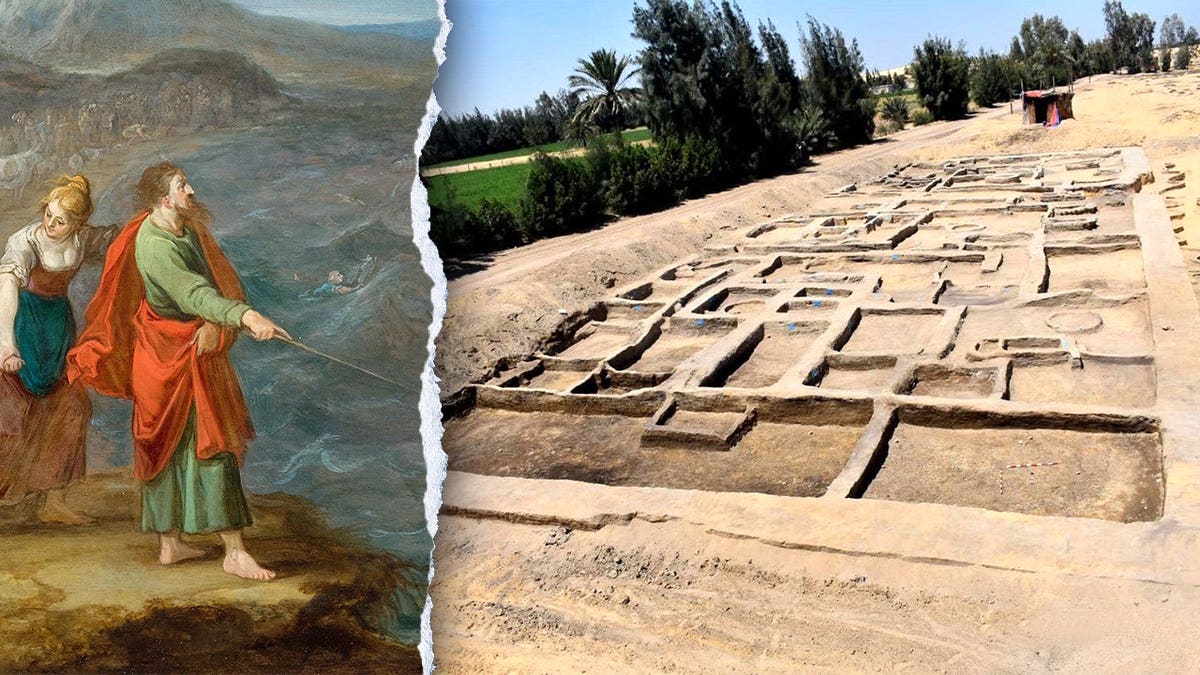
Archaeologists in Egypt have made a significant discovery by unearthing an ancient settlement that dates back to the Second Intermediate Period. This era is often discussed in relation to the biblical Exodus’s historical context. The settlement was unearthed at the Tell el-Koua site, situated in the Wadi Tumilat region, known as an ancient corridor linking the eastern Nile Delta with Egypt’s eastern borders.
The Egyptian Ministry of Tourism and Antiquities announced this finding in late June. The site comprises 15th Dynasty tombs and indicates continuous occupation into the 18th Dynasty, during the transition from Hyksos rule to the New Kingdom. The Hyksos, who ruled much of northern Egypt approximately 3,600 years ago, were later expelled by the Egyptians.
“Archaeologists uncovered an ancient settlement dating to Egypt’s Second Intermediate Period, an era some biblical scholars have suggested may provide historical context for the Exodus account,” stated the Ministry of Tourism and Antiquities.
At Tell el-Koua, researchers found 10 mudbrick tombs, remnants of homes, ovens, grain storage silos, and a walled neighborhood from the Second Intermediate Period. Artefacts like scarab amulets, bronze tools, pottery, alabaster containers, human remains, and animal bones linked to daily functions and funerary practices were recovered.
A notable find includes a 98-by-197-foot residential complex with large halls, rooms, kilns, and additional grain silos situated east of the settlement. Fascinatingly, the site revealed human burials outside traditional tombs, with some found in a unique crouched position, demanding further analysis.
An analysis of pottery from the site shows extensive daily use, with tableware predominating the collection, complemented by cooking vessels. Sherif Fathy, Minister of Tourism and Antiquities, highlighted that this discovery portrays the site as an integrated community featuring living areas, storage facilities, production spaces, and burial sites.
Fathy commended the work of both Egyptian and international archaeological missions aiming to unveil more of Ancient Egypt’s secrets. This find contributes to ongoing debates about whether the biblical Exodus took place and, if so, when.
This discovery is part of ongoing research efforts in Egypt’s Second Intermediate Period. It follows another archaeological milestone, the uncovering of a rare 3,600-year-old pharaoh’s tomb near Abydos, last year. Such findings continue to enrich our understanding of ancient Egyptian civilizations.