
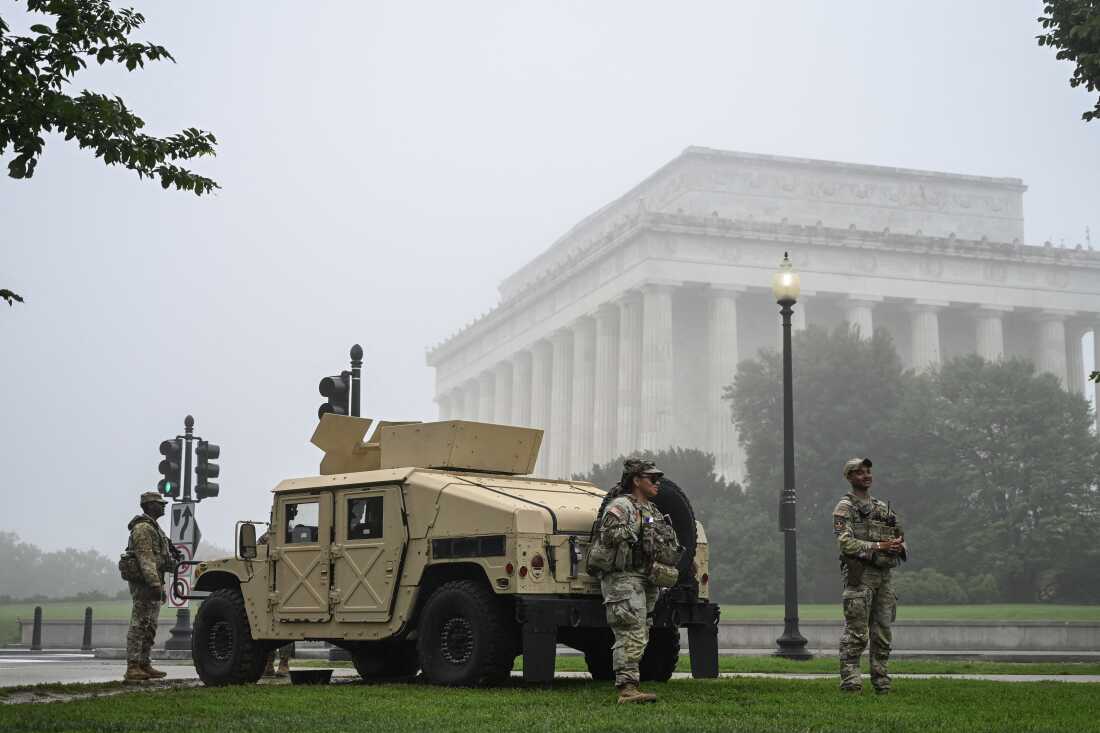
National Guard members have been stationed near the Lincoln Memorial in Washington, D.C., particularly visible around Memorial Day. Their deployment traces back to President Trump’s decision to involve the Guard in efforts to reduce crime.
Impact on Crime
A recent study by the Niskanen Center, a nonpartisan think tank, examined the results of this deployment. Their analysis indicates that while petty property crimes have decreased, there has been little effect on violent crime rates. This reduction in minor crimes comes at a significant financial cost to taxpayers.
The number of National Guard troops in D.C. is planned to increase to 5,000 during a “summer surge” to enhance law enforcement for upcoming national events. Previously, about 2,800 Guard members were deployed from D.C. and other Republican-governed states.
Deployment Strategy
The deployment is part of Trump’s “Safe and Beautiful Task Force,” aimed at reducing crime and beautifying urban areas. This initiative involves federal law enforcement, including immigration officials, working alongside local police. Although the Guard members cannot arrest, their high visibility is supposed to deter crime.
However, the report highlights that most patrols focus on federal properties and public areas, like metro stations, rather than high-crime neighborhoods, leaving D.C. police to manage violent crime areas on their own.
Financial and Social Considerations
The Congressional Budget Office estimates the current troop deployment costs approximately $1.5 million daily. Richard Hahn, a study author, acknowledges the Guard’s role in reducing some crime but questions its efficiency compared to potentially cheaper policing strategies.
White House spokesperson Abigail Jackson refuted the study’s findings, praising the task force for crime reduction and city improvement. However, she did not provide evidence to support these claims.
Future of the Deployment
It remains uncertain when the “summer surge” will conclude or if troop numbers will decrease afterward. Assistant Attorney General Colin M. McDonald stated ongoing commitments to combat crime and protect Washington, D.C., but precise timelines for the National Guard’s presence were not provided.
NPR’s attempts to gain additional comments from task force officials about the surge’s timing were unsuccessful.