
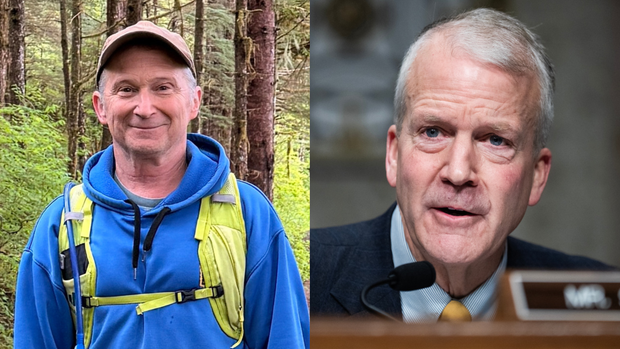
In Juneau, Alaska, a candidate sharing the name of the state’s sitting U.S. senator has advanced to the general election. The November contest is poised to be one of the nation’s most scrutinized races this fall.
Dan J. Sullivan, a retired teacher from Petersburg, emerged among the top four finishers in the August 18 primary. He will compete in the November ranked choice election against Republican incumbent Senator Dan S. Sullivan and Democratic candidate, former U.S. Representative Mary Peltola.
The challenger Dan J. Sullivan succeeded in getting onto the ballot after a judge overturned a decision by the state’s elections official, who claimed Sullivan’s candidacy aimed to confuse voters. These allegations were raised by the incumbent and his Republican supporters. The state Supreme Court ultimately ruled that Dan J. Sullivan should appear on the ballot.
Though the challenger sought to be listed as Republican Dan J. Sullivan, the Division of Elections labeled him Daniel J. Sullivan Jr. without party affiliation. The incumbent senator appears on the ballot as Dan S. Sullivan, Republican.
“The incumbent has failed to stand up for Alaskans,” Dan J. Sullivan stated, criticizing the senator for accepting President Trump’s endorsement.
Donald Trump endorsed Senator Sullivan’s reelection, expressing concern that Dan J. Sullivan’s candidacy was intended to deceive the electorate. Sullivan Junior responded, highlighting the president’s focus on tariffs instead of addressing economic issues like grocery, housing, and energy costs.
As of now, the fourth and final general election slot remains uncertain, alongside other competitive Alaskan races, including those for the state’s U.S. House seat and governor. Republican Rep. Nick Begich is pursuing a second term, having already advanced with independent candidate Bill Hill.
In the governor’s race, Democrats Jonathan Kreiss-Tomkins and Tom Begich, both former state lawmakers, succeeded on election night over a predominantly Republican field vying to replace Republican Governor Mike Dunleavy. Notably, Tom Begich is Nick Begich’s uncle. The Republican Bernadette Wilson also advanced, with one spot still undetermined.
Alaska’s ranked choice voting system allows absentee and overseas ballots to be counted if postmarked by Election Day and received within 10 days.
Sullivan and Peltola lead the Senate race, having amassed substantial campaign funds and enjoyed strong statewide recognition. Their race is among several key Senate contests nationwide that both parties view as critical for controlling the chamber.
Alaska’s ranked choice system introduces an intriguing dynamic. Third and fourth-place candidates could be influential, depending on how their supporters rank other options. This system complicates predictions and enhances the competitiveness of the race.