
Impact of AI Tools on Financial Professionals
New AI tools are enhancing the speed of research, analysis, presentations, and client work for financial professionals. Kevin Buehler, Chief Innovation Officer at Rogo and Senior Partner Emeritus at McKinsey & Company, highlights the potential for firms to utilize AI to expand client coverage, analyze more markets, and focus on work that requires significant judgment. The alternative could be AI serving merely as productivity enhancers scattered across the organization.
AI Impact Forum Webinar Details
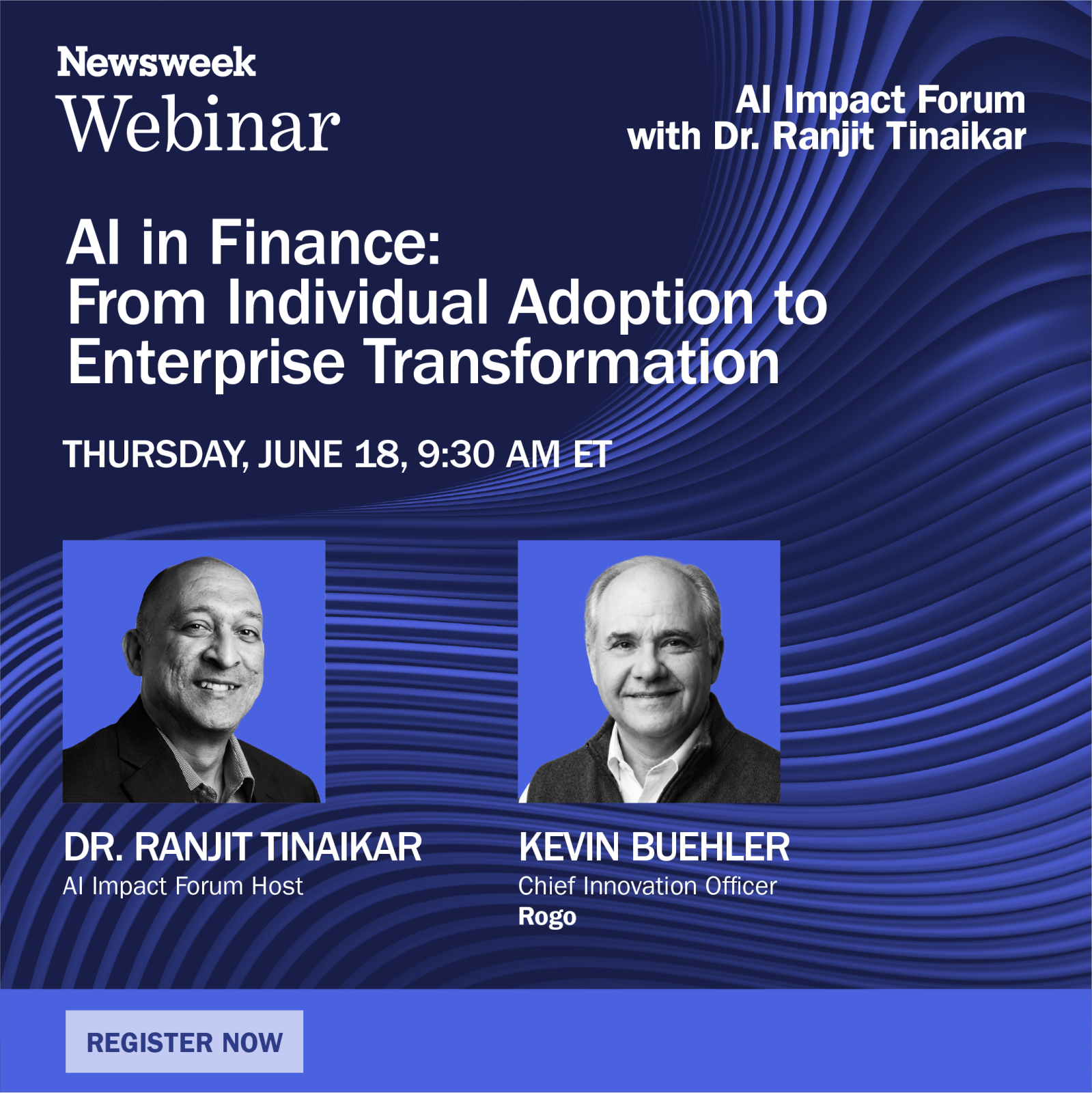
These considerations will be central to the discussion at Newsweek’s “AI Impact Forum” webinar titled “AI in Finance: From Individual Adoption to Enterprise Transformation,” scheduled for Thursday, June 18, at 9:30 a.m. Eastern. During the session, Dr. Ranjit Tinaikar, the host, will converse with Buehler about how agentic AI could transform financial services, impacting analysts, investors, software companies, and service firms.
AI’s Current Impact and Next Steps
Buehler recently conveyed to Newsweek that AI is significantly impacting junior professionals, particularly in tasks involving PowerPoint, Excel, communications, and analysis. AI tools and the rise of agentic AI are producing noticeable effects among junior-level workers. However, individual adoption is merely the initial phase.
The next progression could arise from integrating AI across full business processes instead of isolated tasks. Buehler mentions client onboarding, M&A transactions, and lending as examples of complex workflows that might be re-engineered using AI. The challenge, he notes, is how AI can fundamentally transform such processes.
Effects on Workforce and Adoption Stages
Jobs will be part of the dialogue, though Buehler suggests that the focus isn’t on straightforward replacement. He emphasizes how institutions will choose to utilize the time and capacity generated by AI. Some may opt for cost-saving strategies, while others may expand client interactions, pursue new ventures, or increase training for younger employees.
Faster individual work does not inherently translate to enterprise change, requiring firms to determine the strategic integration of AI into their operations. Buehler outlines three adoption stages: initial use by junior-level employees, expanded usage by senior leaders, and comprehensive workflow redesign.
Most firms have yet to achieve the third stage, which demands a financially driven road map, leadership from senior business leaders, improved data quality, talent enhancement, and effective change management. Buehler identifies data as a frequent challenge and emphasizes the need for upskilling existing talent.
Webinar Focus on AI Adoption and Economics
The June 18 webinar will link AI adoption within financial firms to broader economic aspects. Discussions by Tinaikar and Buehler will cover the ongoing importance of human curation and enterprise context, domain-specific applications that may add value, and evolving commercial models as AI systems start completing tasks, rather than merely supporting them.
This competitive dynamic may hinge on whether AI remains a personal accelerator or becomes integral to business operations. Buehler acknowledges that many firms are still in the initial phases of this transformation.
Register for the webinar, available for free, today.