
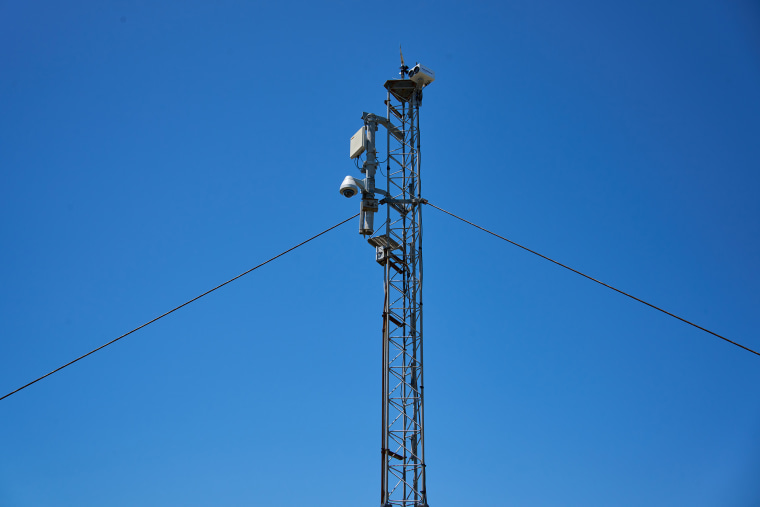
In San Francisco Bay, ferries, cargo ships, and tankers maneuver through the waters. A new system aims to increase awareness of whale presence in these active waters. The AI-driven network, named WhaleSpotter, launched recently to track whale activities both day and night.
The system continuously scans the bay, identifying whale blows and heat signatures within a 2 nautical mile radius. It alerts mariners to adjust speed or reroute when whales are nearby. Thomas Hall, the director of operations for San Francisco Bay Ferry, explains, “Mariners can make adjustments before reaching the whales. It also allows tracking data over time to identify whale locations, adjusting routes accordingly during whale seasons.”
Rising gray whale deaths in the bay prompted this initiative. Last year, 21 dead gray whales were discovered in the Bay Area, the highest in 25 years according to The Marine Mammal Center. Ship strikes caused at least 40% of these deaths. Ten more deaths have occurred this year.
This data likely underestimates the total as many whale carcasses sink or are carried out to sea unnoticed. Gray whales migrate along the California coast, traveling 12,000 miles between Mexico and the Arctic. However, many are now entering San Francisco Bay, staying for extended periods. Climate change links to this shift, as warming temperatures and altered sea ice in the Arctic affect the whales’ food supply, leaving them undernourished during migrations.
Rachel Rhodes, a project scientist at the Benioff Ocean Science Laboratory, states, “The high traffic corridor between Angel Island and Treasure Island presents dangers for whales, as ferry routes intersect these paths.” Data indicates the situation is grave, with teams often struggling to find landing areas for dead whales.
Previously a conservation success story, the eastern North Pacific gray whale population has declined by half in the past decade. NOAA reports just 13,000 remain. Rhodes suggests, “The diminished Arctic food supply starts them on their long journey at a disadvantage.”
The WhaleSpotter uses a thermal camera system for real-time mariner alerts. AI flags potential sightings, which marine mammal observers confirm before sending alerts to ferry operators and vessel traffic controllers. The Whale Safe website also posts public alerts.
WhaleSpotter has similar implementations in the United States, Canada, and Australia. Yet, the San Francisco Bay network uniquely integrates land-based and vessel-mounted detections, ensuring immediate information relay to ships. Initial tests have already shown significant whale activity data collection, emphasizing the need for sharing the bay effectively with the whales.
The constant monitoring capability is a major advantage. Thermal cameras operate at night and through fog, conditions common in the bay. Currently, a camera installed on Angel Island aids this monitoring, with another planned for a ferry route between San Francisco and Vallejo. Scientists hope to expand this network with additional cameras on the Golden Gate Bridge and Alcatraz for comprehensive coverage.
Warming Oceans Affecting Humpbacks Too
Humpback whales face risks as marine heat waves off the California coast shrink cold, nutrient-rich waters. These conditions drive the prey whales follow closer to shore, overlapping with the Dungeness crab fishery operations. The fishery involves thousands of vertical lines connected to seafloor traps and surface buoys, posing entanglement dangers.
This spring, regulators again restricted parts of the crab fishery to protect whales. The overlap between whales and crab fishing seasons has grown due to warming waters. Humpbacks are particularly vulnerable. Kathi George from The Marine Mammal Center notes, “Humpbacks scratch their backs on gear and can become dangerously entangled.” Entangled whales can suffer months of impediments, leading to severe consequences like starvation, infection, and drowning.
In 2024, 36 whale entanglements were confirmed off the West Coast, marking a peak since 2018, according to NOAA. However, many cases remain undocumented. California has authorized commercial use of ropeless pop-up crab fishing gear. This technology releases traps from the seafloor when triggered, allowing fishermen to harvest without endangering whales.
As climate-induced changes in ocean conditions continue, the intersection of whales, ships, and fishing gear requires adaptive management. Caitlynn Birch of Oceana emphasizes the importance of continual scientific guidance to minimize wildlife risk while enabling fishing practices. Birch notes, “California leads in developing whale-safe fishing technologies, setting a model for other fisheries nationwide.”