
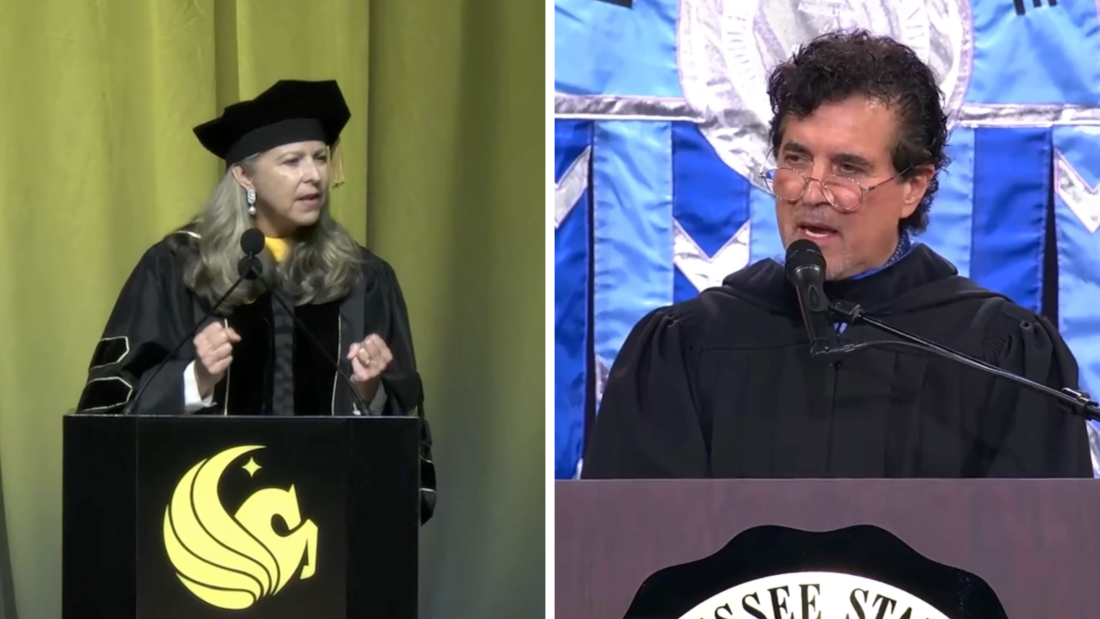
Graduation ceremonies at various universities have recently drawn attention due to students booing speakers who mentioned artificial intelligence (AI). This reaction stems from growing frustrations and concerns about AI’s impact on future job prospects and societal issues.
Speakers Face Backlash
Real estate executive Gloria Caulfield and Big Machine Records CEO Scott Borchetta both encountered disapproval from students at their respective commencements. When Caulfield described AI as ‘the next industrial revolution’ during the University of Central Florida’s graduation, it sparked boos from the audience. Similarly, Borchetta faced negative reactions at Middle Tennessee State University when he discussed AI’s influence on production.
“AI is rewriting production as we sit here,” Borchetta stated, prompting boos. He responded, “Deal with it. Like I said, it’s a tool.”
Former Google CEO Eric Schmidt also faced repeated boos at the University of Arizona’s commencement when he emphasized AI’s inevitable role in shaping the world.
AI and Concerns Among Graduates
The hesitance towards AI among graduates appears justified according to many, including those preparing for their own commencements. Maggie Simmons, a future University of Denver graduate, expressed concerns about how AI affects the planet and disproportionately impacts Black and minority communities. AI systems sometimes perpetuate systemic racism, and their data centers can negatively affect minority neighborhoods.
Simmons believes the focus should be on celebrating the achievements of graduates and their potential contributions to society rather than emphasizing AI, which she perceives as a threat to future jobs without adequate regulation.
Recent American University graduate Kareen Gill noted the initial excitement surrounding AI has diminished due to its interference with job opportunities. She mentioned fewer internships and entry-level positions are available because AI is replacing those roles.
“We worked hard for four years to be eligible for jobs, and AI is messing with our job prospects,” Gill remarked.
Gill highlighted the lack of understanding from older generations who might not experience the same impact on their careers.
General Discontent with AI Development
A poll conducted by Quinnipiac University revealed significant generational differences in attitudes toward AI. Among Gen Z, 81% believe AI will reduce job opportunities, despite their familiarity with the technology.
“People are not rejecting AI, but they are questioning it as its impacts become more evident,” said Chetan Jaiswal, Quinnipiac’s associate professor of computer science.
The poll also found that only 5% of Americans trust that AI development is managed by individuals or organizations representing their interests. Concerns extend to environmental impacts and economic disparities, with AI enriching billionaires while depleting resources.
Clearly, AI’s role in the future and its broader societal implications continue to be a source of debate and unease, especially among younger generations entering the workforce.