
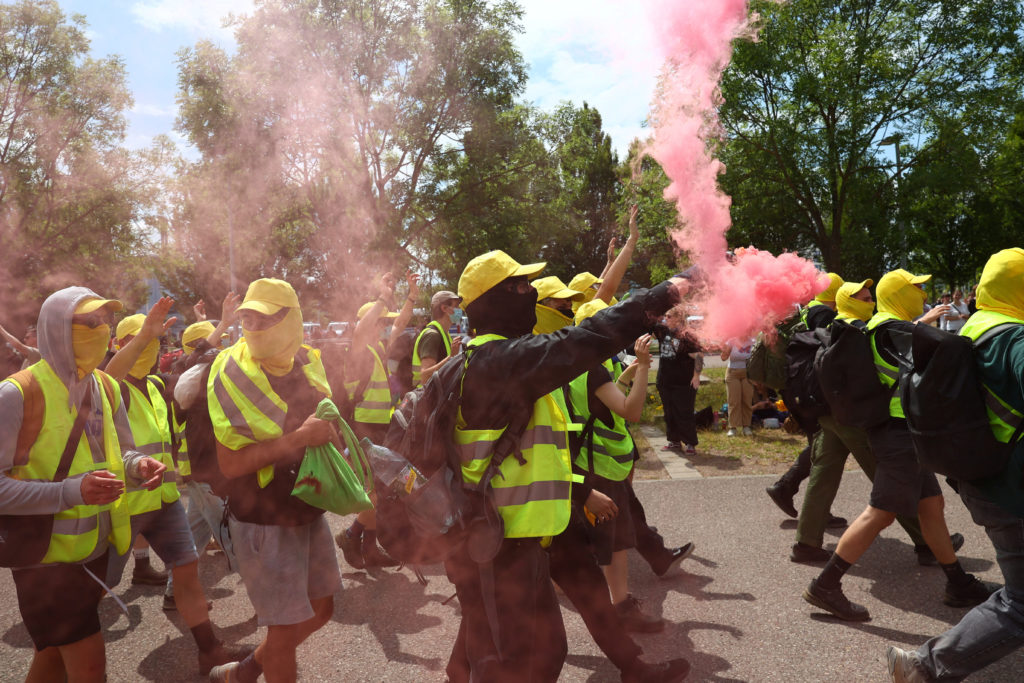
The far-right Alternative for Germany party, known as AfD, held its national convention in Erfurt, Germany, with a significant reelection of its leaders. Alice Weidel and Tino Chrupalla were reconfirmed as co-leaders, receiving 81% and 70% of the vote respectively. Their leadership extension comes amidst tens of thousands of protesters aiming to disrupt the meeting, some of whom clashed with police.
AfD has positioned itself as a unified front despite demonstrations reflecting its divisive impact on Germany. These protests emphasize AfD’s status as the largest opposition party nationally and a dominant force in the country’s former communist east.
Coinciding with the 100-year anniversary of a historic Nazi Party meeting that solidified Adolf Hitler’s control, the timing of AfD’s convention drew criticism from historians and political opponents for its symbolism, which the party dismisses.
“There are no peaceful seated blockades. There are no democratic roadblocks,” Chrupalla stated, defending the party’s right to convene.
AfD’s recent political achievements include its second-place finish in the February 2025 national elections with 20.8% of the vote, marking the best showing for a far-right party since WWII. Their support continues to grow, bringing discussions of potential bans, though Germany’s supreme court sets high standards for banning political parties. As Weidel looks forward to a pivotal 2026, mainstream parties enforce a strategic “firewall” by refusing to collaborate with AfD.
Approximately 31,000 protesters attended rallies on Saturday, holding signs against AfD’s policies, which they perceive as fascist. Lena Raupach, from the anti-fascist alliance widersetzen, condemned AfD for pursuing policies favoring the wealthy while neglecting real problems.
The AfD pursues fascist policies: It wants mass deportations and terror on the streets,” Raupach said.
Germany’s domestic intelligence agency has classified AfD as a right-wing extremist group, though the designation is on hold due to legal challenges.
Upcoming state elections could further strengthen AfD’s position, particularly in Saxony-Anhalt. The party aims for 40% or more in the vote to possibly achieve an absolute majority or attract political defectors, potentially leading to its first state governor position.
AfD maintains its stance against sanctions on Russia and opposes weapon deliveries to Ukraine, while aligning with some policies of the Trump administration, although critical of its Iran engagement.
Björn Höcke, a prominent party leader, invoked the slogan “Make Germany Great Again,” echoing Trump’s platform, as the party continues to expand its influence.
Support for trusted journalism and civil dialogue remains crucial in navigating political landscapes.