
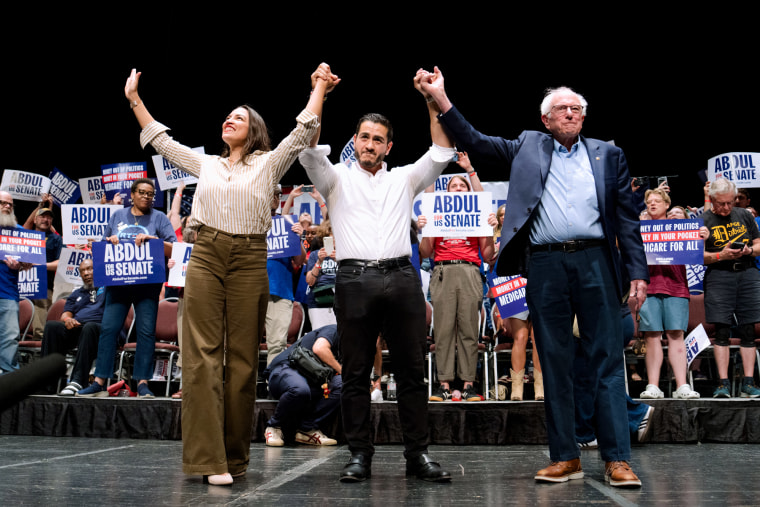
Abdul El-Sayed has secured the nomination in Michigan’s Democratic Senate primary. NBC News announced his victory in a tight race against Rep. Haley Stevens. His win represents a significant moment for the progressive left in the Midwest during this midterm election period.
El-Sayed faced intense competition, with nearly $65 million in external funding opposing him. The Democratic establishment primarily supported Stevens, with endorsements from key figures such as Governor Gretchen Whitmer. Whitmer endorsed Stevens in a late-stage attempt to counter El-Sayed’s increasing popularity.
El-Sayed, previously a public health official, will now compete against former Rep. Mike Rogers. Rogers secured the Republican nomination unchallenged. Their November race is projected to be highly competitive and could influence control of the Senate. The elected candidate will replace Sen. Gary Peters, a Democrat stepping down after deciding against a third term and backing Stevens in the primary.
Currently, Republicans hold 53 Senate seats. The Democrats aim to seize four seats to gain a majority. At the same time, they must defend seats in pivotal states like Georgia and Michigan. Former President Donald Trump’s endorsement of Rogers helped him clinch the Republican primary. Trump won Michigan in 2016 and 2024 but lost to Joe Biden in 2020. National Republicans view El-Sayed as a more favorable opponent than Stevens, producing ads to highlight El-Sayed’s progressive views and endorsement from Sen. Bernie Sanders.
El-Sayed was supported by figures like Sanders and Rep. Alexandria Ocasio-Cortez. His campaign emphasized policies such as “Medicare for All” and criticized the influence of money in politics. He also accused Stevens of supporting corporate PACs and criticized her for her connections with groups like AIPAC. Together with his supporters, El-Sayed spent significantly less on advertising compared to Stevens and her allies.
The primary battle was intense, with Stevens aligning with the Democratic establishment, gaining support from leaders in Michigan and national figures like Chuck Schumer. El-Sayed received backing from influential groups like the United Auto Workers. The primary’s final stages became aggressive, especially after Mallory McMorrow exited the race and endorsed El-Sayed, calling for party unity.
Throughout their campaign, Stevens accused El-Sayed of focusing on national politics rather than state issues. Whitmer’s endorsement of Stevens underscored this argument, paired with a controversial call by El-Sayed that stirred debate about tactics in future elections.
Stevens attempted to connect with voters by addressing critiques about her regional accent and appearance. Meanwhile, El-Sayed consistently emphasized his message of representing the people over corporate interests.