
Increase in Encampment Sweeps
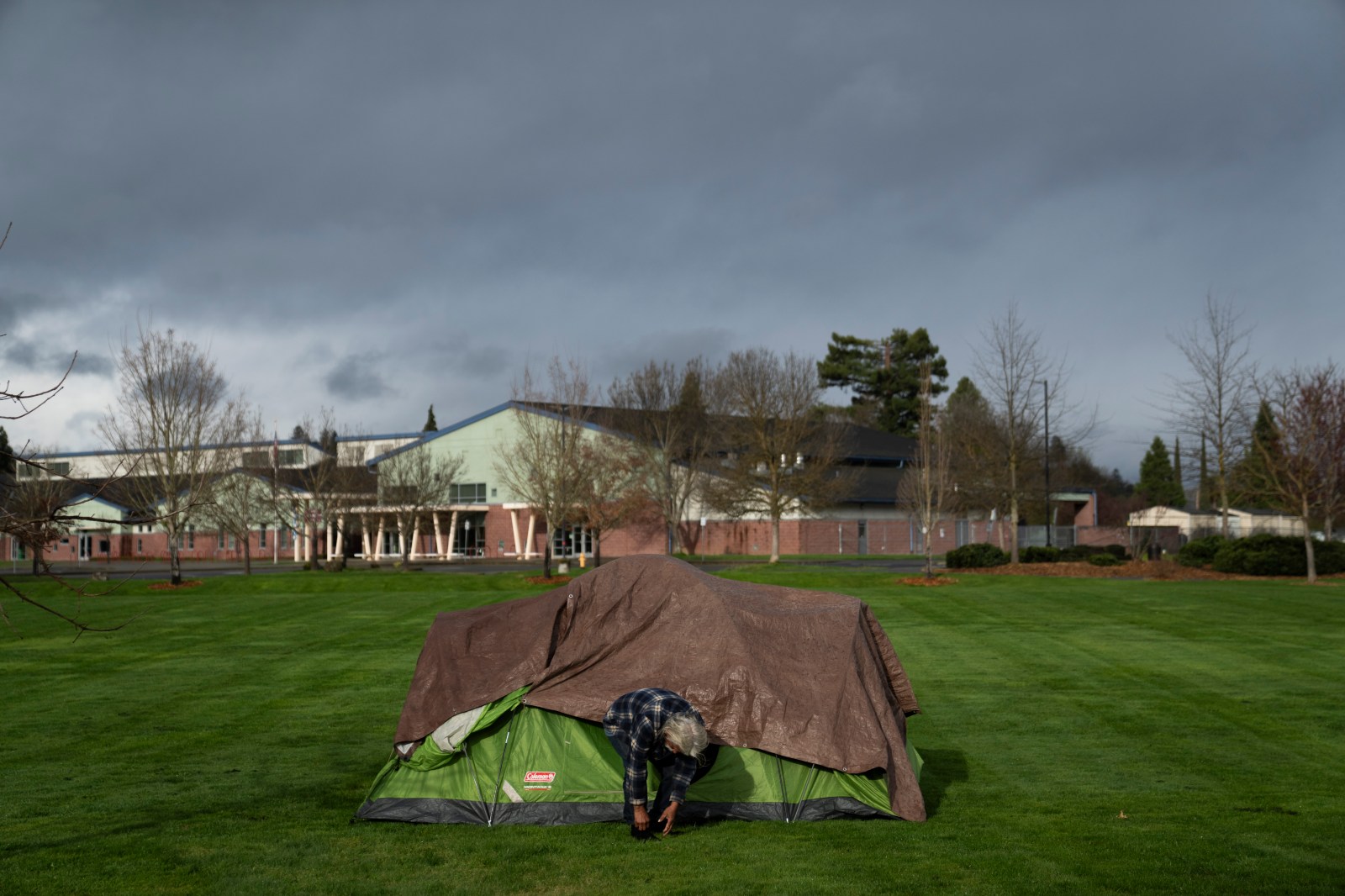
Recent research highlights a rise in homeless encampment sweeps in Oakland, California. This follows a Supreme Court decision granting cities more power to manage homelessness. A study in the American Journal of Public Health reported that these sweeps more than doubled after the court’s decision in 2024. The ruling allowed cities to enforce camping bans, even with limited shelter availability.
The study observed 785 encampment closure reports from Oakland’s public database. Before the ruling, monthly averages were 14.4 closures, with 6.6 new and 7.8 repeat closures. Post-decision, the average rose to 32.2 closures, with 17.5 new and 14.7 repeated closures. Some encampments faced multiple closures, with one being cleared 18 times over four years.
Supreme Court Ruling Details
In June 2024, the case City of Grants Pass v. Johnson involved an Oregon city’s anti-camping laws. The plaintiffs claimed these laws unlawfully targeted those who had no shelter options. The laws restricted items used for outdoor shelter, such as sleeping bags and blankets. The Supreme Court’s 6-3 decision supported the city, ruling that enforcing such ordinances did not breach the Eighth Amendment.
This decision overturned a prior ruling by the Ninth U.S. Circuit Court of Appeals that saw the ordinances as unconstitutional. The Supreme Court’s verdict empowered cities to clear encampments and enforce camping bans.
Racial and Ethnic Disparities
The study noted changes in the demographics of areas targeted for closures. Post-ruling, closures occurred more frequently in neighborhoods with higher Hispanic and Black populations. Researchers suggested two interpretations: the ruling allowed cities to expand enforcement to new locations, and new encampments formed after previous closures.
Study author Jamie Chang from UC Berkeley questioned the efficacy of sweeps, highlighting their cost and potential displacement effects. Co-author C.J. Gabbe emphasized that sweeps disperse people instead of solving homelessness issues, potentially pushing them into vulnerable neighborhoods.
Nationwide Homelessness Data
Homelessness remains a significant challenge in the U.S. Several factors, such as limited shelter spaces and affordable housing, contribute to the issue. The U.S. Department of Housing and Urban Development’s 2024 report stated that California had the highest homeless population at approximately 187,000, followed by New York with about 158,000. Florida and Washington each recorded over 31,000 homeless individuals.
The report identified over 770,000 people as homeless on a single night in January 2024, marking an 18 percent rise from the previous year. President Donald Trump aimed to address homelessness, signing an order to clear homeless encampments on federal lands in Washington D.C.