
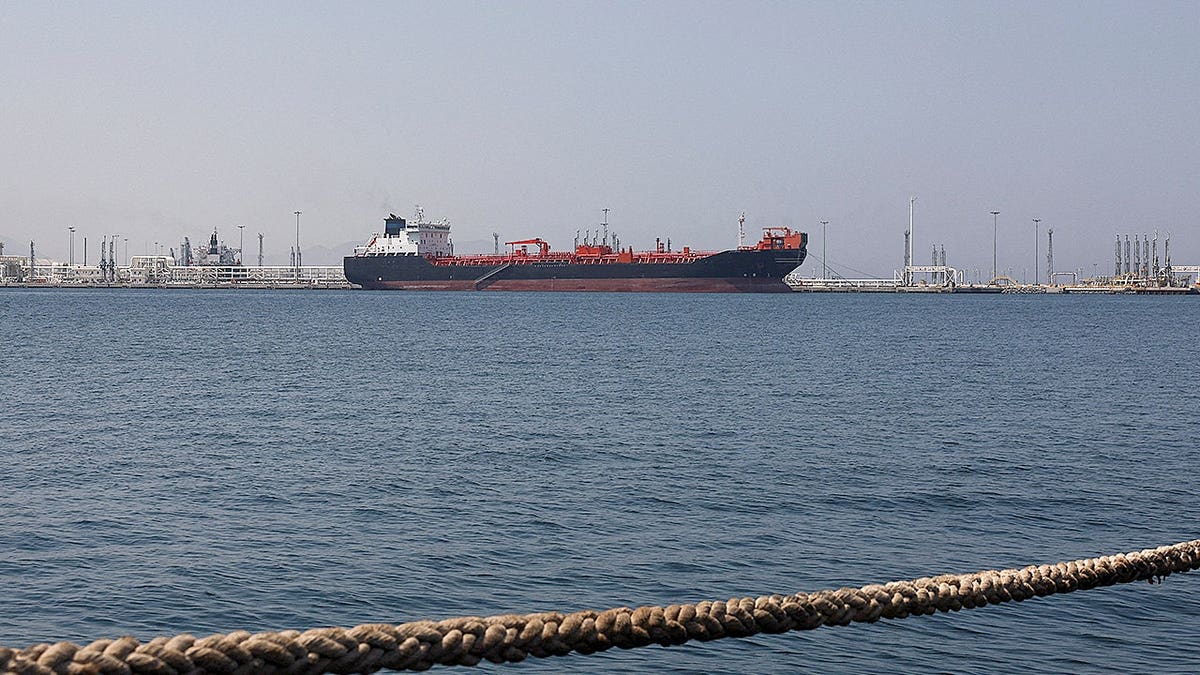
President Donald Trump has openly advocated for a toll-free passage through the Strait of Hormuz, challenging Iran’s assertion of control over this strategic maritime route. The U.S. government is enforcing control through blockade measures while simultaneously imposing economic sanctions and engaging in diplomatic dialogues with Gulf allies. These efforts aim to increase pressure on Iran’s nuclear program and its regional influence.
Maritime Disruptions and Diplomatic Developments
A notable disruption in maritime tracking transmissions occurred near the United Arab Emirates’ primary oil hub, causing a stir in Persian Gulf shipping activities. This incident preceded President Trump’s announcement of progress towards a bilateral peace agreement with Iran, a development identified by maritime intelligence firm Windward AI. The firm reported the sudden blackout in Automatic Identification System (AIS) transmissions near Fujairah, indicative of heightened electronic warfare, deliberate shutdowns, and intense cyber interference close to the crucial UAE oil port.
“Fujairah goes dark: AIS transmissions collapse after Iran’s PGSA announcement,” Windward warned in a post shared on social media.
Windward further reported, “Although vessels remain in the area, their loading capacity has diminished, and a significant number have ceased communication.”
Shipping Standoff and Strategic Movements
As President Trump revealed that a deal with Iran was “largely negotiated” leading to the potential reopening of the Strait of Hormuz, Fujairah managed to transport 1.35 million barrels of crude on Sunday aboard a single tanker destined for South Korea. Although this movement does not completely restore operations to normal, Windward noted it as the initial indication of resumed flow from Fujairah following the announcement.
Prior to this transfer, Trump mentioned that Washington and Tehran had nearly completed a memorandum of understanding for a peace agreement. An AI-generated image posted by Trump illustrated the potential conflict in the strait.
Iran’s Response and Maritime Control
In response, Iran emphasized its continued dominion over the Strait of Hormuz. Ibrahim Al-Fiqar, Iran’s official military spokesperson, restated in a statement that the strait remains under the exclusive control and sovereignty of Tehran. He affirmed that Iran holds the authority over transit routes, timing, and issuance of maritime licenses.
The blackout of tanker operations, crude transfer activities, and progress towards a U.S.-Iran deal accelerated following Iran’s establishment of the Persian Gulf Strait Authority (PGSA) on May 20. Supervised by the Islamic Revolutionary Guard Corps (IRGC) Navy, the PGSA acts as a sovereign regulator, demanding vessels submit details, including cargo, insurance, and crew data, along with mandatory fees for safe passage through the strait.
Regional analysts pointed out Iran’s territorial claims extending beyond its waters into regions associated with Oman and the UAE, raising concerns about its reach.
Military Strategy and Negotiations
Alex Vatanka, director of the Iran Program at the Middle East Institute, commented on the IRGC Navy’s operational approach, which leverages an asymmetric playbook. This includes employing fast boats, drones, radar tracking, coastal missile deployment, and selective intimidation rather than continuous physical interdiction.
Vatanka noted, “Tehran seeks acceptance from Gulf states and major importers of Iranian oversight of Hormuz as a new geopolitical reality.” Amid ongoing negotiations focused on nuclear issues and a reported 60-day ceasefire, the PGSA has surfaced as a potent economic leverage instrument threatening global oil and shipping markets.
The PGSA is credited with giving Tehran a mechanism to influence rivals, favor allies, and establish IRGC oversight of one of the world’s most vital energy routes.
Vatanka explained, “Ships submit cargo and crew data for approval. Reports highlight quiet facilitation payments, preferential treatment for friendly states, and uncertainty for all others. Iran keeps penalties deliberately vague, using the risk of delays, harassment, drone surveillance, IRGC interception, or denial of safe passage as a means of encouraging compliance without closing the strait outright.”