
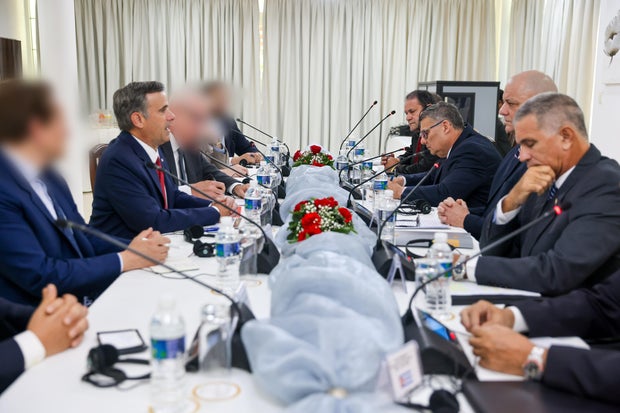
CIA Director John Ratcliffe recently made a significant visit to Havana for a meeting with senior Cuban officials. His entourage included a key participant from the U.S. mission that captured former Venezuelan leader Nicolás Maduro earlier this year. This operation led to tension between Cuba and the U.S. as Cuba had been Venezuela’s ally before Maduro’s arrest. The Cuban government reported the loss of 32 of its military and police officers during the operation.
Ratcliffe introduced the paramilitary leader involved in this mission to highlight the severity of past actions. This gesture was possibly designed to deliver a message of strength from the U.S. The CIA has refrained from commenting on the details of this meeting.
The visit coincided with increasing pressure on Cuba by the U.S. Administration, which threatened substantial tariffs on countries exporting oil to the island. This has resulted in significant fuel shortages. Secretary of State Marco Rubio emphasized the necessity for substantial economic and political reforms in Cuba. President Trump even suggested a potential takeover of the island due to its historical challenges to U.S. administrations since the rise of its communist movement in 1959.
During the visit, Ratcliffe communicated that the U.S. is open to engaging seriously on economic and security matters, conditional on Cuba undertaking fundamental reforms. Among the Cuban officials Ratcliffe met was Raúl Rodriguez Castro, grandson of former president Raúl Castro. An indictment against the elder Castro was disclosed shortly after this meeting, accusing him of murder and conspiracy related to the 1996 downing of two planes.
A CIA official shared that Ratcliffe discussed significant security concerns, asserting that Cuba can no longer provide sanctuary for adversaries in the Western Hemisphere.
U.S.-Cuba relations continue to be affected by historical Cold War tensions, compounded by past covert U.S. efforts to destabilize Fidel Castro’s government. Recent comments by Marco Rubio highlighted Cuba’s possession of weapons from Russia and China and the presence of their intelligence missions within Cuba.
The U.S. intelligence community is assessing potential Cuban reactions to American military action as tensions escalate. Reports confirm that Cuba has acquired attack drones. Meanwhile, Cuban President Miguel Díaz-Canel Bermúdez clarified that Cuba poses no threat to the U.S. However, he cautioned against military strikes, warning they could lead to severe consequences.
Olivia Gazis contributed additional insights to this report.