
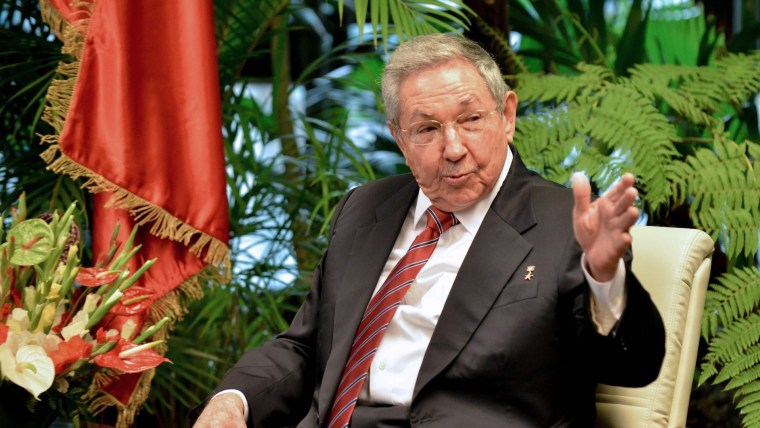
The U.S. Justice Department indicted former Cuban leader Raúl Castro, along with five others, for their role in the 1996 shooting of two civilian planes. The incident resulted in the deaths of four Cuban exiles. U.S. Attorney General Todd Blanche announced charges including conspiracy to kill U.S. nationals, murder, and aircraft destruction.
Raúl Castro, brother to the late Fidel Castro, has been accused of conspiring with other Cuban military officials. Five Cuban fighter pilots involved in the shooting joined him in being indicted. The announcement occurred in Miami, in front of the Freedom Tower, a site historically significant to Cuban Americans.
The indictment states, “All orders to kill passed through a chain of command, with Castro Ruz and Fidel Castro as the final decision makers.”
The charges arise from the mission by Brothers to the Rescue. Founded in 1991, they aimed to rescue Cubans fleeing to Florida. However, the group sometimes entered Cuban airspace, according to U.S. records. During one such mission, Cuban MiG-29 jets shot down two planes in international airspace. Despite Cuba’s claims of airspace violation, reports from international organizations contradicted this.
The Clinton administration condemned the incident. It led to sanctions and the conviction of a person for providing Cuba with information about Brothers to the Rescue’s activities. Decades later, the event remains a pivotal aspect of U.S.-Cuba relations. Cuban American advocates and victims’ families have long called for Castro’s prosecution.
Blanche emphasized the importance of this prosecution, stating, “We were focused on gathering sufficient evidence for the indictment.” He refrained from detailing this evidence.
Relatives of the victims, like Miriam de la Peña, expressed gratitude: “We are hopeful that our children’s murders are acknowledged under the dictatorship’s actions.”
The Cuban government criticized the indictment, calling the U.S. actions manipulative. It is unlikely Cuba will extradite Castro, but a warrant for his arrest is in place. Lawmakers, especially those of Cuban descent, view this as a step toward justice.
Trump Administration’s Stance and Cuban Response
Amidst tensions, the Trump administration pressured Cuba for changes, threatening military action. President Trump criticized Cuba’s governance, and Secretary of State Marco Rubio addressed the Cuban public about the nation’s struggles.
Cuba faces fuel shortages and power outages, partly due to halted Venezuelan oil shipments. In response, residents complain of lasting blackouts affecting daily life.
Cuban President Miguel Díaz-Canel condemned U.S. actions as imperialistic. Citizens in Havana echoed these sentiments, accusing the U.S. of economic aggression.