
Following the removal of Venezuelan leader Nicolás Maduro by U.S. forces, President Trump suggested a similar action may occur in Cuba. He stated, “Cuba’s going to be next” and hinted at “taking Cuba in some form.” For years, U.S. attempts to change Cuba’s communist system have seen limited success, relying on sanctions while the island’s economy declined. The Trump administration’s oil blockade has further deteriorated living conditions in Cuba.
Amidst these tensions, U.S. officials have engaged with key Cuban figures to advocate for economic and political reforms. Trump envisions a significant change for Cuba, referencing a “new dawn,” but its implications for the country’s leaders remain uncertain.
Raúl Castro
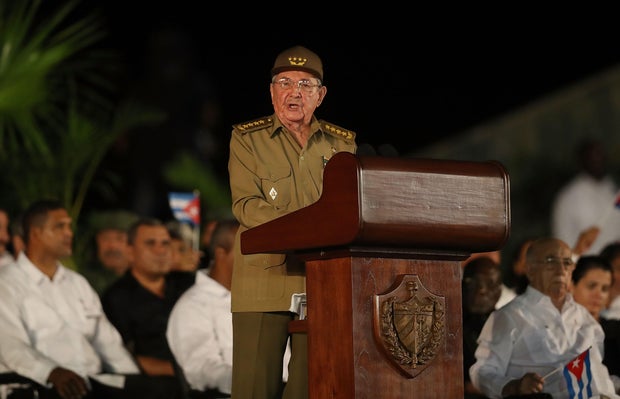
Raúl Castro, Fidel Castro’s brother, stepped down as Cuba’s president in 2018 and left the Communist Party leadership in 2021. However, he remains an influential figure. At 94, he faces U.S. charges related to a 1996 incident involving the downing of planes from the exile group Brothers to the Rescue. Raúl led Cuba’s armed forces, with Fidel at the helm as leader for nearly five decades. In 2008, Fidel handed the presidency to Raúl, who later succeeded him as party leader. Though Fidel Castro passed away in 2016, Raúl’s role in diplomatic openings with the U.S. remains notable.
Miguel Díaz-Canel
Miguel Díaz-Canel, Cuba’s president since 2018, also leads the Communist Party. His tenure extends to 2028. He is the first non-Castro leader since the Cuban Revolution. Hand-picked by Raúl Castro, Díaz-Canel is seen as a loyal official rather than a true power broker. U.S. officials doubt meaningful change will occur under his leadership. Despite talks with the U.S., Díaz-Canel opposes any military threats.
Oscar Pérez-Oliva Fraga
Oscar Pérez-Oliva Fraga, a great-nephew of the Castro brothers, serves as Deputy Prime Minister and oversees trade and investment. His role as Deputy Prime Minister and the introduction of economic reforms, including allowing diaspora investments, marks a shift from past policies. However, potential conflicts with the Helms-Burton Act, which ties the lifting of U.S. sanctions to a non-Castro government and free-market reforms, remain.
Pérez-Oliva Fraga’s oversight includes GAESA, Cuba’s military-controlled conglomerate. The U.S. imposes sanctions on GAESA, believing it controls a significant portion of the Cuban economy, allegedly holding illicit assets exceeding $20 billion.
Raúl Guillermo Rodríguez Castro
Known as “Raulito,” Raúl Castro’s grandson serves as his bodyguard and advisor. While lacking a formal government role, he is pivotal in U.S.-Cuba relations and has met with U.S. officials. Though unlikely to be a public leader, “Raulito” could be influential in future negotiations.
Potential Changes and Challenges
The U.S. may seek a leader in Cuba similar to Delcy Rodriguez in Venezuela, yet such a figure is unclear. Possible candidates include members of the Castro family, but their roles in a reformed government face uncertainty. American University professor William LeoGrande highlights Cuba’s resistance to U.S. demands on its political system, emphasizing national sovereignty. This stalemate presents challenges in negotiations.
The Associated Press contributed to this report.