
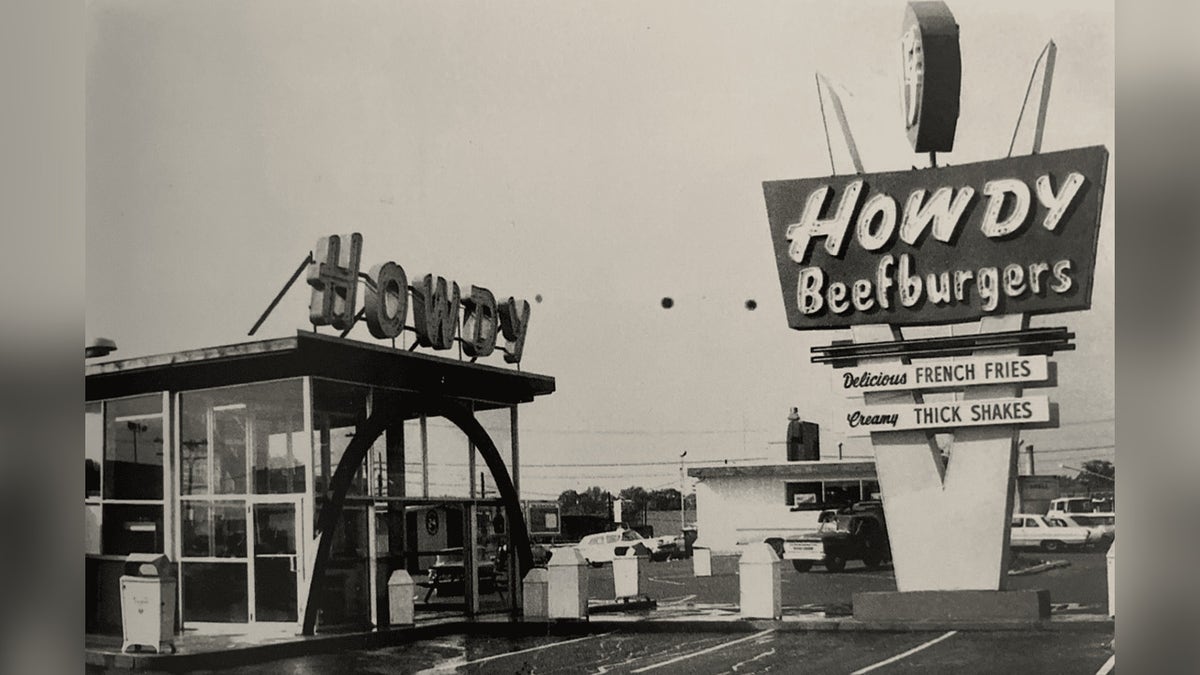
Before Dunkin’ became synonymous with coffee and donuts, its founder, William Rosenberg, ventured into the fast-food market. In 1961, Rosenberg launched Howdy Beef N’ Burger in New England. At its height, the chain had approximately 30 outlets, some sharing locations with Dunkin’ Donuts.
Originally named Howdy Beefburger, the chain took inspiration from Howdy Doody, a beloved TV puppet from a popular children’s show on NBC that aired from 1947 to 1960. This show featured skits and songs performed by the puppet, Howdy Doody, and human characters in front of children known as the “peanut gallery.”
The Howdy Doody Show captivated audiences from 1947 to 1960.
Howdy Beef N’ Burger offered more than hamburgers and fries. The menu included a signature Big ‘B’ burger, roast beef sandwiches, fried chicken, shakes, and local New England seafood like clam strips and lobster rolls. Promotions capitalized on family appeal, promising meals on a budget and children-focused giveaways, as reported in The Boston Globe.
Despite these efforts, the chain struggled against competitors like McDonald’s. Business complexities arose as Rosenberg’s company juggled other ventures, including seafood and pancakes. When Rosenberg’s son, Robert, became company president in 1963, efforts shifted more towards Dunkin’ Donuts.
Over time, Howdy’s locations dwindled. Some outlets were sold to other restaurant chains, including a Quincy, Massachusetts branch that became a Wendy’s in 1979. By the 1980s, Howdy Beef N’ Burger had largely vanished, lingering in old advertisements and the memories of diners.
Howdy Doody was not alone in inspiring themed restaurants. For example, the Bubba Gump Shrimp Co. drew from the 1994 film “Forrest Gump,” while Central Perk Coffee Co. mirrored the café from the TV series “Friends.” On the East Coast, Tony Soprano’s pizza chain was based on “The Sopranos.”
Today, Howdy Beef N’ Burger remains a piece of nostalgia—a nod to its quirky origin and the ever-changing landscape of the fast-food industry.