
The enigmatic lives of Edgar Allan Poe and Arthur Conan Doyle continue to captivate readers and scholars.
Poe: The Founding Literary Enigma
Born in Boston in 1809, Edgar Allan Poe faced tragedy early. Orphaned and later adopted by the Allan family in Virginia, he endured a short, tumultuous life. He passed away at 40 under mysterious circumstances, yet left behind a legacy of essays, haunting poems, and short stories. Poe is credited with inventing the detective story. The mystery of his supernatural talent and the lasting impact of his work remains unsolved despite numerous biographers’ efforts.
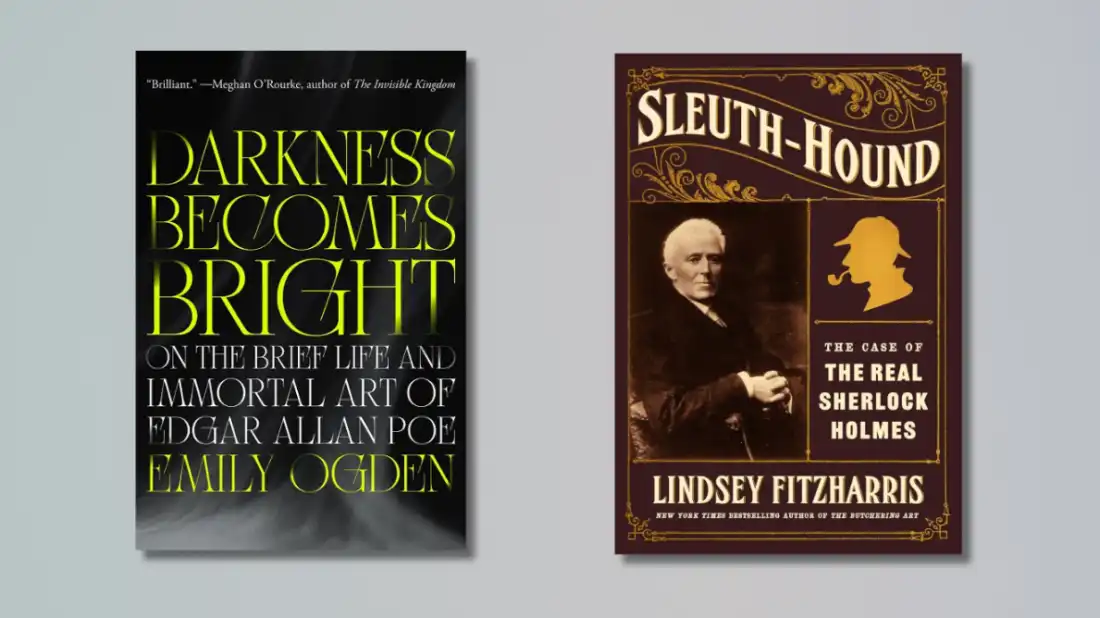
Emily Ogden, a professor at the University of Virginia, explores Poe’s life in her book Darkness Becomes Bright: On the Brief Life and Immortal Art of Edgar Allan Poe. Ogden fell under Poe’s spell while teaching his works.
This book is as much about Poe as it is about his followers. It invites us to explore the darkness, madness, loneliness, and pain in human experience.
Poe’s life and work are entwined with personal torment, as illustrated by an incident in 1849 involving Poe and Philadelphia engraver John Sartain. During a visit, Poe summoned Sartain for a midnight walk to the Fairmount Water Works, where Sartain reportedly stopped Poe from jumping into the river. Ogden uncovers how such experiences shaped Poe’s art.
Doyle: Inspired by Poe and Real-Life Detectives
Sir Arthur Conan Doyle revered Poe, labeling him the father of the detective story. Despite his admiration, Doyle found his own niche with the creation of Sherlock Holmes. Financial need prompted Doyle, then a struggling physician, to write his first mystery, A Study in Scarlet, in 1887, followed by 59 more tales. Holmes and Dr. Watson became iconic, with some fans convinced of their real existence, sending letters to 221B Baker Street.
Lindsay Fitzharris’s new book, Sleuth-Hound: The Case of the Real Sherlock Holmes, explores the inspirations behind Doyle’s characters. Fitzharris investigates the influence of Joseph Bell, a surgeon known for his acute diagnostic skills, and Henry Duncan Littlejohn, a pioneer in forensics. Doyle, once their student, immortalized them in his stories, with Bell often regarded as the prototype for Holmes.
Fitzharris also discusses Bell and Littlejohn’s work on notable Scottish murder cases. This includes possible involvement in investigating the Jack the Ripper case. Alongside detective work, she provides glimpses into the history of toxicology, anesthesiology, and public health.
Both Ogden and Fitzharris offer fresh perspectives on Poe and Doyle. Their works emphasize that, as suggested in Poe’s ‘The Purloined Letter’, subtle details often lie hidden, waiting for discovery.