
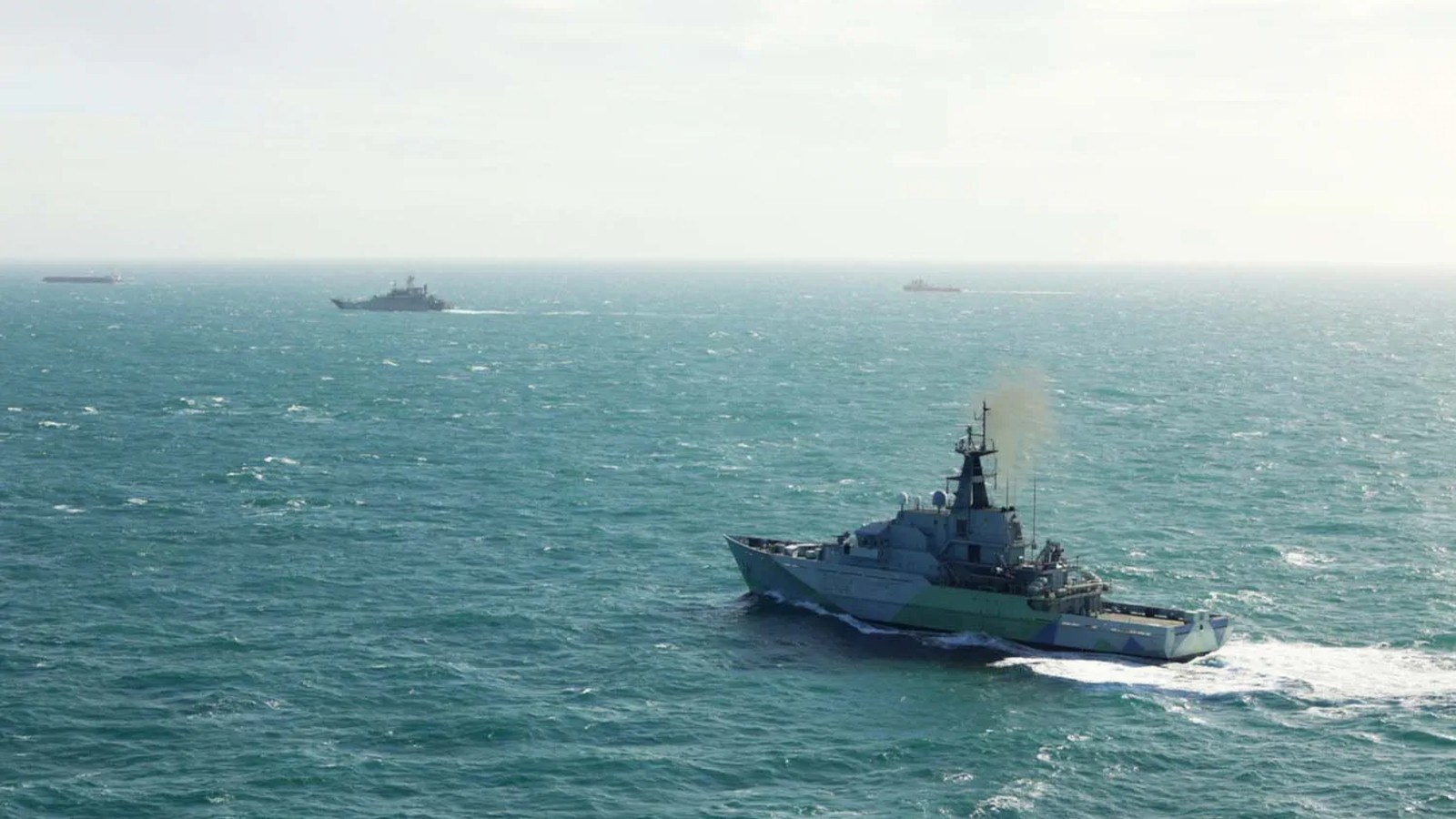
A Russian spy ship, Viktor Leonov, was caught observing NATO warships off the coast of the UK during a large-scale training exercise. The Vishnya-class vessel monitored allied ships participating in Exercise Strike Warrior in the Outer Hebrides. This naval drill included eight warships, 19 aircraft, and over 2,000 personnel from six nations.
In response, the Royal Navy deployed warships and helicopters to intercept the intelligence-gathering vessel, Viktor Leonov, and two Russian frigates between the end of September and early October. The urgent operation, named Operation Iceblast, involved Wildcat and Merlin helicopters dispatched from Royal Naval Air Station Culdrose in Cornwall to Glasgow Prestwick Airport in Scotland.
Captain James Hall, commanding officer of RNAS Culdrose, stated, “I am immensely proud of the efforts of our people, who have once again demonstrated that the UK is prepared to respond to immediate operational requirements.” Hall emphasized the significance of Operation Iceblast in testing the rapid deployment capabilities of the Merlin Helicopter Force.
The Merlins, equipped with advanced sensors, tracked the Viktor Leonov from September 29 to October 8. Separately, HMS Tyne and HMS Dauntless were tasked with monitoring the Russian warship RFN Neustrashimy between October 1-14. HMS Tyne eventually transferred its duties to HMS Dauntless, which then intercepted RFN Aleksandr Shabalin from October 11-14. Both Russian vessels were escorting sanctioned cargo ships through the English Channel.
Lieutenant Commander Sam Fields of HMS Tyne remarked, “Operating from the North East to the English Channel in quick succession, HMS Tyne’s recent activations demonstrate the flexibility and enduring utility of our patrol ships.” Commander Neil Skinner of HMS Dauntless highlighted the importance of the Royal Navy’s monitoring activities, noting they contribute to a comprehensive understanding of the maritime environment.
In June 2026, Britain intercepted Russia’s shadow fleet vessel for the first time. This fleet of over 700 ships carries around 75% of Russia’s sanctioned oil, supporting Russia’s conflict with Ukraine, as per the Ministry of Defence. The UK has sanctioned more than 600 vessels to date.
Additionally, the UK Treasury chief, John Healey, announced a £10 billion ($13.4 billion) support package for Ukraine in the recent Autumn Budget. This includes £500 million in military aid to bolster Ukraine’s air defenses. Overall, the UK will allocate £4.5 billion for Ukraine’s military support this year, marking its largest contribution since the conflict began in February 2022.