
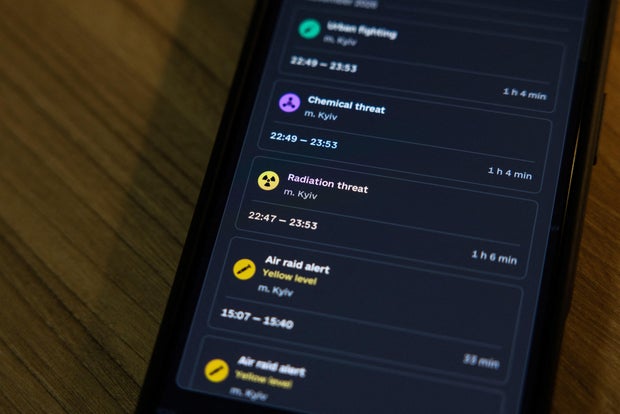
In Kyiv, both Ukrainian and Russian emergency alert applications were hacked on the same night. These apps are designed to warn civilians about incoming military threats, such as missiles and drones. However, on Sunday night, they sent out false alarms of radiation, chemical attacks, and nuclear strikes.
At 10:47 p.m. local time, the Ukrainian app named Air Alert began issuing fake warnings. This app, created by Ajax Systems and Stfalcon with help from Ukraine’s Ministry of Digital Transformation, is crucial for Ukrainians in deciding whether to seek shelter during Russian assaults. Social media platforms, like Telegram, are also relied upon for real-time updates from Ukraine’s Air Force and security analysts.
Within ten minutes, the Ukrainian Air Force confirmed that these alerts were not true. They communicated across multiple platforms, reassuring the public that there was no radiation threat. Their message on Telegram urged citizens to stay calm and continue following official updates.
“The Air Alert app appears to have been subjected to hostile interference. There is no radiation threat!”
Reports indicated that many residents in Kyiv realized the notifications were false after consulting Telegram channels.
A few hours later, at 2:45 a.m. in Moscow, another hack occurred, this time targeting Russia’s Emergencies Ministry app. Fake alerts spread across 33 regions, warning of impending “nuclear warheads” and advising residents to prepare for three weeks in shelters. Russian media, under strict government control, reported these fraudulent messages, which prompted the ministry to cut off and contain the affected services quickly.
The developers behind Ukraine’s Air Alert app cited “unauthorized interference” as the reason for temporarily disabling both push notifications and the app itself.
Yurii Ihnat, representing the Ukrainian Air Force, stated the hack had no effect on Ukraine’s military operations. He clarified that the Air Alert app does not connect with the military command systems.
The hacks coincided with the conclusion of a temporary ceasefire near Oleshky, a city in southern Ukraine under Russian occupation since 2022. This ceasefire, credited to efforts from U.S. first lady Melania Trump and Pope Leo, allowed the delivery of humanitarian aid and enabled some civilians to leave. Dmytro Lubinets, Ukraine’s human rights commissioner, confirmed that both parties respected the truce and are in talks for further aid measures.