
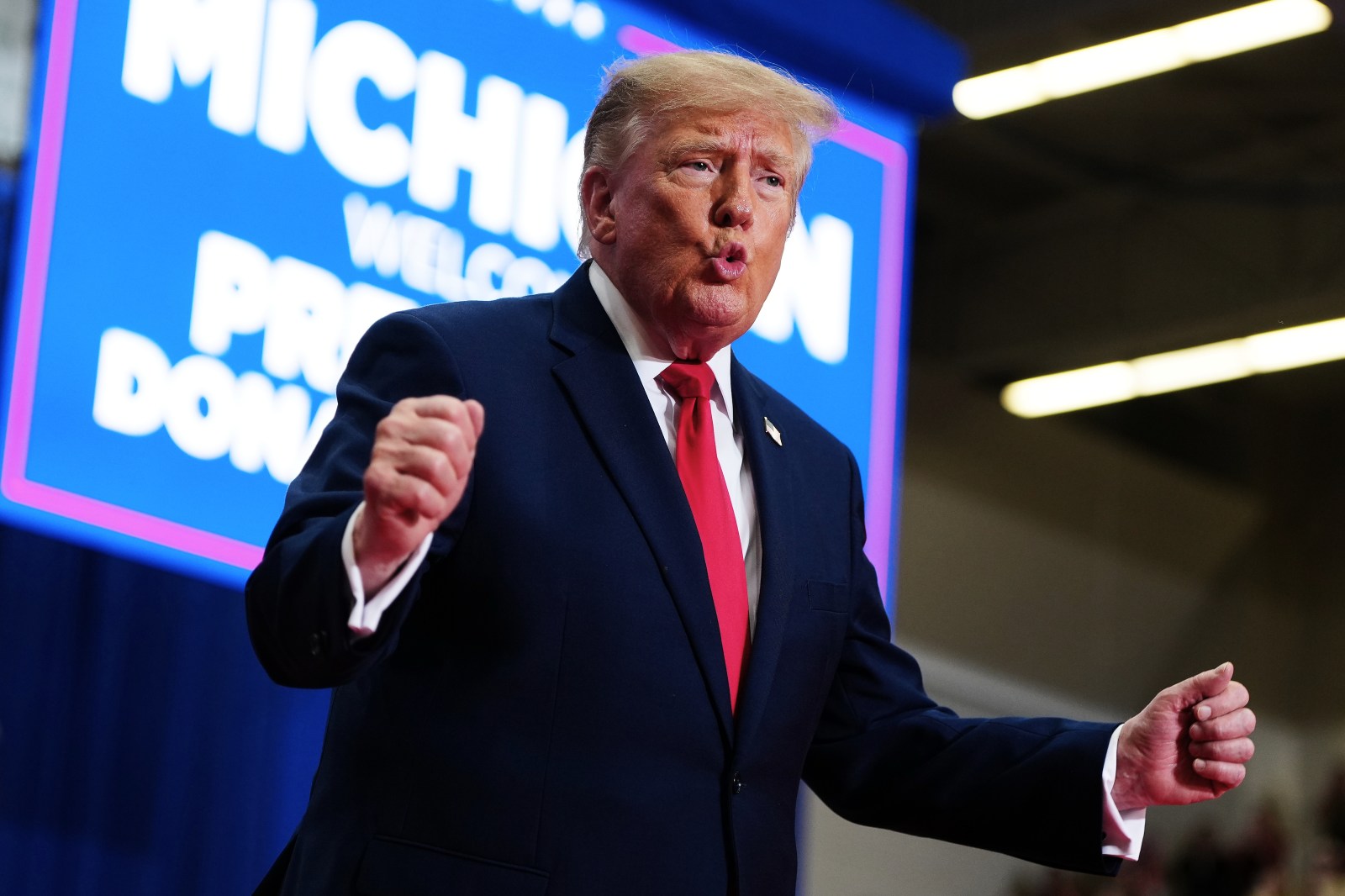
President Donald Trump has announced a $1 million reward for valid reports of voter fraud leading to arrest and conviction. This initiative is part of his ongoing election-integrity campaign just over a week before the 2026 midterms. The announcement was made on Truth Social on Monday.
Anybody reporting Voter Fraud in the past Elections, or the upcoming 2026 Midterm Election, will be paid $1,000,000 upon the arrest and conviction of those that created the Fraud!
Trump stated. He did not specify where the funds would come from, how information could be submitted, or who would assess the validity of tips. The White House provided no additional details when asked by Newsweek and referred to Trump’s Truth Social post. The Justice Department also deferred to the White House on inquiries regarding administration or funding of the reward.
This development arrives eight days before Election Day as the Trump administration intensifies actions against alleged election fraud through prosecutions, investigations, and voter roll litigations. Recently, Trump and Vice President JD Vance announced a distinct $25 million program offering financial rewards for revealing fraud in federal programs.
Voter Fraud Crackdown Intensifies
The Justice Department revealed that 113 individuals in 20 states faced charges related to illegal voting and registration offenses within the prior seven weeks. Among the allegations were noncitizens voting in federal elections, false citizenship claims on registration forms, and individuals allegedly voting multiple times. These cases involve allegations, not proven guilt.
One of the administration’s most contentious issues involves California, where federal authorities claim several voters may not be U.S. citizens. The DOJ has sued California to withhold ballots from over 20,000 individuals deemed likely noncitizens until their citizenship status is confirmed. California officials dispute these claims, citing insufficient information from the government to verify the list.
Additionally, the administration has pursued states for detailed voter registration records. A federal judge recently denied the Justice Department’s request for Georgia’s unredacted voter list, marking its 26th court defeat in efforts to acquire detailed voter data from states. Appeals have been filed in several instances.
Trump has consistently alleged fraud in U.S. elections, advocating for stricter citizenship and identification checks. Election experts acknowledge rare noncitizen voting but assert that tighter verification is necessary for election integrity.
Financial Initiatives Ahead of Midterms
The $1 million reward is the latest in Trump’s chain of monetary incentives as midterm elections approach. Days earlier, Trump and Vance introduced the $25 million Fraud Whistleblower Incentive Program (WHIP) to motivate individuals to report suspected federal program fraud.
Trump claimed that whistleblowers could gain 1% of the fraud amount they exposed, suggesting substantial earnings potential. However, this contrasts with the Justice Department’s terms, stating awards between $10,000 and $30,000 for eligible tips leading to criminal charges in specific fraud categories. Trump has insisted on no limit on whistleblower compensation, proposing he would personally settle reward disputes. Nevertheless, the DOJ maintains awards at its own discretion.
During the midterms run-up, several cash-related announcements have emerged as Republicans aim to retain congressional control. Proposals include $90 checks to seniors for Medicare premiums, $500 Obamacare refunds, and $5,000 payments to each adult citizen if Republicans control Congress.
In a recent initiative, Trump declared an $8 billion one-time ‘fuel relief’ payment for farmers impacted by elevated input costs, such as diesel. These proposals address affordability concerns and living costs as key issues before the midterms.
Election Fraud Focus Before Midterms
This $1 million offer emphasizes Trump’s election integrity agenda during the final stretch of the midterms. The announcement did not cite specific fraud cases or accused entities in the 2026 races, nor did it clarify evidence criteria for award eligibility.
The White House and the Justice Department have furnished no supplementary information to Newsweek regarding funding sources, administration, or claim procedures for the promised reward. This figure underscores the emphasis Trump places on addressing election fraud as voters approach the 2026 midterms.
(Story prepared by Newsweek reporters using Martyn, Newsweek’s AI assistant.)