
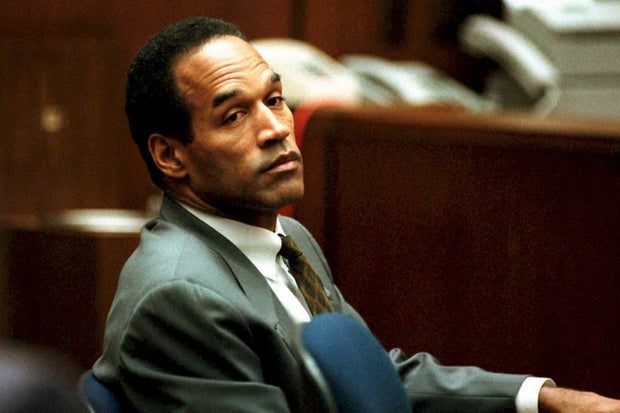
Over three decades after the O.J. Simpson murder trial, a fresh investigation presents a different perspective on the events of the night his ex-wife Nicole Brown Simpson and her friend Ronald Goldman were killed in 1994.
Although O.J. Simpson was acquitted in 1995, Los Angeles prosecutors later received new insights from a friend of Simpson about the murder weapon’s disposal. These revelations came to public attention through court documents acquired by the New York Times.
You would think that there could not possibly be anything new, and now, for the public, there certainly is,said legal analyst Rikki Klieman, who reported on the case for Court TV during the trial.
According to the court records, an assistant U.S. attorney wrote to a federal judge requesting a lenient sentence for Joey Ippolito, a prisoner charged with escape. Ippolito, a convicted drug trafficker turned federal informant, allegedly knew facts pertinent to the O.J. Simpson case, including the disposal of the never-found murder weapon.
Ippolito allegedly met Simpson through Al Cowlings, the driver in Simpson’s notorious Bronco chase. Although Ippolito passed away in 2006, his brother Sam shared with the Times that Joey left home on the night of the killings to assist a friend. Upon his return, he reportedly had blood on his hands and a bag with a heavy item, instructing Sam to dispose of it while he took a shower.
Rikki Klieman noted that the complications lie in differentiating between the original informant’s accounts and the additions made by his brother. Klieman expressed skepticism toward the brother’s reliability. Others involved in the case, including former prosecutor Marcia Clark, shared similar doubt, stating she had no knowledge of Ippolito’s involvement.
Ippolito’s brother Sam claimed certainty about Joey’s presence at the crime scene. Yet, after the Times rejected compensation for his story, Sam attempted to retract his statements. Notably, aspects of his account resonate with details from Simpson’s book “If I Did It,” which discusses a fictional scenario with an accomplice helping him get rid of the weapon.
The authorities, that is, police and the current district attorney of Los Angeles County, cannot simply discount it. They have got to look at it, or continue to look at it,Klieman stated.
Simpson was found liable in a civil trial in 1997, leading to a $33.5 million judgment for Brown’s and Goldman’s families. The Goldmans declined to comment on the Times’ investigation.
Malcolm LaVergne, executor of Simpson’s estate, noted that Brown, Goldman, and Simpson, who died in 2024, remain the primary sources. He emphasized the lack of firsthand accounts and questioned the value of creating further theories or allegations.