
The global helium shortage has intensified following Iranian strikes on Qatar’s gas infrastructure and the closure of the Strait of Hormuz. The conflict has disrupted helium supplies, essential for numerous industries with no resolution in sight.
Despite helium’s reputation for party balloons and altered voices, it plays a crucial role in technology and modern warfare. Cliff Cain, a helium exploration company president, highlights helium’s transportation difficulty due to the need for extreme cold—452 degrees below zero Fahrenheit. Once leaked, helium is irretrievable. Cain cautions about the vulnerability of the helium supply chain, reliant on few locations: Algeria, Poland, Russia, Qatar, and the United States, chiefly from the latter two.
Helium issues stem from the Strait of Hormuz’s closure and Iranian strikes on Qatar’s Ras Laffan facility, the largest natural gas and helium production site globally. Qatar reports a minimum three-year recovery period for Ras Laffan. US helium exports surged 70% since the conflict began, indicating an increased demand despite a Wyoming facility being the primary source in the country.
Rich Brooke, a former executive at helium supplier Air Liquide, states helium spot prices tripled post-war initiation, stressing the uncertainty on how long the U.S. can meet rising demands.
Helium’s importance extends to defense and scientific research. The Pentagon urges defense contractors to amplify production amid ongoing war, as helium is pivotal in weaponry and electronics production, according to Cain.
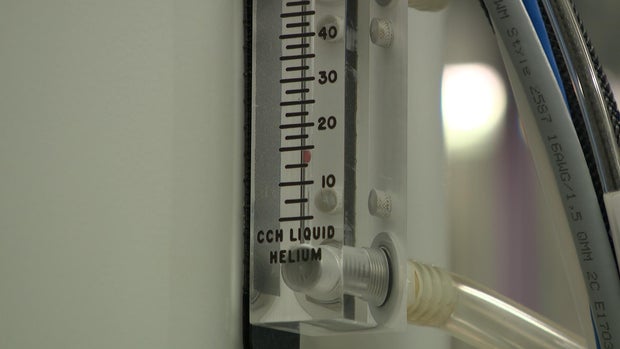
Scientific endeavors also rely on helium. At the University of Chicago, Joe Sachleben’s lab employs helium in magnetic resonance machines for critical health research, including breast cancer and Alzheimer’s treatments.
Electronics like semiconductors heavily use helium; Polar Semiconductors, near Minneapolis, integrates helium in numerous production steps. This need comes as semiconductor demand grows due to AI data centers and electrification.
To manage supplies, Polar hedges helium through three suppliers, yet experiences rationing effects. Sachleben’s lab faces similar allocation challenges, emphasizing difficult decisions on equipment prioritization due to reduced helium access. Alternate suppliers offer uncertain deliveries, exacerbating the supply issue with Iran’s conflict ongoing.
The resolution of the helium crisis will remain challenging without an easing of geopolitical tensions, leaving scientists and industries grappling with uncertain prospects.