
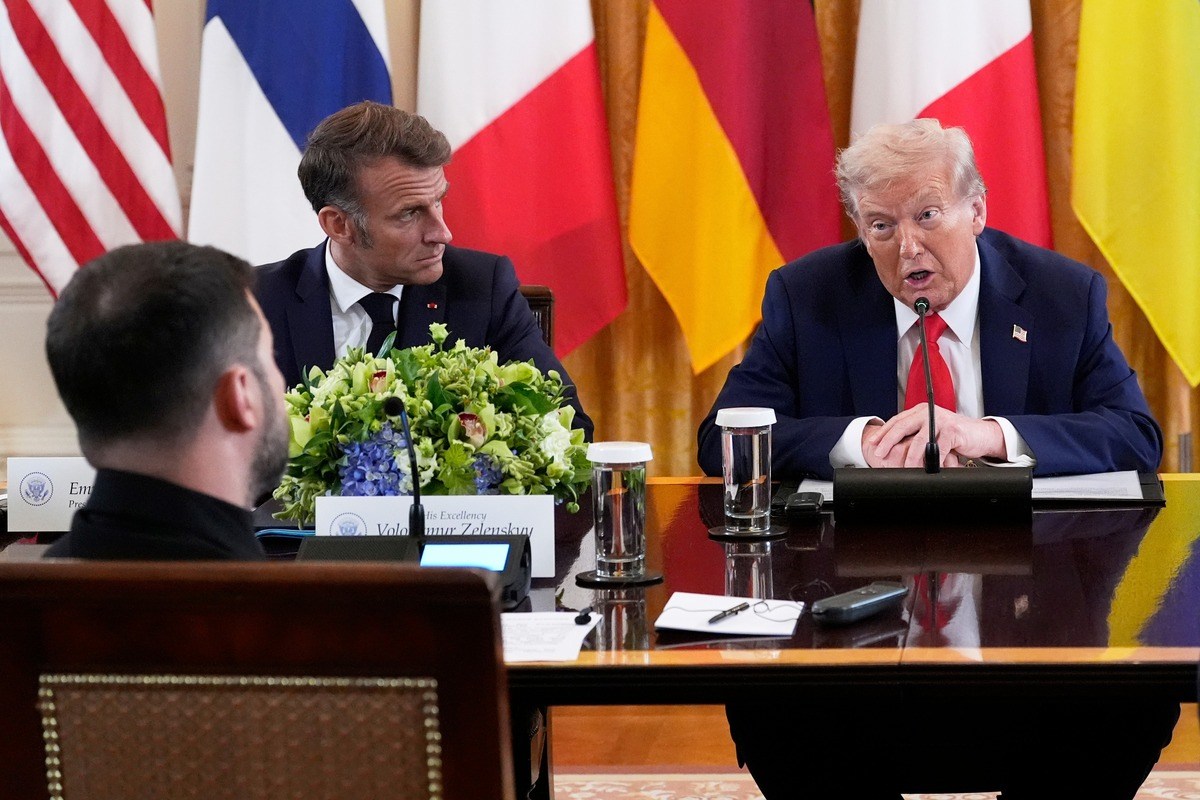
President Donald Trump suggested the U.S. might consider withdrawing from Europe, citing immigrants, religious extremists, and left-wing groups for recent riots in several French cities. His remarks prompted questions about future relations with traditional allies. The White House was contacted for clarification, but no response has been received.
Central Paris and other French cities imposed curfews as protests erupted over high living costs. These protests escalated into violence, with stores looted and buildings set on fire. In Limoges, the town hall suffered a partial roof collapse due to fire. French authorities arrested over 2,000 individuals, as President Emmanuel Macron called for calm.
“A once-great nation that is being conquered, looted, and burned to the ground by migrants, jihadists, and Communists who hate Christianity, and Western Civilization,” Trump expressed on his Truth Social account.
Trump criticized left-wing politicians, accusing them of importing migrants incompatible with Western values, attributing current disorder to these policies. He linked France’s unrest to upcoming U.S. midterm elections, mentioning challenges Republicans face such as rising fuel costs, low approval ratings, and the Iran war.
French officials blamed far-left groups for exacerbating protests, which initially began as student demonstrations against education decline and rising costs. Macron highlighted hard-left and criminal elements joining the protests.
Trump urged Europe to “close borders” and remove those who dislike their host nations. He emphasized U.S. support for Europe but warned of potential withdrawal if Europe fails to address its challenges.
These statements coincide with the White House’s push for Europe to assume more responsibility for its security, challenging longstanding transatlantic alliance assumptions. Trump advocated reducing U.S. troop presence in Europe, encouraging European defense self-reliance to refocus American military priorities on China and the Indo-Pacific.
Pentagon reviews on military deployment in Europe raised concerns in countries near Russia, fearing vulnerability to attacks. The U.S. administration linked immigration and economic stagnation to Europe’s struggles.
Beyond France’s current unrest, European nations pledged increased defense spending in light of security threats. Despite these commitments, aging populations and social welfare costs challenge economic growth and defense funding.
Trump’s language aligns with a national security strategy released in November 2025, labeling Europe at risk of “civilizational erasure” due to migration policies. This document received criticism from European leaders but resonated among those concerned about migration impacts.
The strategy affirmed U.S. support for like-minded political entities in Europe and acknowledged patriotic European parties’ influence. Centrist parties, facing rising right-wing opposition, have tightened immigration policies after increased migration from conflict regions in the Middle East and Africa.
Vice President JD Vance criticized European immigration policies and met with Alice Weidel of Germany’s far-right Alternative für Deutschland. Vance attributed France’s riots to assimilation failures encouraged by Western liberals.
Trump officials endorsed Marine Le Pen, leader of France’s National Rally, aligning with sentiments that riots stem from immigration. Though a complete severing of U.S.-European ties appears unlikely, Trump’s remarks indicate a shift: Europe is less seen as a dependent ally, more as an independent partner.