
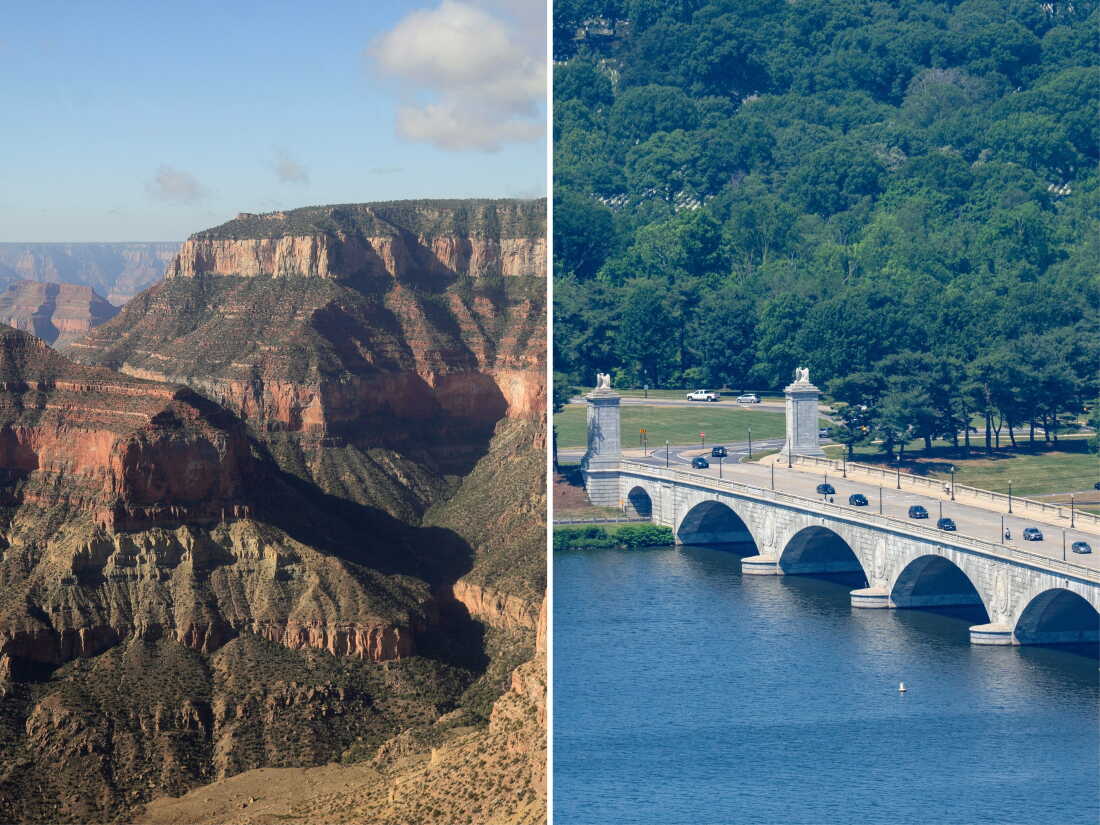
Historic preservation advocates warn that significant historic sites like the Grand Canyon and Arlington Memorial Bridge are at risk due to proposed changes in protection laws. President Trump’s proposed construction plans, including a 250-foot arch, highlight these potential losses.
Sixty years ago, President Lyndon B. Johnson signed the National Historic Preservation Act (NHPA), alongside several conservation bills, stating it was to return a part of the country to the public. Today, voices in historic preservation claim the government is retracting public power, distancing from what was initially a collaborative public-private partnership.
Preservation has worked best with partnership,
Brent Leggs, CEO of the National Trust for Historic Preservation, described a shift in government responsibility. The NHPA initially established a mechanism to identify and protect significant historic sites, including over 100,000 landmarks now recognized on the National Register of Historic Places. Section 106 review mandates federal consultation with states, tribes, and stakeholders before projects potentially affecting these sites begin.
Section 106 is seen as integral to NHPA. Elihu Rubin from Yale explains its role in mitigating impacts of federal projects on historic resources rather than halting development entirely. Despite success stories from saved buildings and prevented developments, Section 106 faces threats from recent political actions.
A federal council, filled with appointees from President Trump, voted to weaken Section 106 regulations. Meanwhile, proposed bipartisan permitting reform in the Senate threatens to narrow the review process, expediting infrastructure projects but risking historic site protection. Greg Werkheiser from Cultural Heritage Partners warns of drastic reinterpretations of the NHPA’s intent, which could undermine protections for countless historical sites.
A coalition, named Section 106 Strong, aims to counter these threats, comprising 1,000 organizations, including tribal, environmental, and civil rights groups, representing over 9 million Americans. Werkheiser notes an unusually quick movement to combat these changes, driven by frustration over historical sites being influenced or destroyed by political maneuvering.
The NHPA emerged from post-Great Depression efforts to survey historic buildings, meant to counteract rapid urbanization and construction, which threatened many landmarks. The law was a response to public backlash against post-war urban renewal projects, which often displaced communities.
Since 1966, the NHPA enforced a framework for state offices to administer national preservation programs. It included every state and later embraced Native American tribes and Native Hawaiian organizations in 1992 as part of a major amendment.
Valerie Grussing from NATHPO highlights the threat of proposed regulatory changes, potentially reversing decades of historic preservation advances, particularly affecting tribal communities’ voices in preservation efforts.
Despite challenges, preservation experts assert Section 106 doesn’t significantly slow federal projects. National Trust statistics show most reviews conclude rapidly without adverse impacts on historic sites. Yet, recent political climates reveal inherent tensions between development goals and preservation.
Chris Cody from the National Trust for Historic Preservation points out widespread challenges in answering assistance requests and opposing controversial developments, including those by Trump, like his White House ballroom construction.
Efforts to bolster preservation laws led to launching a defense fund seeking $10 million initially to protect targeted sites and laws. Cody emphasizes the existential risk preservation efforts nationwide currently face.
Preservation Advocates Fight Amidst Rising Threats
The Advisory Council on Historic Preservation, created under the NHPA, now intends to limit criteria for historic designation, excluding significant features like the Grand Canyon. They also plan to make public comments optional and reduce tribal consultation requirements.
This regulatory change is ongoing, with eventual public comment opportunities ahead. The council’s next meeting is set for Nov. 10. Concurrently, a Senate bill proposes reforming environmental reviews, potentially impacting Section 106, limiting public involvement, and narrowing legal options if disputes arise.
NATHPO leaders express concern over tribal sovereignty restrictions, noting disappointment with some Senate allies joining on statutory changes countering preservation interests.
The Senate returns on Nov. 9 with plans to consider this bill. Werkheiser voices opposition to enshrining these changes in law due to implications on future preservation work.
Instead, advocates urge new dialogue, better approaches considering diverse perspectives, and safeguarding historic places sustainably.
The National Trust for Historic Preservation recently held a summit discussing defense measures, emphasizing the importance of responding swiftly against potential threats to historic places and laws.
Controversies and Challenges Ahead
Critics argue the Senate bill introduces ambiguity to the Section 106 process. It lacks clear definitions, risking entanglement in legal disputes. Grussing and Werkheiser describe lobbying meetings where Senate staff acknowledged these challenges, foreseeing court intervention to resolve definition discrepancies.
Despite hoped efficiency, Werkheiser predicts challenges due to reduced public and expert engagement, prompting potential controversies. He calls for broad participation in safeguarding preservation laws.
Regardless of your political stance, Werkheiser insists, You shouldn’t have to fight your government to remember your past.