
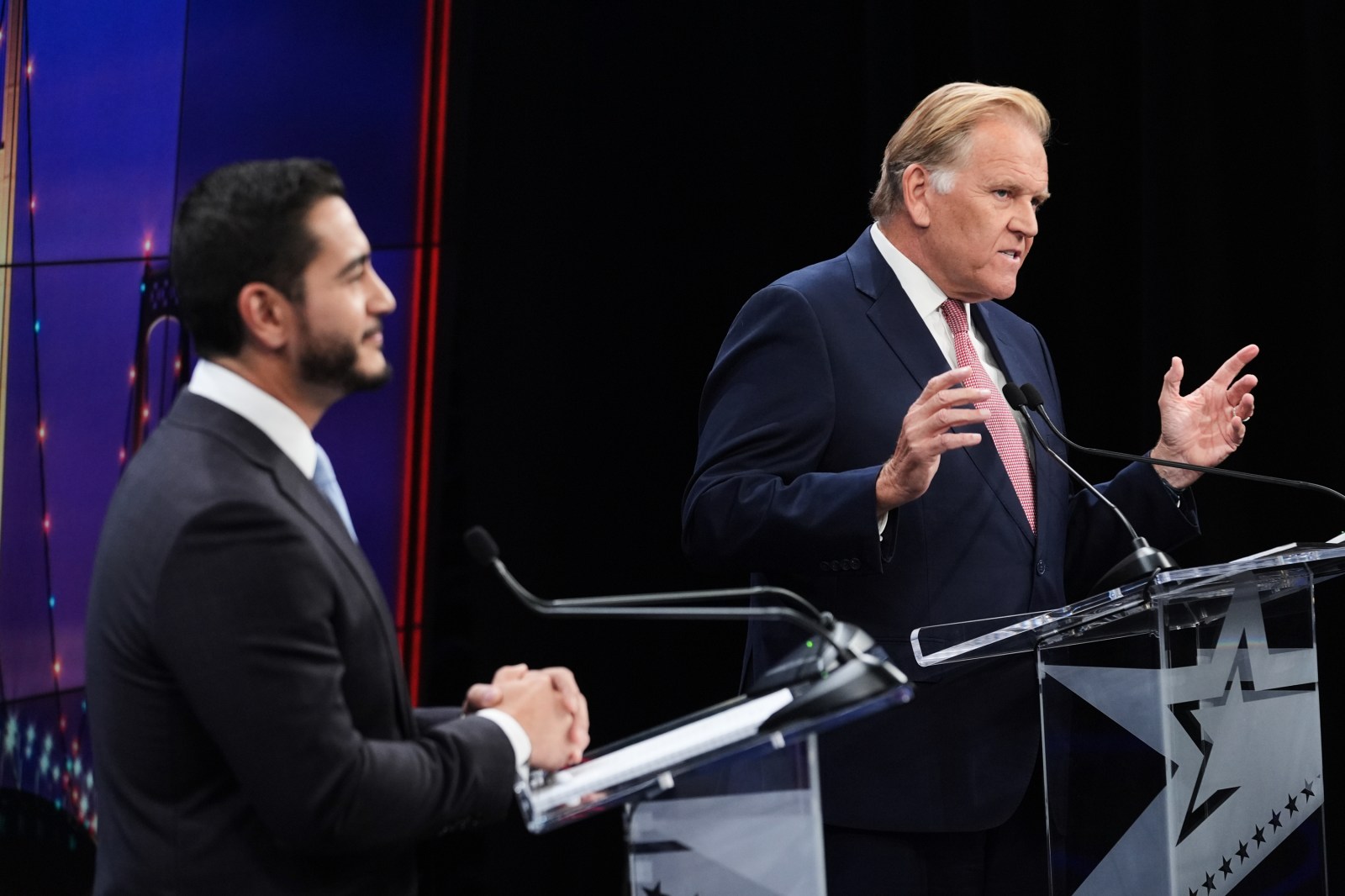
Michigan’s Senate race intensified Thursday as Republican Mike Rogers and Democrat Abdul El-Sayed clashed in their first debate. The candidates frequently interrupted each other, exchanging personal attacks over healthcare, tariffs, immigration, Israel, and the conflict with Iran.
The hourlong debate in Grand Rapids, hosted by NewsNation and WOOD-TV, saw moderator Rick Albin intervene several times. Notably, the candidates argued even during a commercial break, prompting Albin to comment on their persistent disagreements.
The debate offered voters a distinct view of two candidates with opposing visions. Rogers depicted El-Sayed as a progressive whose policies he deemed costly and extreme, while El-Sayed linked Rogers to President Trump, corporate interests, and foreign controversies.
Rogers warned against El-Sayed’s Medicare for All stance, arguing voters “cannot afford Abdul.” El-Sayed countered by accusing Rogers of political opportunism and neglecting economic issues impacting Michigan families. One exchange focused on Rogers’ criticism of Trump’s trade war with Canada, highlighting his alleged reversal.
Healthcare sparked further contention, with Rogers attacking El-Sayed’s Medicare for All support and claiming it involved “death panels.” El-Sayed argued his plan would allow families to keep private insurance and ensure comprehensive health coverage.
The debate turned personal, as Rogers questioned El-Sayed’s use of “doctor,” while El-Sayed criticized Rogers’ wealth and investments. A tense moment arose over surveillance technology when El-Sayed confronted Rogers about terrorism watchlists.
Despite ongoing disputes, the candidates shook hands before leaving the stage. The debate reflected the broader tensions in the Michigan Senate race, a key contest in the 2026 midterms.
Polling data shows a tight race, with recent surveys giving El-Sayed a slight edge. The latest Quantus Insights poll placed him ahead by 1 point, while other polls showed similar margins.
The debate occurred amid escalating campaign exchanges, highlighting a competitive national spotlight on the Michigan race. Rogers, previously defeated narrowly in 2024, seeks Republican support in a state the party hasn’t won since 1994.
El-Sayed emerged from a competitive Democratic primary, working to unify the party and appeal to independents. He enjoys support from national Democrats, including former President Obama.
As the race continues, both candidates navigate unique challenges. Rogers aims to balance moderate and Republican support, whereas El-Sayed seeks to prove a progressive can succeed in a swing state.
The Senate seat, vacated by Democrat Gary Peters, represents a major opportunity for Republicans and a crucial defense for Democrats.