
For over a year, Austin Davis’ phone has been inundated with cries for help from within the Phoenix metropolitan area. A school employee sought assistance for a homeless family but found no shelter space. She wondered if Davis could pay for a hotel room. A mother with five children, living in a storage unit, reached out to a homeless services group, only to be directed to Davis. Another mother, panhandling with her children, was given his number by passersby, hoping he could offer shelter. She messaged him, “I feel like the worst mother in the world.”
Every individual contacting Davis, a 26-year-old poet and advocate for the homeless, reports that they attempted to reach help via 211, the standard hotline for aid. They learned they might wait months for shelter or housing. Davis’ phone has become an unofficial emergency line for those in need. Caseworkers, teachers, social workers, police, and hospital staff often contact him to support those without homes. Even the official channels, such as 211 and the Family Housing Hub, sometimes direct people to Davis.
Davis’s work highlights the failures of the care system for homeless families in Maricopa County.
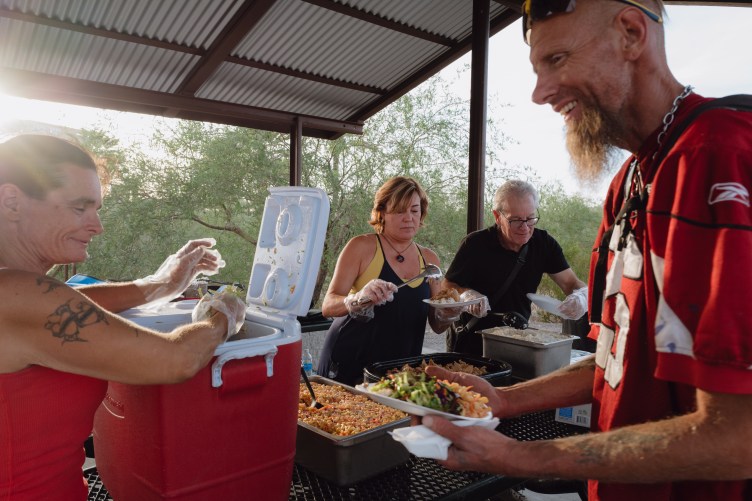
Official channels often leave families without assistance, leaving them feeling hopeless. His nonprofit, AZ Hugs, regularly distributes food at “The Hill” in Phoenix. In January, I visited “The Hill” to meet the families Davis supports. The scene was a mix of desperation and hope. Families who had faced eviction, lost jobs, or fled domestic violence pleaded for his help. As Davis listened, he interacted with their children, maintaining his energy with a drink in hand.
Despite its benefits, his help underscores a critical question: why is Davis, in a county of almost 5 million, the go-to emergency resource for these families? Why do government agencies and well-funded nonprofits, responsible for aiding homeless families, refer people to him? Davis, operating outside traditional channels, runs meal services at a suburban Phoenix park. This has led to legal challenges, with Tempe officials citing him 35 times for trespassing and permits violations. In 2024, he settled by pleading guilty to one violation, resulting in jail time.
In 2025, Davis led a lawsuit against Tempe, claiming violations of free speech. After the city revised its permit ordinance, he dropped the lawsuit. Recently, Davis focused on the “family homelessness crisis,” raising money online for hotel rooms for families. He acknowledges he can’t help everyone seeking aid and argues for a larger effort involving nonprofits and local and state officials. Numbers from Maricopa County show 2,103 people in homeless families, the highest since 2015. These figures likely undercount the issue, as counts occur on a single night, potentially missing those avoiding detection.
Approximately 200 families waited for shelter in late September in the county. This number excludes those unable to register, disqualified as non-homeless, or discouraged by unhelpful 211 interactions. Solari, managing the statewide 211 line, states that eligibility for shelter waitlisting falls to the Family Housing Hub, run by UMOM.
I interviewed over 30 families seeking shelter. Parents feared the impact of their situation on children. Research indicates homelessness disrupts children’s brain development, causing lasting changes. Davis’ phone remains a sought-after resource, bombarded by distress signals from struggling families.
One parent, Candice Ortiz, sought housing since spring, watching her son’s health decline amid prolonged exposure to the heat. Davis helped as she faced roadblocks in securing housing. After multiple unsuccessful calls to 211, feeling like she could have gathered similar information online, Ortiz was told that sleeping in her car didn’t qualify her as homeless. After using her last funds on a ride to a shelter, she learned she wasn’t “in the system.” UMOM’s policy is to not comment on individual cases, but in August, Ortiz connected with the Phoenix Rescue Mission, which later ran out of funds to assist her.
UMOM, which received over $7 million in government grants last year, dedicated units and tents to families during a severe heatwave, aiding about 300 households. In April, Davis pushed for a broader response, launching a petition urging Arizona Governor Katie Hobbs to declare a state of emergency addressing family homelessness. The petition had over 5,000 signatures. In June, a volunteer handed the governor a letter detailing the petition’s goals and urging immediate action.
According to Davis, nonprofit leaders and officials have not engaged with him on the issue. He expressed frustration over their lack of response, seeing it as a disservice to families in crisis. Governor Hobbs’ office stated that emergency declarations apply to natural disasters and might not suit homelessness issues. However, Governor Hobbs is aware of these challenges, investing $245 million in statewide efforts on housing and shelter.
Davis continues addressing family homelessness, often utilizing social media fundraising for immediate aid. His organization began hosting a temporary shelter at the First United Methodist Church of Mesa for at least six families. On a recent night, families arrived with belongings in packed vehicles, receiving a meal and shelter for the night. Despite its urgency, Davis insists these are temporary fixes for a larger problem.