
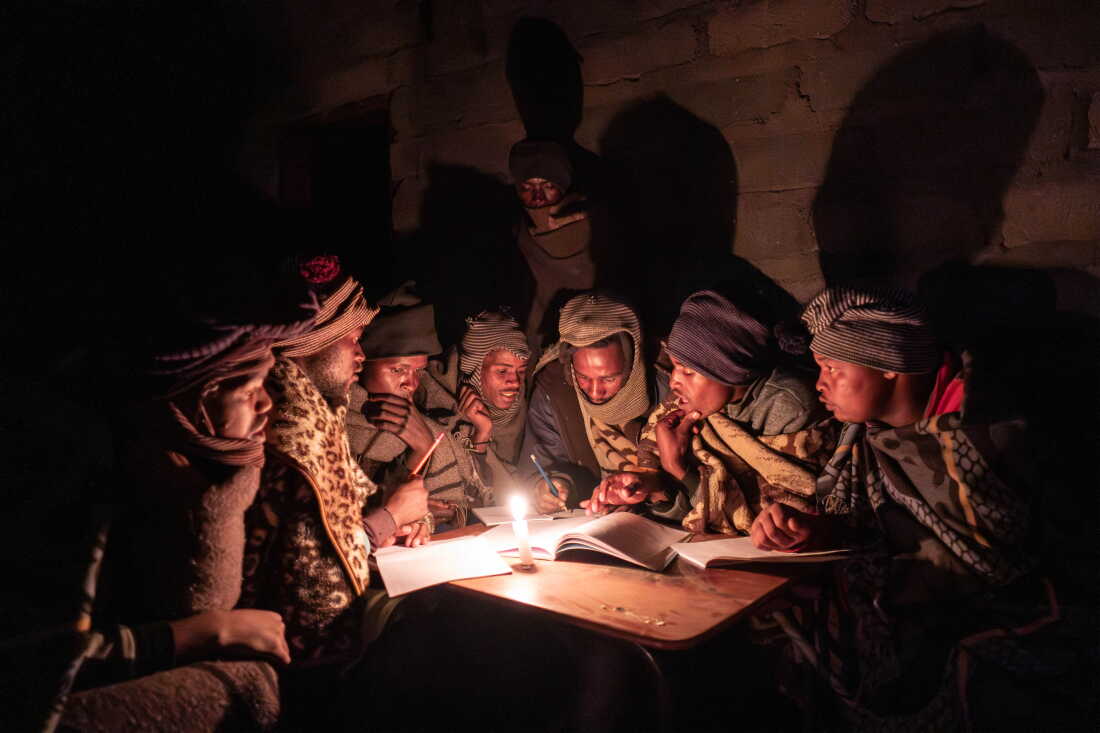
In the mountains of central Lesotho, two young shepherds, Kabelo Mohai and Lepeli Maapesa, make their journey to the Good Shepherd School for night classes, their wool blankets shielding them from the cold. Climbing down rocky paths nearly 8,000 feet above sea level, they aim for Semonkong where over 40 herders convene each evening. Among them, Mohai and Lepeli represent a significant portion of Lesotho’s young male population engaged in herding, a critical aspect of the nation’s economy.
Lesotho’s agricultural exports rely heavily on wool and mohair, commodities that support much of the rural population. Tradition and economic necessity lead countless boys to shepherding, often at the expense of formal education. The World Bank’s analysis highlights that nearly half of the country’s young males are involved in herding, creating barriers to traditional schooling.
Mohai, 20, started working with animals at nine, completing only primary school. Similarly, Lepeli began his herding duties early, sharing Mohai’s ambition for education despite the demands of shepherding work.
“I started working with animals when I was 9. I only finished primary school.” – Kabelo Mohai
Night schools in Lesotho, mainly driven by volunteers, aim to deliver basic education like reading, writing, and arithmetic. Despite financial challenges, these efforts have created opportunities for shepherds to hope for another future beyond the hills.
At the heart of Mohai’s story is resilience. Living high up in a cattle post, he built a shelter from rocks and branches for his 155 sheep and goats, where he shares the company of his dog, Balireng. Despite the challenges of mountain life, the pursuit of education motivates him. Every night, he commutes to attend Grade 7 classes.
This night schooling initiative started in 2003, led by Sister Rosemary Mokebe, who recalls a need for literacy among the herders of Semonkong. Their nightly journey symbolizes a break from solitary existence, bringing social connections alongside education.
Lesotho’s night schools, estimated at 155 nationwide, depend heavily on government support, volunteer work, and community initiatives. While bureaucratic delays challenge these institutions, their continued operation reflects dedication to social change. Sister Mokebe’s classroom offers more than education; it’s a beacon of community integration and support.
The story of Motlatsi Monoana, attending school for the first time in his mid-40s, underscores the challenges of missed education. Facing unethical practices due to illiteracy, he hopes for a future beyond herding.
Describing his first schooling experience, Monoana shares, “My parents refused to send me because they needed someone to look after the animals.”
At the night school, Makha’s dedication to teaching mirrors the inspiration from teaching her father to read. Her story portrays the drive for literacy among diverse students, including shepherds, farmers, and housewives, often overcoming financial and logistical hurdles.
These night schools do more than impart knowledge; they nurture essential social skills and community belonging. Shepherd life often leads to isolation, impacting interpersonal relations among young men. Education helps bridge these gaps, equipping learners with essential life skills.
Through night classes, communities like Semonkong find pathways to support health awareness and dream of futures beyond herd duties. Makha’s efforts, amidst challenging conditions, reflect the enduring spirit of Lesotho’s education volunteers.
Night by night, under the stars, teachers and students navigate paths toward dreams of betterment and connection.