
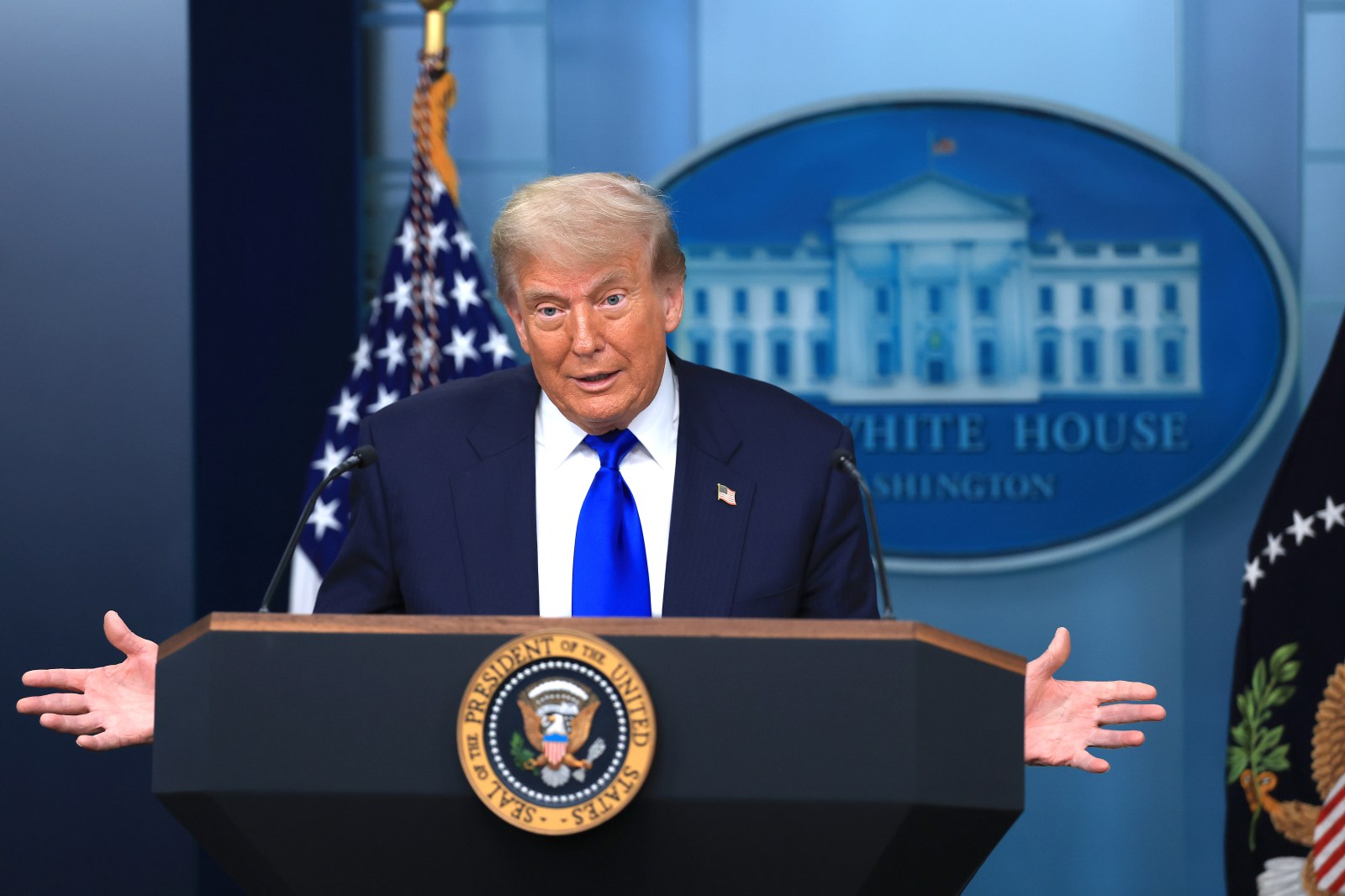
President Donald Trump accused the U.S. Supreme Court on Saturday of making ‘faulty, political, and ridiculous decisions,’ alleging these rulings on tariffs and birthright citizenship have cost the United States ‘trillions of dollars.’ This criticism follows significant setbacks on core policies of his second term.
Trump expressed his views on Truth Social, challenging the court’s lack of ‘Courage to MAKE AMERICA GREAT AGAIN,’ and asserting that their decisions negatively impacted the U.S. economy and citizenship policies. ‘Over the last 6 months, with their faulty, political, and ridiculous decisions on TARIFFS and Birthright Citizenship, they have cost the United States of America Trillions of Dollars, and forever damaged the way people become Citizens of our great Country,’ Trump posted.
Newsweek attempted to contact the White House for a response on Saturday.
Why It Matters
Trump’s post addresses two significant legal defeats during his presidency. In February, the court decided the International Emergency Economic Powers Act did not authorize Trump to impose extensive global tariffs. This led to the policy’s reversal, with refunds issued to importers. The administration then pursued tariffs under Section 301 of the Trade Act of 1974, imposing tariffs between 10 to 12.5 percent on imports from 60 trading partners. These tariffs currently face legal challenges.
Documents from customs officials filed with the U.S. Court of International Trade, referenced by the Financial Times, indicate the Trump administration has refunded approximately $100 billion in tariffs to importers as of August. This equates to nearly 60 percent of the $166 billion paid in tariffs by businesses.
In June, the court reinforced a broad interpretation of birthright citizenship, rejecting Trump’s attempts to limit automatic citizenship for children born in the U.S. to parents unlawfully or temporarily present in the country. The decision upheld the Fourteenth Amendment’s Citizenship Clause.
Conservative Justice Clarence Thomas dissented, expressing doubts about the interpretation’s enduring validity.
These decisions originated from a conservative-majority court, including three Trump appointees: Neil Gorsuch, Brett Kavanaugh, and Amy Coney Barrett.
Trump claimed that the rulings adversely affected the economy and immigration policy. ‘It has been a sad chapter in the life and times of America, but we will prevail!’ he stated.
The Birthright Citizenship Fight Continues
The administration explores other methods to limit birthright citizenship and counter ‘birth tourism.’ This month, a federal judge blocked a Trump administration order aimed at restricting birthright citizenship. The ruling clarified that the government cannot deny citizenship to children whom the Supreme Court classified as citizens at birth under the Fourteenth Amendment.
U.S. District Judge Deborah Boardman, appointed by President Joe Biden, declared: ‘The Supreme Court has spoken: Children in the certified class are ‘citizens at birth.’ … The President must follow it.’
The Supreme Court’s June ruling, authored by Chief Justice John Roberts, stated birthright citizenship applies to ‘every free-born person in this land,’ with the promise upheld.
The administration has issued directives to prevent foreign nationals from entering the U.S. primarily to secure citizenship for their children, a focus heightened after the Supreme Court ruling.
Trump and allies continue to push the issue following the court’s June decision. Recently, new executive orders target birth tourism and other areas outside traditional protections, while conservative activists consider ways to persist through litigation, legislation, and judicial appointments, including strategies to influence future judicial choices.
What Happens Next
Trump’s comments don’t signal new legal actions or policy strategies, yet reflect ongoing dissatisfaction with rulings constraining key initiatives. Although exploring alternate legal avenues for tariffs and immigration, the court’s decisions remain significant barriers to Trump’s agenda.
The White House hasn’t immediately shared whether Trump plans further legislative or legal responses to these rulings.
For further information, contact Newsweek editors Steve Mollman and Anthony Murray.