
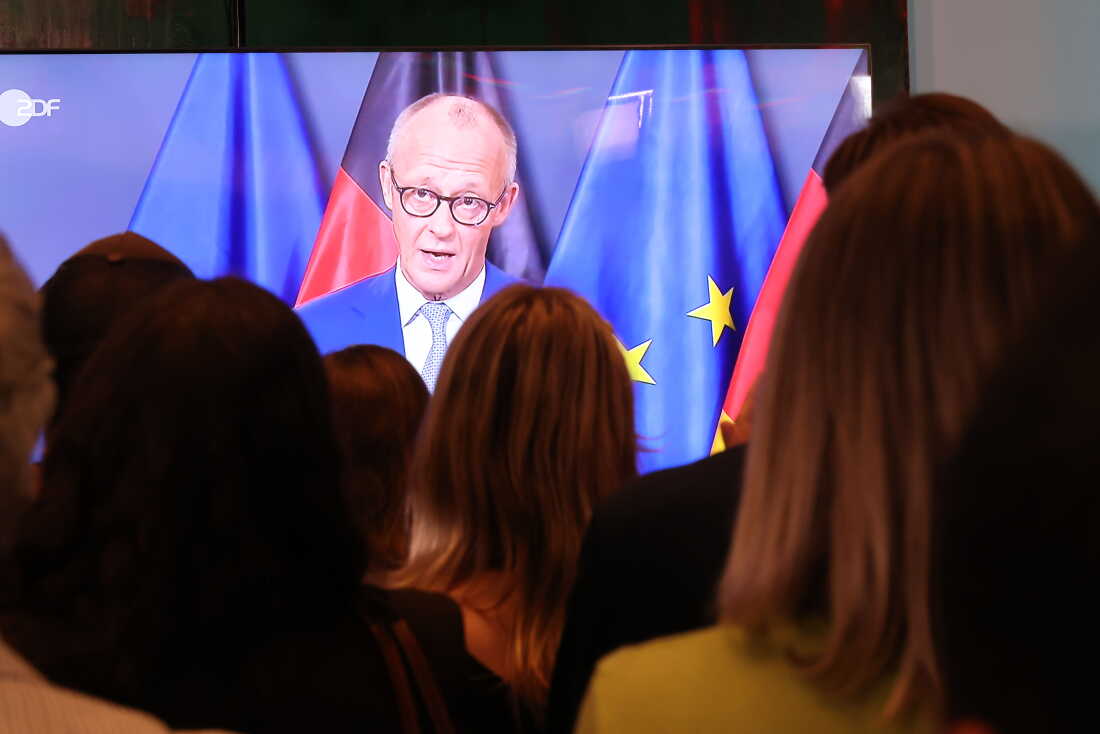
Friedrich Merz, the leader of Germany’s Christian Democratic Union (CDU), made an unexpected appearance in Berlin following the closure of polling stations during the state elections in Mecklenburg-Western Pomerania on September 20, 2026. These elections brought a major setback for the CDU, marking its worst results since World War II.
In these elections, held in Mecklenburg-Western Pomerania and Berlin, the far-right Alternative for Germany (AfD) increased its votes significantly. The AfD secured 38.2% in the rural northeastern state and 16.3% in Berlin. Meanwhile, in Berlin, the far-left Die Linke outperformed others with 25.7% of the vote, positioning it seven percentage points ahead of the CDU.
Unable to surpass the 5% threshold, the CDU failed to enter parliament in Mecklenburg-Western Pomerania, having received only 4.9% of the vote. Despite these losses, Merz dismissed speculation about resigning, even after enduring a severe defeat in Saxony-Anhalt just two weeks earlier.
Normally, the German federal chancellor does not comment immediately on state election results, particularly from smaller electorates. However, these significant losses cast a spotlight on Merz’s leadership, prompting him to acknowledge the results as a “disaster” for the political center. He pledged to advance his federal agenda focused on tax and welfare reforms, which he described as essential to countering authoritarian threats.
Alice Weidel, the federal leader of the AfD, remarked to public broadcaster ARD that Chancellor Merz’s persistence benefits her party. She claimed that Merz is compromising the CDU’s position. In Mecklenburg-Western Pomerania, the AfD surpassed Merz’s coalition partner, the Social Democrats (SPD). However, the AfD remains unlikely to secure partners to form a government, allowing the SPD’s Manuela Schwesig, who garnered 35% of the vote, to remain governor.
In Berlin, the far-left Die Linke achieved its best results to date. Its leader, Elif Eralp, expressed a commitment to making the city affordable, echoing initiatives by New York’s Mayor Zohran Mamdani. She declared that Berlin’s citizens reject the AfD’s ideology, asserting that “love and justice have triumphed over hate.” Eralp plans to introduce a rent cap and target apartments owned by large real estate corporations, which could pose challenges during coalition talks.
Germany’s electoral system combines winner-take-all with proportional representation, often requiring parties to form coalitions. To assume the role of mayor, Eralp must partner with at least two other parties. At the federal level, Merz faces challenges in achieving consensus even with one coalition partner, as noted by Sudha David-Wilp of the German Marshall Fund. She suggested that Merz remains determined to hold his position, despite discussions of his possible replacement, knowing the difficulty of displacing a chancellor in Germany.
In the broader context of a fragmented political landscape, forming stable coalitions becomes increasingly complex, with parties often hindering each other’s policy goals. Meanwhile, the AfD stands ready to capitalize on these fractures come the next federal election.