
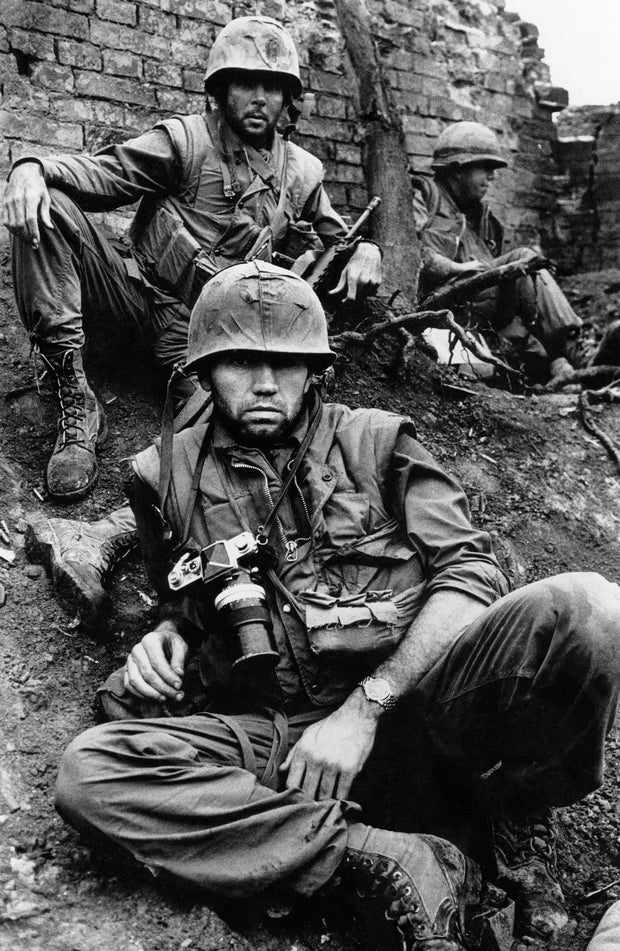
“I want my pictures to hurt you,” states Sir Don McCullin, a legendary British war photographer, as he approaches the release of what he declares will be his final book. For over five decades, McCullin documented wars across the globe, from Cyprus to Northern Ireland. Now 90, he is set to publish a compelling retrospective capturing the Vietnam conflict that defined his career and an entire generation: “Vietnam.”
Images from the Past
The book features thousands of images from McCullin’s assignments in Vietnam during the 1960s and early 1970s. Among these are some of his most iconic works alongside unseen photographs that reveal the lasting impact of the conflict. The images capture the pain of civilians caught in war and the deep fear and exhaustion of U.S. Marines.
Focusing on the Battle of Hue
The heart of the book focuses on the 1968 Battle of Hue, part of the Tet Offensive. McCullin shares memories of the ordeal. “It was amazing any of us survived,” he shares about the battle, where he unexpectedly found himself for 11 days.
The Power of a Single Image
One of McCullin’s most powerful photos, “Shell-shocked US Marine,” features prominently in the book. The photo depicts a motionless, unresponsive soldier. “Not once did his eyelashes move,” McCullin recalls.
Despite its fame, McCullin feels uneasy about the image’s popularity. “I hate this picture,” he admits, emphasizing that effective war photography should provoke discomfort rather than become iconic and accepted.
Between Observer and Participant
McCullin’s work often blurred lines between observer and participant. He recounts photographing and then rescuing a severely injured Marine during the fierce battle in Hue. This act of bravery underscores his commitment not to remain detached from the suffering he documented.
McCullin continues to be haunted by these experiences. “I live that battle every night,” he confesses, though he neither seeks nor expects sympathy. For him, the camera was never a tool for detachment.
The Legacy of “Vietnam”
As McCullin’s legendary career wraps, “Vietnam” serves as a historical account and personal farewell. The collection bears witness to the pain and challenges endured during wartime. It echoes McCullin’s belief that photography should disturb, not comfort.