
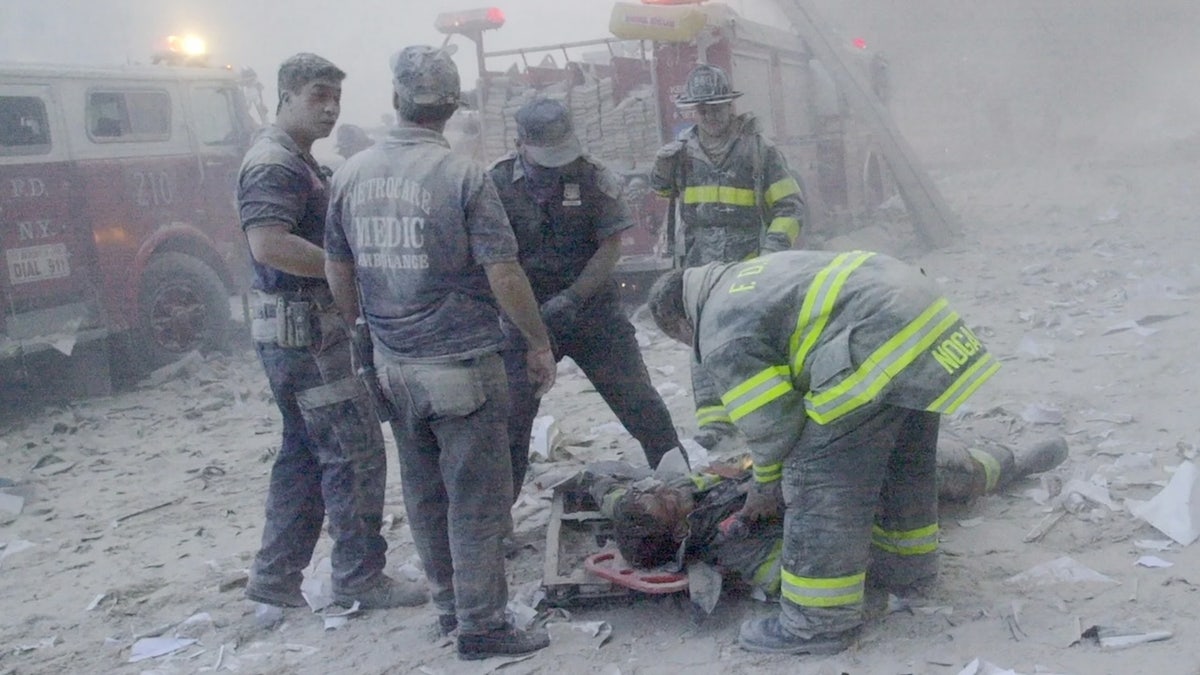
Survivors and responders of the September 11, 2001, attacks at Ground Zero continue to face serious health challenges due to the toxic exposure they experienced. The collapse of the World Trade Center towers released clouds of dust and debris, leading to contaminated air that many first responders and survivors were forced to breathe.
The World Trade Center Health Program reports that over 400,000 individuals were exposed to hazardous materials, physical injury risks, and high-stress situations in the aftermath of the attacks. As of March 2025, 8,215 participants of the Health Program have passed away, including 5,844 first responders, although the program doesn’t track if these deaths were directly 9/11-related.
A Responder’s Health Struggles
Mordechai Shedrowitzky, a volunteer EMT during the attacks, shared in a Fox News interview his personal health battle stemming from 9/11 exposure. Living in Brooklyn, Shedrowitzky went to Lower Manhattan to assist the response efforts. He recalls the eerie darkness and overwhelming debris upon entering the area.
“My most vivid memory was actually entering Manhattan from Brooklyn. As we approached the tunnel, there were no lights, no electricity; it was pitch black,”
he described. Shedrowitzky also noted the effect of the debris on his ambulance’s engine.
Long-term Health Effects
Shedrowitzky experienced worsening asthma symptoms after the attacks, which led to more severe respiratory issues over time. Initially manageable with an inhaler, his condition advanced to needing oral steroids and resulted in frequent hospital visits.
“I wouldn’t be able to go to work, wouldn’t be able to take care of my kids. The effects were definitely increasing over time,”
he stated.
Years later, his condition, tracheobronchomalacia – a collapse of the windpipe walls – was identified as 9/11-related. He underwent surgery in 2024, improving his condition, although he still faces occasional infections.
Treating 9/11-related Illnesses
Dr. Denise Harrison, medical director at the NYU Grossman School of Medicine WTC Health Program, has helped treat people affected by 9/11 exposure since 2002. She explained that the dust from 9/11 was highly alkaline and irritating, leading to respiratory and digestive problems.
The Health Program provides screening and treatment for a range of issues, such as asthma, COPD, and gastroesophageal reflux disease. These conditions are complex and multifaceted, often coexisting with PTSD, complicating treatment.
Dr. Harrison emphasized the importance of ongoing research and patient care:
“While it might not directly benefit them now, future research can help overall disaster response,”
she said.
Call to Action
Shedrowitzky encourages other responders experiencing health problems to seek help and be vigilant about their health. He advocates for continuous monitoring to identify any potential health issues early.
As of March 2025, the World Trade Center Health Program supports over 130,000 enrolled members, addressing persistent health effects that could last for decades.