
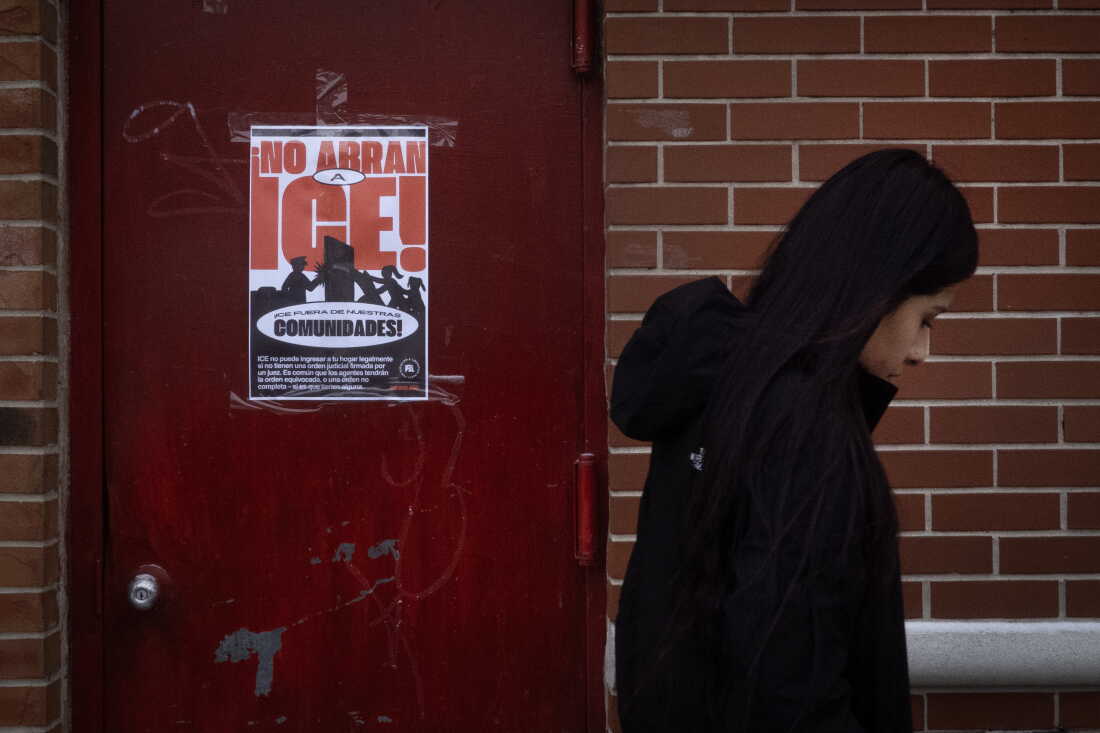
A recent study from the University of Illinois Chicago has revealed the substantial economic impact of immigration crackdowns initiated in early 2025 on Chicago’s commerce. The research found that these enforcement actions resulted in over $1.26 billion in losses for local businesses.
The study employed anonymous cellphone GPS data to observe movement patterns between immigrant and non-immigrant neighborhoods in Cook County, Chicago. It showed a significant decline in routine interactions between these communities following President Donald Trump’s inauguration on January 20, 2025. This was fueled by rampant rumors and actual ICE raids targeting Chicago.
Professor Matt Wilson, one of the study’s co-authors, highlighted the widespread economic impact beyond immigrant communities. The decrease in consumer movement led to roughly $1.26 billion in losses for retail shops and restaurants in non-immigrant neighborhoods. Additionally, Illinois faced an estimated $107 million loss in tax revenue.
“We see a 9% drop in retail and a 10% drop in restaurant visits, and it persisted for about a year,” Wilson told NPR. “And it’s not that it recovered after a year. People’s behavior systematically changed after January 20, 2025.”
The Little Village neighborhood in Chicago, largely comprising Mexican immigrants, felt the hit significantly. A 10% sustained drop in foot traffic could spell financial hardship for small businesses.
Contrary to assumptions, Wilson pointed out immigrant communities are not isolated but integrated into the economy, making frequent trips across the county. This broad participation in the economy means any disruption causes extensive ripple effects.
The fear and anxiety among immigrants escalated around the 2025 inauguration. Caridad, a Chicago waitress, expressed this sentiment to NPR, sharing her hesitation to shop due to fears of ICE presence.
Nationwide, the administration’s crackdowns have led to hundreds of thousands of arrests, with immigration detention populations at a record high. The White House defended this strategy, arguing it enhances community safety. However, ICE statistics show about 70% of detained individuals lack criminal convictions.
This report complements other research indicating that large-scale immigration enforcement sends economic shockwaves through local economies. For instance, the Brookings Institution noted a 1.7 percentage point drop in consumer spending in high-enforcement states. Minneapolis reported nearly $700 million in economic damage from ICE sweeps, with small businesses losing $81 million in revenue in January alone.