
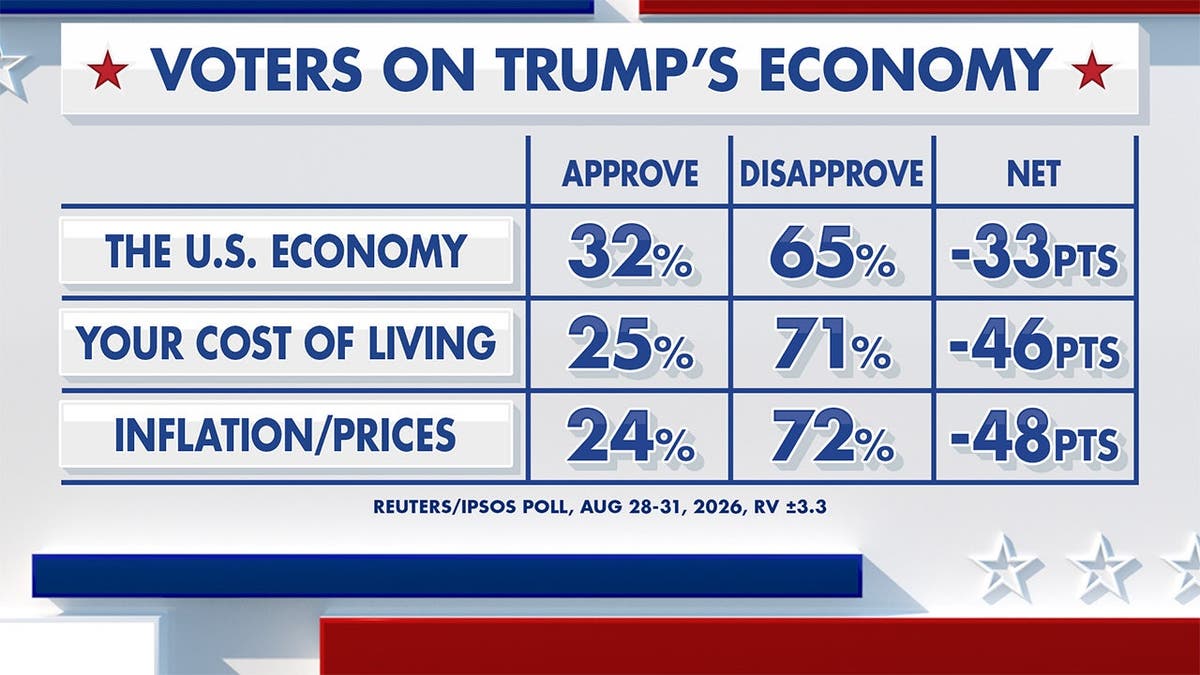
Janelle King, co-chair of Let’s Win for America Action, analyzed a recent Fox News poll showing widespread economic dissatisfaction among voters. She noted that while President Trump promotes ‘Trump accounts’ as long-term benefits, many voters face immediate financial challenges. King also expressed concern over the growing influence of far-left political movements in Midwest primaries, indicating a trend towards emotional voting.
With eight weeks until millions of Americans vote for their next congressperson, polls suggest that the economy remains the primary issue influencing their choices. Despite dissatisfaction with Trump’s economic policies, there is not yet overwhelming support for the Democratic alternative.
Key Considerations for Voters This Midterm Season
Polls indicate that the economy, though a crucial issue, isn’t voters’ sole focus. Other related issues like healthcare also play a significant role. Historically, the economy has consistently been a top concern during elections. It was a pivotal issue in the last two midterms, being the most important for 47% of voters in 2022 and 18% in 2018.
The Economy and Other Related Issues
The economy’s influence extends to issues like healthcare. Even strong economic metrics haven’t saved the GOP from losing seats when healthcare gains importance, as evidenced in past elections.
Understanding Voter Perceptions
Voter perceptions of the economy vary. While Trump’s government showcases job growth and a low unemployment rate, many Americans feel economic pressures from rising costs of essentials such as gas and food.
Recent polls reveal Trump’s economic approval rating hovers in the low-to-mid 30s. When questioned about personal economic situations, there’s notable dissatisfaction with cost of living and inflation, which may impact Trump’s support come election time.
Optimistic Economic Messaging Fails to Convince
In 2022, despite a rebounding economy under President Biden, voters were not swayed by administration claims of economic success. High inflation rates and gas prices led to a backlash against Democrats. Similarly, attempts by the Trump administration to highlight positive economic points face skepticism from voters dealing with real-world financial strains.
Alternatives Aren’t Necessarily Attractive
While economic dissatisfaction appears widespread, enthusiasm for Democratic alternatives remains uncertain. Democrats propose different economic plans, ranging from ‘Medicare-for-all’ to tweaking existing systems. However, conflicting visions within the party might confuse voters.
Currently, 36% of voters trust Republicans more on economic issues, while 37% lean towards Democrats, according to a recent survey. With such tight margins and a margin of error, predicting outcomes is challenging.
Congressional Races: A Closer Look
In current forecasts, Democrats are slightly ahead in the race for control of the House, holding 212 seats to the GOP’s 206. Yet, 17 tightly contested seats remain uncertain battlegrounds.
Missouri’s Electoral Dynamics
Missouri’s redistricting efforts have made certain districts more competitive. After courts blocked the use of new maps not yet approved by voters, Democrat Emanuel Cleaver retains his hold on the 5th District.
Ohio’s District Challenges
In Ohio, the 7th District, represented by Republican Max Miller, faces contention due to personal controversies. The seat moves from Likely R to a Toss Up category. Other districts, expected to be secure for Republicans, might face stronger competition due to Democrat Sherrod Brown’s Senate run.