
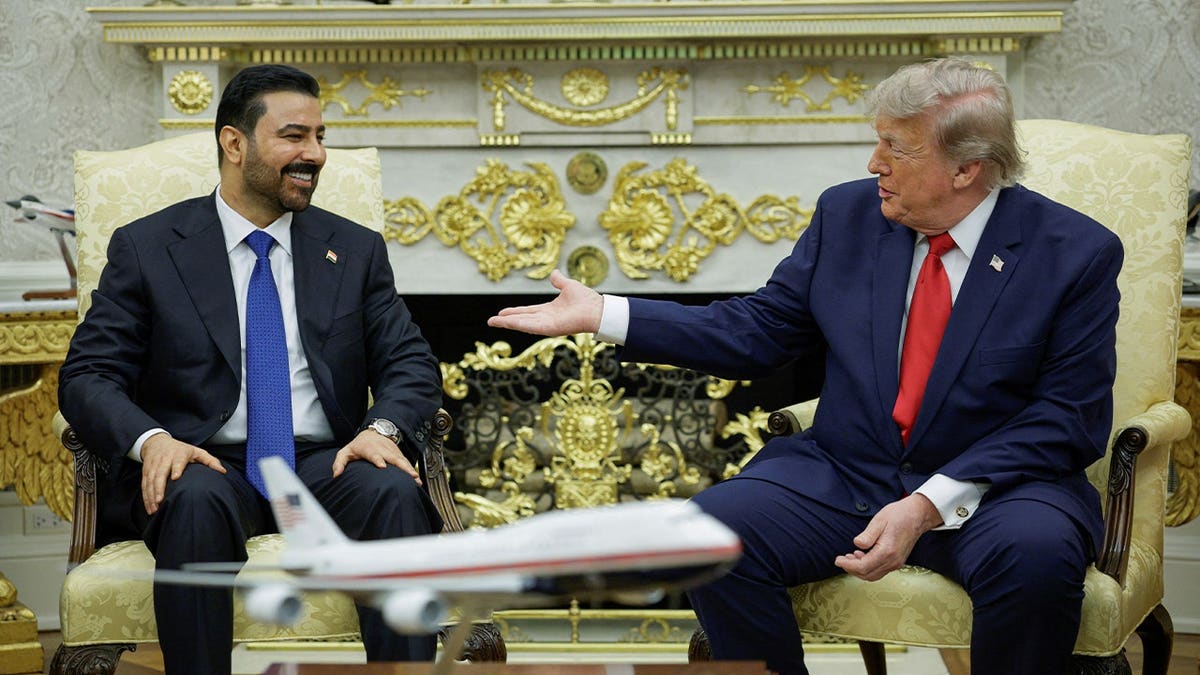
President Donald Trump has announced the withdrawal of U.S. troops from Iraq, suggesting that Iraq is prepared to manage its own security. However, Iraqi Prime Minister Ali al-Zaidi highlights that armed groups operating outside state control will face diminished justification once the coalition mission concludes.
The Trump administration continues to pressure Prime Minister al-Zaidi to dismantle pro-Iran militias, despite obstacles. In a notable announcement, senior Iraqi official Qasim al-Araji clarified that September 30 is set as the departure date for the international coalition, not a deadline for disarming militias like the Popular Mobilization Units (PMU).
The Iraqi government aims to integrate these militias into state structures. Some factions, including those led by Shiite cleric Muqtada al-Sadr, support this integration. However, more extreme groups, such as Kataeb Hezbollah, refuse to comply.
Iraq’s deputy minister of oil, Ali Maarij Al-Bahadly, was sanctioned by the U.S. Treasury Department for diverting oil revenue to Iranian proxies. He was later sentenced to seven years in prison for corruption. Former U.S. ambassador Alberto Fernandez claimed the profits from this diversion fund militias, though an Iraqi official contested the accuracy of these remarks.
The U.S. State Department expresses support for Iraq’s new direction under Al-Zaidi, aiming for a secure partnership free from terrorism. Entifadh Qanbar, a former Iraqi official, voiced skepticism but recognized the need to address militia threats. Elizabeth Tsurkov from the New Lines Institute commented on the difficulties the Iraqi government faces due to militias’ influence and willingness to use force.
The arrest—and subsequent release—of Abbas al-Yaqubi, a PMU intelligence figure, signaled a setback for Iraq in curbing militia power. His arrest initially seemed promising but quickly reversed, highlighting the challenges Iraq faces in asserting control over these groups.