
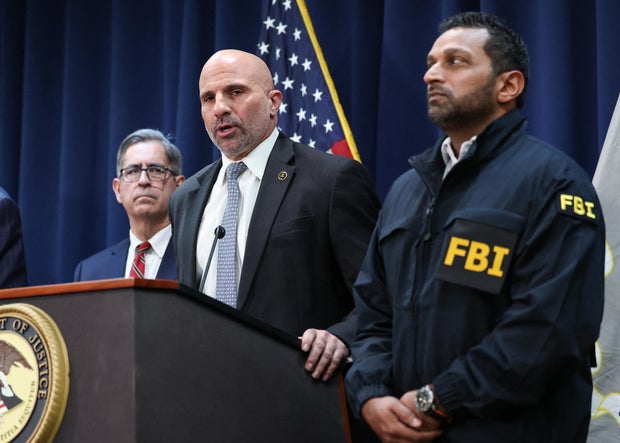
The FBI has adopted artificial intelligence (AI) to enhance its ability to identify threats and combat crime, focusing on transnational criminal organizations and drug cartels. Deputy Director Christopher Raia shared this with CBS News shortly after the bureau revealed a notable decline in violent crime rates across the nation.
Raia, who has been with the FBI for 23 years and became Deputy Director in January, stated that AI aids in pinpointing credible threats, significantly reducing the time from receiving tips to taking action. The process has accelerated from weeks to mere hours or minutes.
“We’ve integrated AI, enabling tips to surface quickly and allowing us to act on them promptly,” Raia mentioned.
The U.S. has witnessed a dramatic drop in violent crime. In 2025, the murder rate hit a 20-year low, with overall violent crime experiencing the largest one-year decline recorded. The FBI’s annual crime report showed aggravated assaults decreased by 7.2%, rapes by 7.6%, and robberies by 18.5%.
Raia attributed the decline to a “combination of factors,” including the efforts of state and local law enforcement, improved border security, and a renewed focus on violent crime.
AI has played a crucial role by enabling faster processing of vast amounts of data that previously overwhelmed human analysts. The FBI’s National Threat Operations Center utilizes AI algorithms to prioritize imminent threats, thereby optimizing resource allocation.
A specific example occurred in March when Zachary Charles Newell from Newport, North Carolina was swiftly arrested for posting threats against a black preschool and its children. Thanks to AI, the tip was quickly prioritized, leading to Newell’s sentencing to two years in federal prison.
There are ongoing discussions about AI’s impact on civil liberties. Raia assured that the FBI maintains transparency with Congress and oversight bodies to protect citizens’ rights. “Someone has to oversee law enforcement,” Raia emphasized. The bureau has submitted over 50,000 pages of documentation for review in the last year and a half.
Privacy advocates have expressed concerns about rights violations by Flock Safety, which supplies automated license plate readers to 6,000 law enforcement agencies. The data from these cameras is shared with federal agencies.
“Flock cameras are indispensable for investigations, offering valuable leads and helping to locate individuals,” Raia remarked.
Raia also referenced the Trump administration’s strategies against drug cartels and transnational gangs. An executive order in January 2025 created the Homeland Security Task Force, fostering collaboration among the FBI, Homeland Security Investigations, Drug Enforcement Administration, Treasury Department, and Department of Defense.
In August, as part of the Homeland Security Task Force Initiative, 81 alleged members of a violent gang in Puerto Rico faced charges related to drug trafficking and firearms violations.