
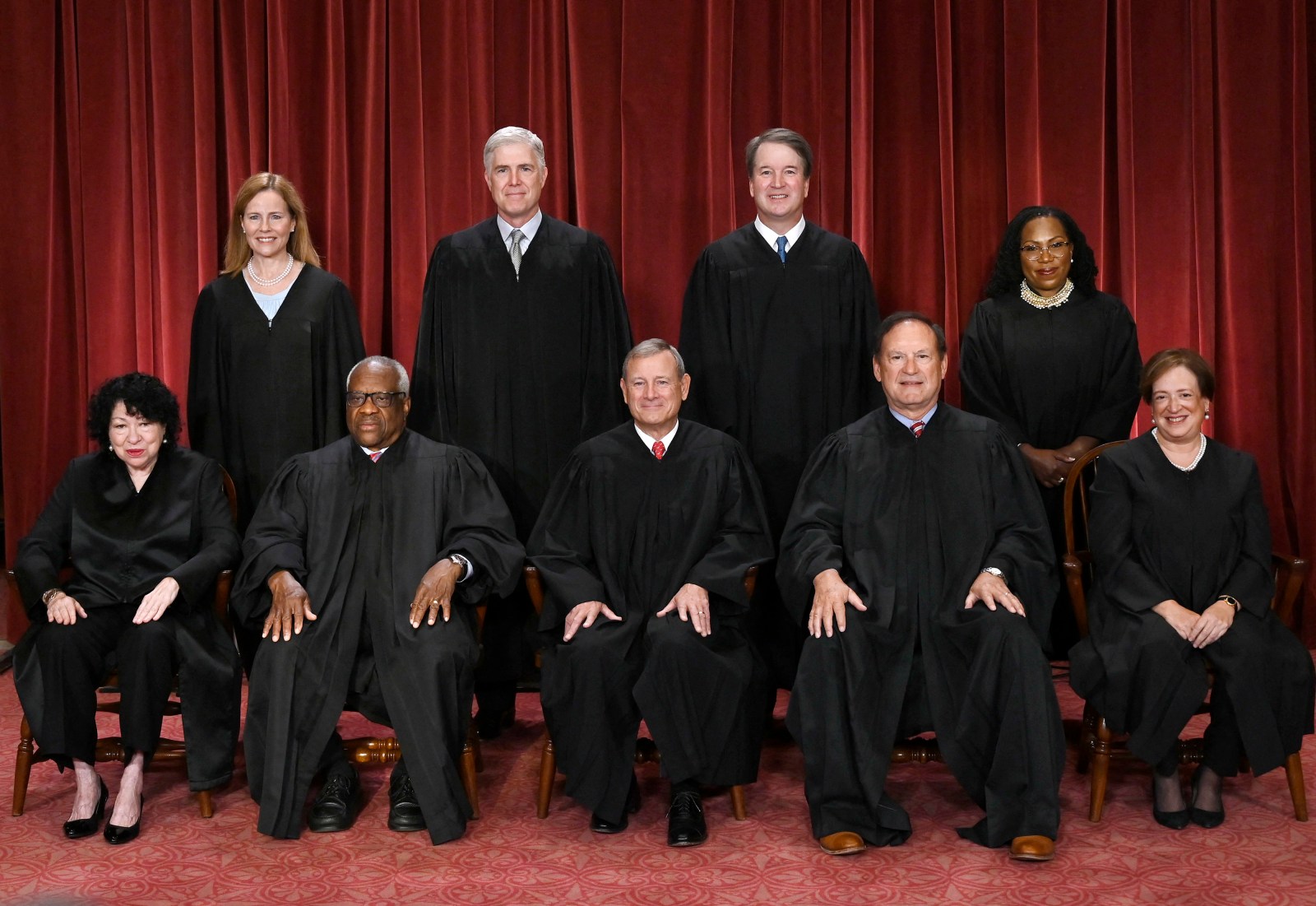
House Votes on Supreme Court Size Amendment
The U.S. House of Representatives conducted a vote on a constitutional amendment aiming to permanently set the size of the Supreme Court at nine justices. This measure would elevate the court’s current composition to a constitutional level, removing it from the realm of ordinary federal law. Known as the “Keep Nine Amendment,” the proposal required lawmakers from both parties to publicly declare their stance on this contentious issue within the judiciary.
The proposal emerged as Republicans sought to put Democrats on the record due to discussions on possibly expanding the Supreme Court. While all Republicans supported the amendment, it did not achieve the necessary two-thirds majority to pass. Only one Democrat, Representative Don Davis of North Carolina, voted in favor.
Arguments and Outcomes
Proponents, primarily Republicans, argued that fixing the number of justices at nine would prevent future attempts to expand the court—often referred to as “packing”—by adding seats. They asserted that maintaining the current structure, which has existed for over 150 years, would shield the court from political influences.
However, Democrats contended that the court had become excessively partisan and unbalanced, attributed to actions during President Donald Trump’s administration. Representative Jamie Raskin vocalized this concern, arguing against the amendment’s necessity.
The vote concluded with 212 votes in favor, falling short of the 290 needed to pass the amendment.
The Historical Context of Nine Justices
The U.S. Constitution establishes the Supreme Court but does not dictate the number of justices. Congress controls this aspect through legislation. Historically, the number of seats has varied between five and ten. The Judiciary Act of 1869 established the current composition of one chief justice and eight associate justices. This arrangement has become customary, providing stability over generations.
Supporters of the amendment argue that altering the court’s size could lead to political retaliation with shifts in government control. Currently, Congress retains the ability to change the size through legislative means, a reality amendment supporters want to address through a constitutional approach.
Democratic Views on Court Expansion
Interest in expanding the Supreme Court has grown, particularly after notable rulings have established a 6-3 conservative majority. Those in favor of expansion believe more justices could mitigate partisanship and enhance public trust in the court.
Court expansion is among several reform ideas, including establishing a formal ethics code, term limits for justices, and adjusting recusal standards. Advocates argue that these reforms are vital given the court’s significant impact on national policy and constitutional interpretation.
Critics caution that such moves might lead to a cycle where parties in power incrementally add seats to secure preferred outcomes, threatening judicial independence.
The Challenges of Amending the Constitution
Passing a constitutional amendment remains daunting. Under Article V, a proposed amendment needs a two-thirds vote in both the House and Senate before state ratification. After Congressional approval, three-fourths of the states must ratify it for inclusion in the Constitution. Given these stringent requirements, few amendments have successfully been adopted.
This vote signifies more than legislative action; it represents a symbolic move ahead of the midterm elections, compelling Democrats to clarify their position on maintaining nine justices on the court.