
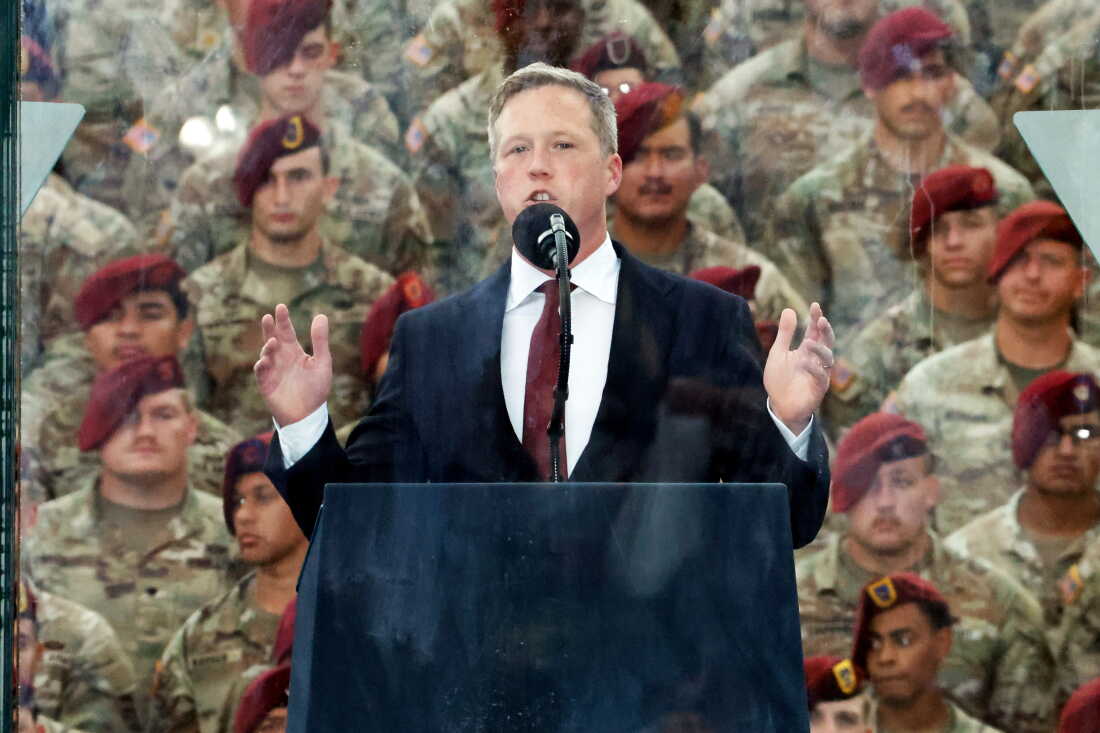
Washington — Army Secretary Dan Driscoll has announced his resignation after serving for 18 months, as confirmed by the White House on Monday. This marks the latest departure of a senior military leader during the Trump administration.
No official reasons have been disclosed for Driscoll’s resignation, despite his well-documented friendship with Vice President JD Vance. Reports have highlighted ongoing tensions with Defense Secretary Pete Hegseth.
The departure adds to a series of leadership changes within the Army, which has been experiencing significant upheaval.
Anna Kelly, White House spokeswoman, stated, “Secretary Driscoll has played a key role in advancing President Trump’s initiatives aimed at strengthening America’s Army. His leadership has been instrumental during historic military operations, focusing on readiness, lethality, and international negotiations including those between Russia and Ukraine.”
An anonymous Army official confirmed Driscoll’s discussion and subsequent resignation submission to President Donald Trump, but did not offer further details. Questions directed at the Pentagon were referred back to the Army. The resignation was initially reported by The Wall Street Journal earlier on Monday.
Leadership Changes and Program Revisions
Dan Driscoll’s resignation follows the removal of a close ally from the Army and the rollback of a drone initiative he supported. Notably, Defense Secretary Hegseth removed Gen. Randy George, a high-ranking officer, in April. Additionally, Gen. Christopher Donahue, responsible for the Army’s operations in Europe and Africa, stepped down unexpectedly in June.
Currently, Gen. Christopher LaNeve serves as the acting chief of staff in place of George. LaNeve’s leadership has led to the cessation of a drone modernization project, redirecting a European Army unit back to traditional infantry functions.
Driscoll expressed discontent over George’s departure, lamenting the situation both publicly and with members of Congress.
Bipartisan Praise Amid Departures
Arkansas Republican Rep. Steve Womack praised Driscoll’s leadership and contributions to the Army on X, citing improved readiness and threat capabilities due to Driscoll’s focus on soldier welfare.
Colorado Democrat Rep. Jason Crow highlighted his positive working relationship with Driscoll, despite policy differences. Crow expressed concerns over the current state of leadership in the Pentagon given recent departures.
Sen. Jack Reed of Rhode Island commended Driscoll for his efforts to adapt the Army to future challenges, although he criticized the hostile environment under Secretary Hegseth’s leadership.
Negotiations and Modernization Efforts
The unexpected assignment of Driscoll as a negotiator in the Russia-Ukraine war showcased his broad role as Army secretary. An Iraq war veteran and tech investor, Driscoll was noted for his attempts to streamline military contractor processes for advancing drone technologies to match evolving warfare demands.
Driscoll was confirmed by the Senate in February 2025 after a hearing that focused on modernization within the Army, addressing recruitment challenges, and enhancing the military industrial base. His connection to the Army through family ties informed his commitment to soldier-centered policies.
Dan Driscoll previously served in Iraq and had a stint as a Republican candidate for North Carolina Congress in 2020. His resignation occurs amidst other significant leadership exits initiated by Hegseth, such as the dismissal of Navy Secretary John Phelan.