
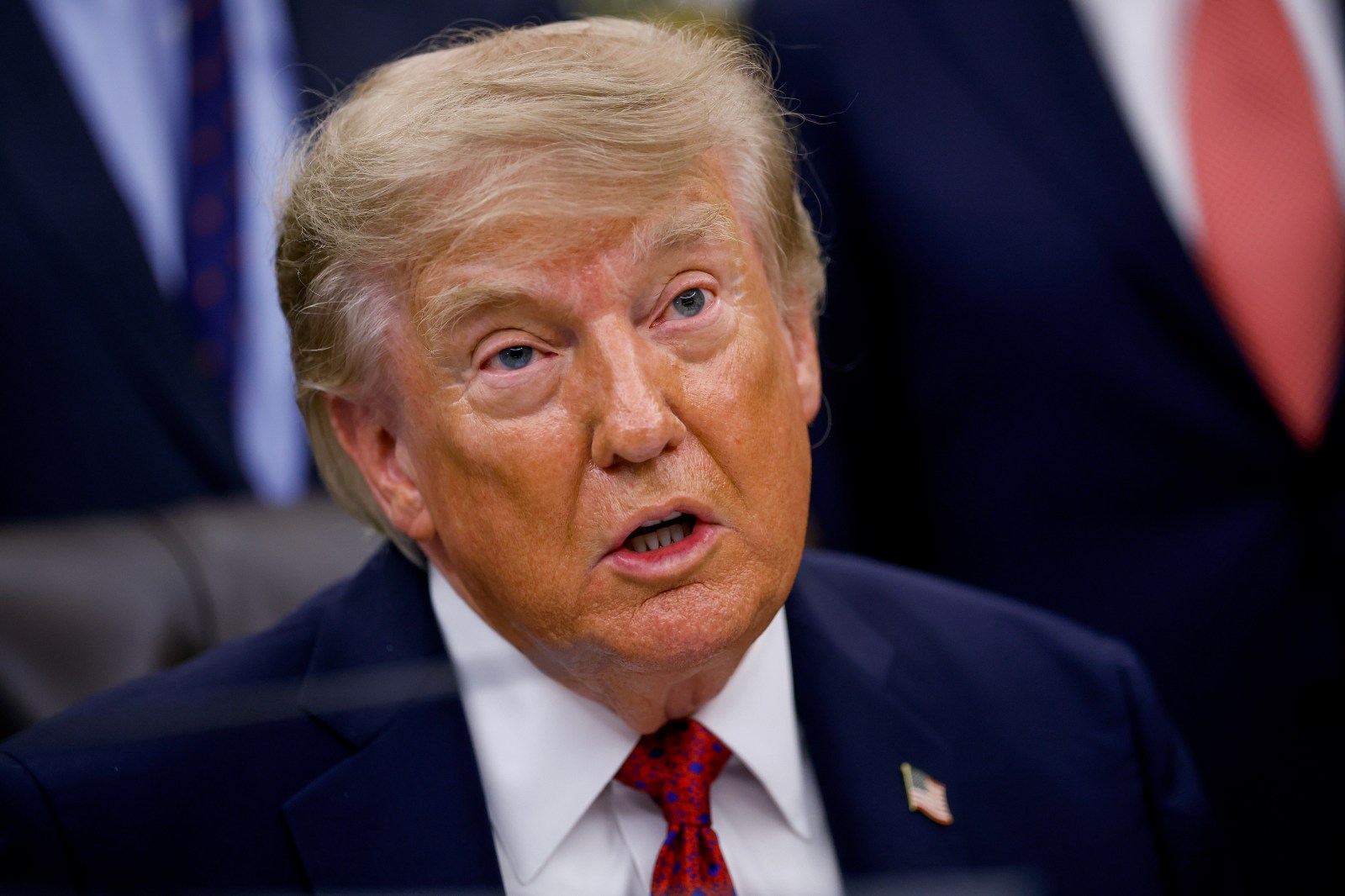
Some of President Donald Trump’s supporters are rethinking their stance as his approval rating plummets. The latest University of Massachusetts Amherst poll reveals a record low for Trump’s approval. This outcome bears significant consequences for the Republican Party, particularly as midterm elections approach and they aim to maintain control of the House and Senate.
Trump’s decline in popularity follows his return to office, with many voters expressing dissatisfaction over issues like the economy, inflation, and an unpopular war in Iran. Historically, a president’s low approval rating can lead to their party losing seats in midterm elections. In 2018, Republicans faced such losses during Trump’s first midterm election. This decline in approval also presents an opportunity for Democrats to contest traditionally conservative states, such as Texas.
Voter Loyalty Shifts
The UMass poll indicates that 84% of Trump voters would support him again if the presidential election were held now. This contrasts with 94% of Democratic former Vice President Kamala Harris’s voters, who would back her again. Despite this, many disenchanted Trump supporters are not switching parties. Only 2% indicated they would vote for Harris, while 7% would choose a third party, and another 7% would abstain from voting altogether.
Among those who did not vote in 2024, only 20% would now support Trump, compared to 27% for Harris and 14% for a third party. A significant 40% would still abstain from voting.
Approval Ratings Across the Board
Trump’s net approval has dipped to a -32 point low. The poll shows 32% of people approve of Trump’s performance, while 64% disapprove. This marks a drop from earlier UMass Amherst polls, where his approval had been at -29 points in March 2026 and -20 points in July 2025.
Tatishe Nteta, UMass Amherst’s director of the poll and a political science professor, noted the urgency for Trump and the Republican Party to address critical national issues. Failure to do so could risk Republican control of both the House and Senate.
The poll included 1,000 respondents surveyed from August 21 to 26, 2026, and has a margin of error of ±3.5 percentage points.
Comparative Poll Insights
Other polls also show dipping approval ratings for Trump. A Morning Consult poll found Trump at -14 points, with 41% approval and 55% disapproval. This survey included 2,203 registered voters in late August 2026.
Quantus Insights pegged his approval at -15 points (42% approval, 57% disapproval) via a survey of 1,200 likely voters, with a margin of error of ±3.2 percentage points.
YouGov/The Economist reported a -21 point approval rating, with 36% approving and 57% disapproving, from a survey conducted among 1,536 adults.
Reuters/Ipsos put Trump’s approval rating at -32 points, highlighting 65% disapproving and 33% approving, based on interviews with 1,215 adults.
Trump’s Criticism of Polls
Trump has criticized recent polls showing his declining approval. On August 30, he denounced them in a Truth Social post, calling them “fake polls” and urging intervention. A White House spokesperson referenced this post when contacted for comment.
He reiterated these claims on August 24, suggesting Democrats use misleading polls to demoralize Republican voters.
Economic Issues at the Forefront
Economic dissatisfaction contributes significantly to Trump’s approval slump. CNN analyst Harry Enten highlighted inflation as a prominent factor. August 2024 Ipsos polling showed Trump was preferred over Harris on inflation by 12 points among independents. Recent data depicts a sharp decline, with Trump’s approval on inflation now at -64 points among independents.
The UMass poll disclosed that only 22% believe Trump has managed inflation well, with 75% disagreeing. On employment, 31% approved of his handling, while 63% did not.
YouGov/The Economist further revealed growing economic discontent, with 39% trusting Democrats more on the economy, versus 32% for Republicans. Only 3% of respondents considered the economy “excellent,” while 40% rated it as “poor.” More than half, 57%, felt the economy is deteriorating.
Rising gas prices have added pressure. Disruptions in the Strait of Hormuz due to the Iran war have impacted the global oil supply, leading to increased fuel costs, a concern for many voters.
Newsweek editors Samantha Beech and Sam Wilson contributed to this coverage.