
A 17-year-old girl from North Carolina faces charges of murder by aiding and abetting in a deadly mosque shooting in San Diego. Forsyth County District Attorney Jim O’Neill announced on Monday the arrest of Sarah Lindsey Santiago. A grand jury in Winston-Salem indicted her for three counts of murder and one of conspiracy.
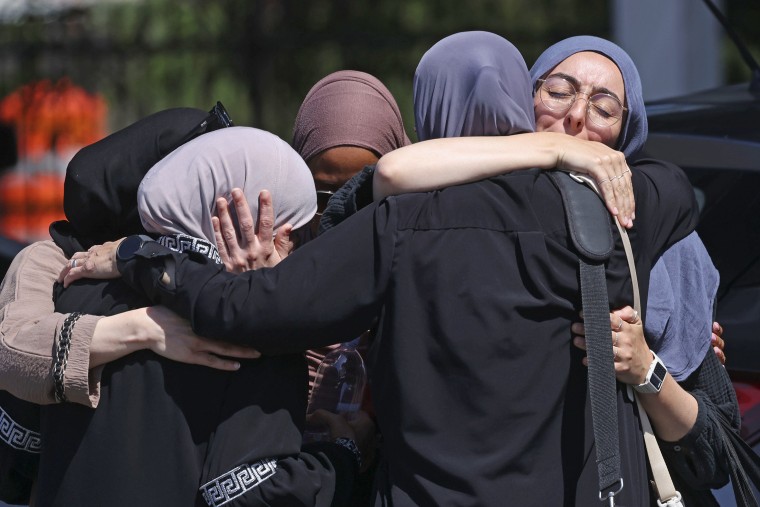
Santiago’s lawyer did not respond for comments from The Associated Press following the charges. Mosque community members were seen supporting each other in the Islamic Center of San Diego’s parking lot after the tragedy.
Under North Carolina law, aiding-and-abetting charges can lead to penalties identical to those for the direct perpetrators, according to O’Neill. The indictment reveals Santiago agreed to record the livestream prior to the attack and distribute white-supremacist writings. She also bought and sent a patch with a white-supremacist symbol for one of the attackers to wear.
During the attack on the Islamic Center on May 18, gunmen Cain Clark, 17, and Caleb Vazquez, 18, confronted a security guard. The guard, Amin Abdullah, was killed alongside Mansour Kaziha, a caretaker, and Nadir Awad, a teacher’s spouse. The security guard’s quick response helped secure the safety of 140 children nearby.
The attackers’ writings included extreme ideological motivations and referenced the 2019 New Zealand mosque shooter. They planned further violence against a Jewish temple and a high school with a mostly Black student population.
Their document expressed antagonistic views toward various groups, including Jews, Muslims, the LGBTQ+ community, Black individuals, and both political sides. They aimed to incite societal collapse. Flowers and candles marked Lindbergh Park during a vigil after the attack, where hundreds of community members gathered to honor the victims.
The Vazquez family shared in a statement that Caleb Vazquez was on the autism spectrum and struggled with identity issues. They believed these, combined with exposure to online hate, influenced his radicalization.