
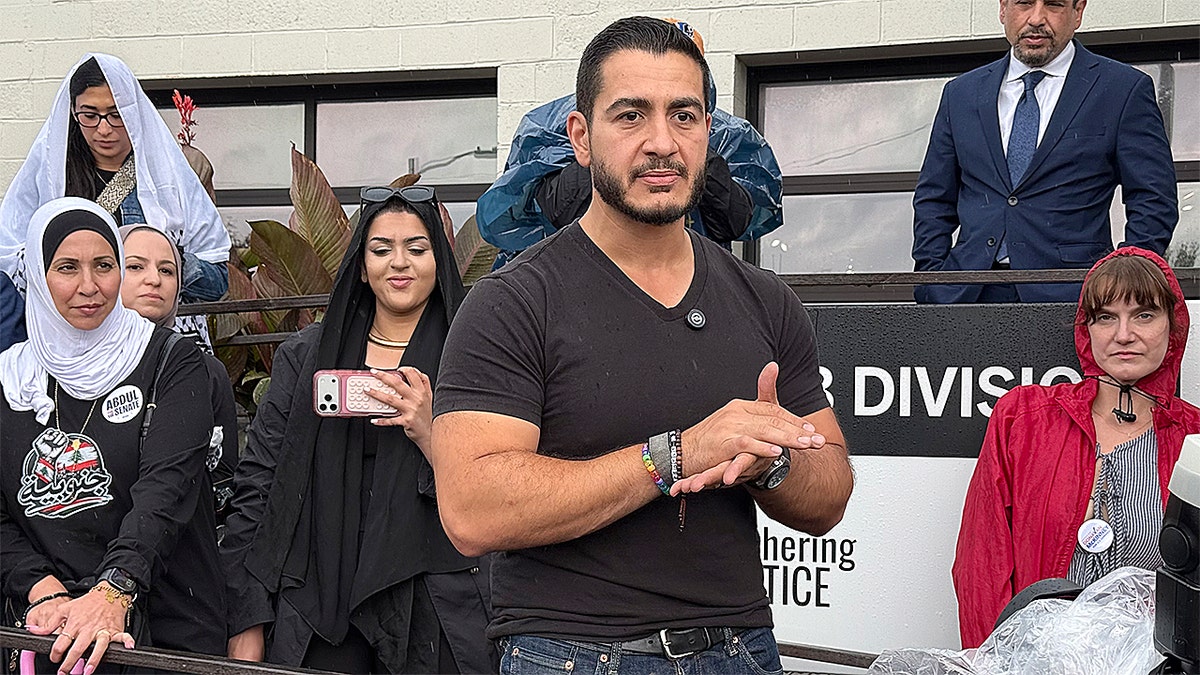
Michigan’s Democratic Senate candidate Abdul El-Sayed shared his views on American society during a podcast episode in October 2025. He described Americans as “desperate to feel something” and noted that “we’re just all living it alone here.” His reflections compare the community he experienced during childhood stays in Egypt, where he felt a constant connection with other people’s humanity.
El-Sayed stated that life in America has become deeply atomized, arguing that connections via phones and social media are not true community. In Egypt, he said, human interaction is more prevalent, enveloping people in collective experiences. During the interview, El-Sayed said this constant human interaction is something beautiful, a sentiment he wishes could be more prevalent in America.
“It’s like a beautiful thing,” El-Sayed said. “And I wish we had more of that.”
These remarks are consistent with El-Sayed’s previous criticisms of American society. In a 2019 commencement speech at the University of Michigan’s School of Public Health, he discussed racial and economic disparities in Detroit. El-Sayed accused American politics of reverting to white supremacy and racism while discussing the Flint water crisis and other social issues. These statements contrast with his portrayal as a proud “Michigan man.”
Resurfaced recordings reveal El-Sayed stating he “hates” Mackinac Island and questioning football’s culture. He linked the sport to historical narratives of slavery and toxic masculinity, claiming these aspects are central to American life. His campaign challenged these resurfaced materials, suggesting they were cherry-picked and do not represent his current beliefs.
During the podcast, El-Sayed recounted summers spent in Egypt, where he learned about his father’s language and culture. These experiences in his father’s one-bedroom apartment significantly influenced his understanding of humanity. He observed that in societies like Egypt, interaction with others forces one to confront the human condition.
El-Sayed contrasted social media with traditional gatherings in Egypt, like weddings, which he described as “a celebration of humanity.” He criticized social media as an attempt to monetize human interaction, asserting that genuine connection cannot be replicated by corporate platforms. According to El-Sayed, true collaboration is essential to American values, but has been overshadowed by pursuits of wealth.
Ultimately, El-Sayed argued for a shift towards community-based living where people’s basic needs are met. He stated this preference over a country where wealth is concentrated among a few, leaving others to struggle.