
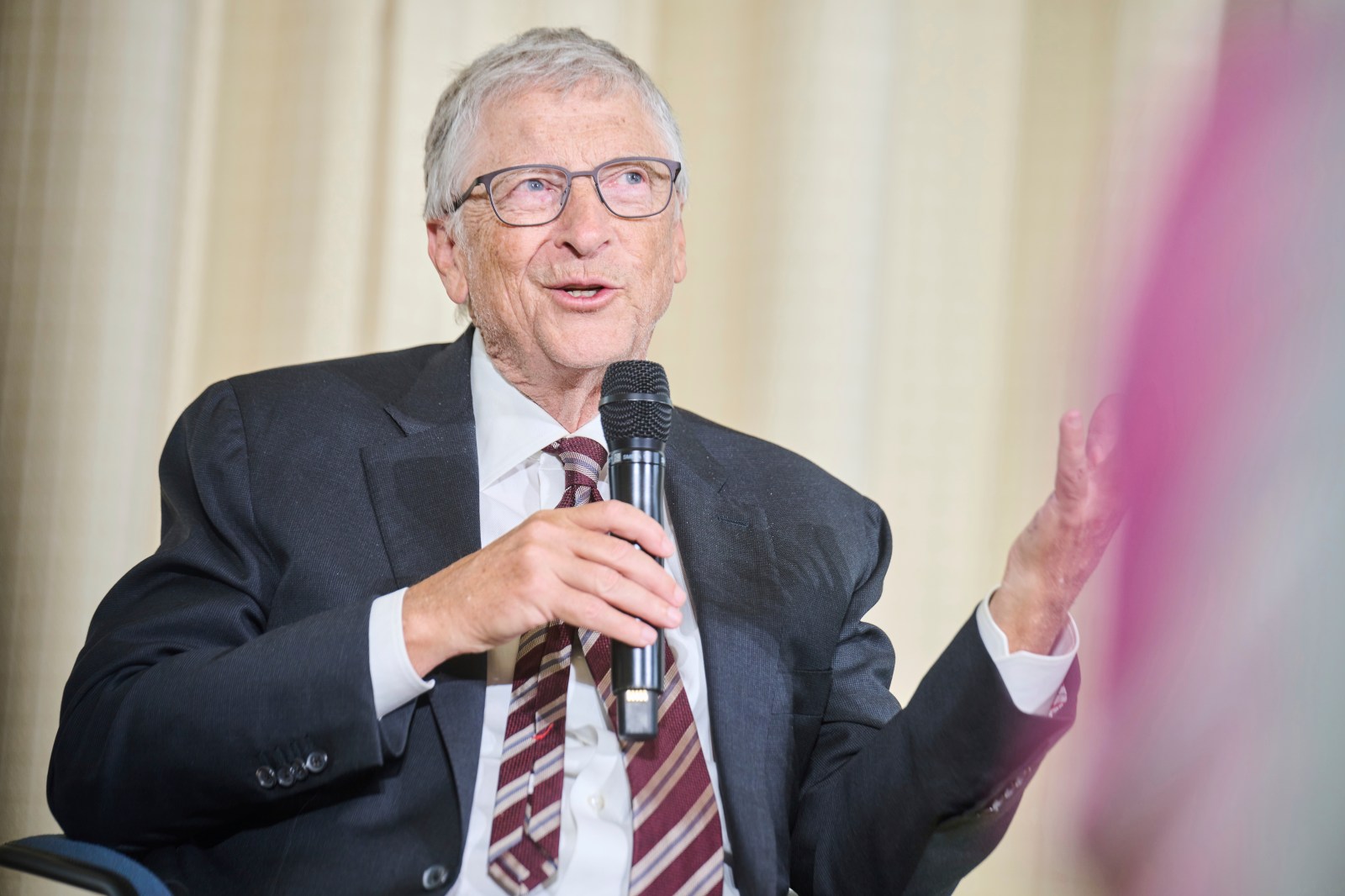
Microsoft co-founder Bill Gates has expressed growing concern over the rapid progress of artificial intelligence (AI), citing insufficient safeguards and the need for public involvement in its future. In an interview with CNN’s Anderson Cooper, Gates emphasized the importance of addressing both the advantages and threats posed by AI. He highlighted the risks such as cyberattacks, bioterrorism, and the broader psychological and social consequences. Gates revealed his surprise at the lack of stronger protections currently in place.
Gates mentioned that limiting data centers would not effectively hinder AI’s development since companies can construct them elsewhere. He believes that democratic tradeoffs are necessary, involving public discussion on AI’s positive and negative aspects.
“These data centers will show up somewhere,” Gates said, “We have to take the AI issue, and it’s the bads versus the goods in a very explicit way.”
Gates’ concerns follow his publication of a lengthy essay warning of a turbulent AI era, where leaders are unprepared for disruption, especially as AI begins performing tasks in sectors like law, customer service, medicine, software, and manufacturing.
While not advocating for a complete halt in AI development, Gates supports a global agreement to slow its progress, noting geopolitical and economic challenges make such an agreement unlikely. As a solution, he suggests measures like taxing AI or robots, analogous to payroll taxes, and reserving specific jobs for humans to mitigate AI-driven displacement.
Despite acknowledging AI’s potential benefits in healthcare, research, and productivity, Gates urges governments to establish safeguards to prevent negative impacts such as rising unemployment and social disruptions.
Outlined Risks of AI
Gates identified three primary risks associated with AI. The first is job displacement, where AI could remove positions across various industries, affecting entry- and mid-level employees. The second risk involves AI empowering harmful activities, including cyberattacks, fraud, disinformation, and bioterrorism. Lastly, Gates cautioned that AI might hinder children’s development and replace human relationships, especially through AI companions.
“I’m staking my reputation completely on the fact that in terms of the impact on the job market, this is very different than any technology that I’ve been involved in,” Gates stated.
Texas Congressman Greg Casar responded to Gates’ concerns on social media, advocating for an AI token tax to prevent mass unemployment, citing his introduction of a bill to address the issue.
Gates’ Recommendations on AI Management
According to Gates, governments should act urgently to manage AI’s rapid growth, establishing institutions to monitor associated risks. Stronger scrutiny of AI systems, especially those affecting national security, cybersecurity, or public safety, is necessary. Gates proposes taxing AI tokens and robots, using revenue for worker retraining and bolstering a safety net. He also suggests reserving roles requiring human judgment and interaction for people.
Oren Etzioni, a computer science professor and former CEO of the Allen Institute for Artificial Intelligence, agrees with Gates’ assessment of AI risks but disagrees with some remedies. While Etzioni supports taxing robots replacing workers, he critiques Gates’ proposal to tax AI tokens based on usage instead of job displacement. Etzioni warns that slowing U.S. AI development through taxes could disadvantage the country compared to competitors. He urges existing government agencies to develop appropriate policies, emphasizing the timeliness of addressing AI risks.
“I still think it’s within our grasp to shape this in a net positive way,” Gates mentioned, drawing parallels to the dual nature of nuclear technology. “This is a thousand times bigger.”
Newsweek reached out to the White House for comments regarding Gates’ AI concerns.