
The Los Angeles Dodgers have been under a microscope in recent years due to their aggressive roster-building and financial strategies. This scrutiny began with the signing of Shohei Ohtani in late 2023. That offseason, the Dodgers also secured Yoshinobu Yamamoto, Teoscar Hernandez, and Tyler Glasnow, leading to their victory over the New York Yankees in the 2024 World Series. They continued to strengthen their team by adding Tanner Scott and Blake Snell, convincing Roki Sasaki to join, and bringing back Tommy Edman and Teoscar Hernandez. Their efforts resulted in another World Series win.
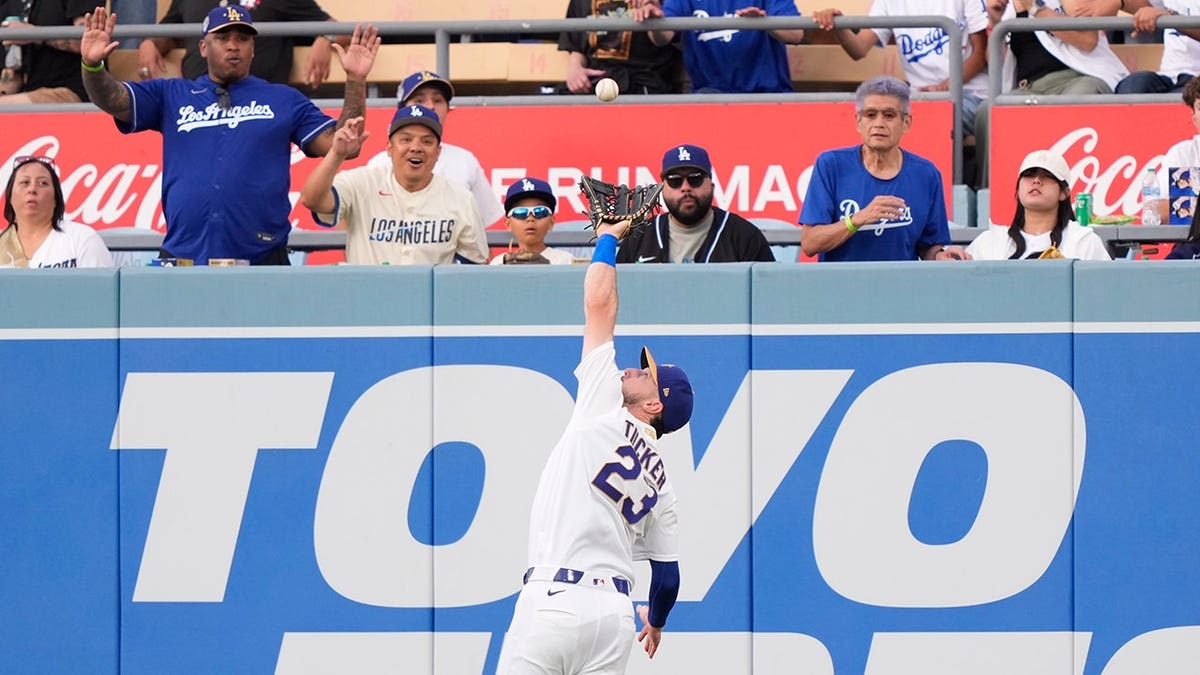
In the 2025-2026 offseason, the Dodgers acquired Kyle Tucker and Edwin Díaz, sparking debate among fans on social media platforms like X. The argument centered on the Dodgers having an unbeatable roster, with critics pointing to the team’s financial dominance as a concern.
Debunking Salary Cap and Deferred Contracts Myths
Discussions have arisen about the Major League Baseball (MLB) salary cap and its role in maintaining competitive balance. Critics argue that the Dodgers’ financial power makes them nearly unstoppable. Yet their recent struggles, including a 2-11 record against teams like the Red Sox and Brewers, illustrate that success isn’t solely based on payroll size.
A significant misunderstanding involves the Dodgers’ use of deferred contracts. These contracts have been common in MLB for decades. Contrary to claims, deferred payments aren’t unique to the Dodgers. Numerous players across the league, including Rafael Devers and Jose Ramirez, have deferred compensation agreements. Teams must account for these payments in the present, not push them to an indefinite future.
Ohtani’s deferred contract, which became a source of controversy, was not an imposition by the Dodgers. He offered a similar deal to multiple teams, with the Dodgers, Blue Jays, and Giants accepting it. If Ohtani had joined the Blue Jays, they would shoulder the deferred payments, not the Dodgers.
Investigations and Financial Structures
Recently, Dodgers owner Mark Walter has been investigated by the federal government for practices involving insurance companies he controls. Reports suggest significant loans possibly linked to these companies. However, the investigation does not imply financial wrongdoing regarding the Dodgers’ payroll or contracts. Misinformation on platforms like X falsely claims these loans contribute to the Dodgers’ financial position.
The Dodgers also own a portion of Spectrum SportsNet LA, a practice not uncommon in the sports industry. The YES Network has similar ownership ties with the New York Yankees.
Walter’s situation, owning 27% of the Dodgers, does raise questions about his future involvement. Nonetheless, he doesn’t single-handedly dictate the team’s operations, nor would a sale of his stake imply the team’s financial collapse.
Dodgers’ Revenues Amid Misinformation
The Dodgers have been reported to generate over $1 billion in revenue, largely through various streams beyond their television deal, which contributes $325 million annually. Even without their TV income, the Dodgers have lucrative income sources, making them financially stable compared to other MLB teams.
Market rules protect some of their revenue from being shared with smaller market teams, estimated at $55 to 60 million annually, adding to perceived advantages. Despite criticism, their revenue-sharing practices don’t significantly impact the ability of other teams to close payroll gaps.
The scrutiny over the Dodgers stems from their strategic success rather than any wrongdoing. While fan outrage persists, the Dodgers’ financial and contractual strategies comply with MLB rules and are not inherently problematic.