
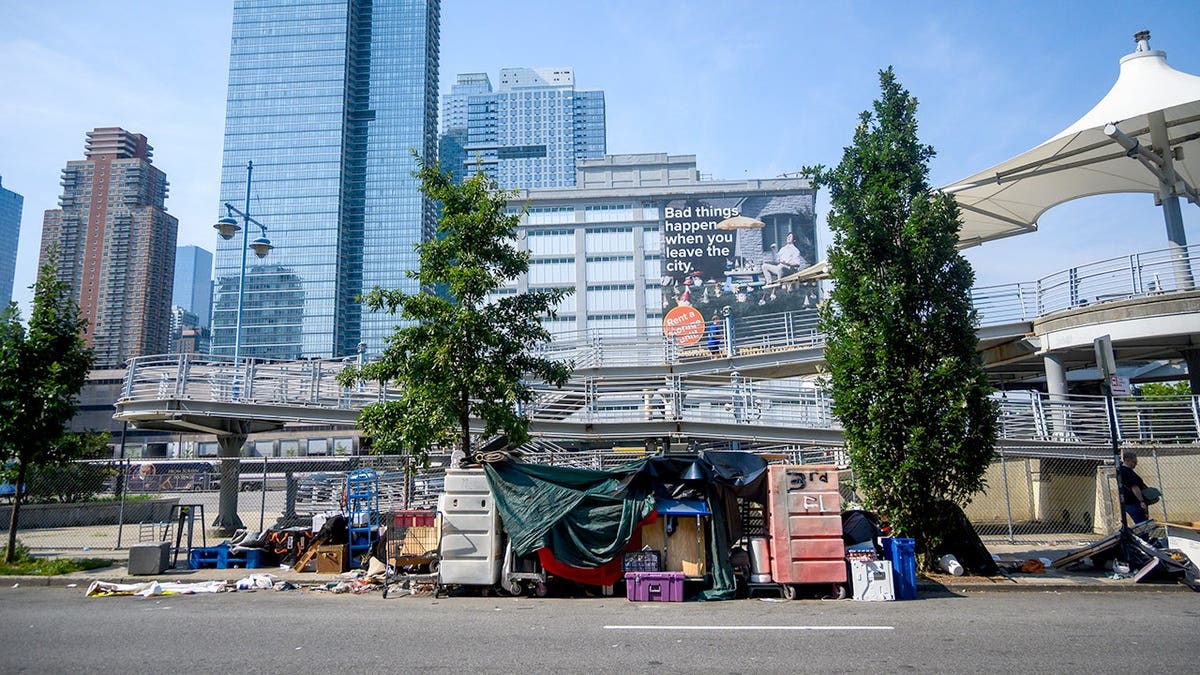
Democrats are actively opposing the Trump administration’s efforts to provide assistance to 146,000 homeless individuals suffering from serious mental health issues.
In late July, House and Senate Democrats initiated an inquiry, accusing the administration of regressing to an era when individuals with disabilities were denied basic civil rights. However, the system currently being defended has contributed to the high numbers of mentally ill persons living in poor conditions on the streets.
Challenges of Community-Based Care
Historically, states faced limitations in aiding mentally ill homeless individuals due to expansive interpretations of the Supreme Court’s 1999 Olmstead decision. This decision mandated states to provide “community-based care.” For those with serious mental health conditions, this often resulted in living independently where mental health and substance abuse treatments were optional, and frequently declined.
In June, the Department of Justice issued a contentious opinion to reform federal oversight of mental health care at the state level. The administration’s new framework permits states to offer small-scale, affordable supportive housing options, like community-based group homes, which will provide court-mandated treatment to people affected by mental illness or substance abuse.
Issues with Existing Regulations
Intermediate housing solutions have long been hindered by stringent regulations prioritizing resident autonomy over safety and clinical needs, thereby blocking states from establishing a middle ground between hospitalization and community-based care.
This new approach from the administration avoids reverting to large state psychiatric hospitals, which are costly and rarely qualify for federal reimbursement. Activists, however, argue this shift could result in “warehousing” individuals in facilities reminiscent of past American asylums, disregarding current conditions that ‘warehouse’ people in unsafe outdoor areas.
The Reality of Mental Illness Among the Homeless
Visible in cities across the U.S., the issue of mental illness and addiction among the homeless is urgent. Numerous individuals with profound mental health disorders or severe substance-use problems live outdoors, posing risks to themselves and others.
These individuals experience high rates of victimization, crime, disease, and premature death, yet they often resist outreach due to the impact of their mental illnesses on reasoning abilities.
Historical Context and Policy Shift
This crisis has developed over decades. Since 1992, federal authority over state behavioral health systems has increased significantly, encouraging states to focus primarily on voluntary mental health care within communities.
Although important, this care is often unsuitable for those severely mentally ill, who need structured support incompatible with isolated living in community settings.
The administration’s new policy does not suggest returning to large psychiatric hospitals, which are expensive and offer few chances for reimbursement. States have been trapped in choosing between abiding by federal law and neglecting their most critically ill patients or risking litigation.
Amidst the DOJ’s memo, the threat of federal litigation led states to draft “Olmstead Plans” aimed at reducing psychiatric hospital populations, often neglecting patient well-being and safety. Consequently, since 1990, psychiatric hospital beds dropped by tens of thousands while the U.S. population rose by 110%.
Impact and Outlook
State agencies, initially targeting abuse in psychiatric institutions, shifted focus to pressing hospitals to release patients, resulting in premature releases leading many to homelessness or the criminal justice system. Even at the time of the Olmstead ruling, Justices Kennedy and Breyer highlighted the possibility of displacing patients to inappropriate settings like homeless shelters.
Federal policies, while claiming to “liberate” individuals from hospitals, often banished them to conditions comparable to the world’s poorest areas.
The history of institutional abuse in the U.S. is genuine; past advocates achieved significant progress in addressing this. While avoiding past mistakes, current evidence shows the present system leaves thousands facing increased illness, unsheltered and untreated.
The Trump administration is justified in reassessing federal regulations in light of these realities. The actual tragedy lies in the delayed implementation of these necessary changes.
Dr. Elinore McCance-Katz is a psychiatrist, senior fellow at the Cicero Institute, and the former Assistant Secretary for Mental Health and Substance Abuse at the U.S. Department of Health and Human Services.