
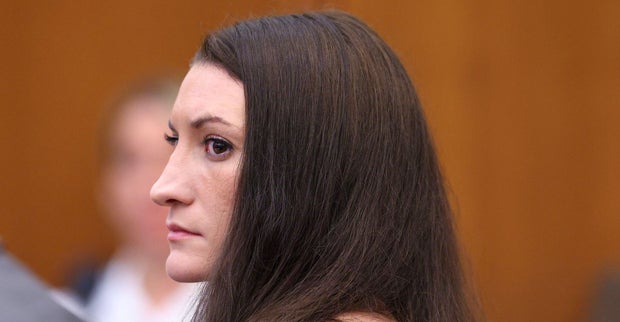
Jurors in Lindsay Clancy’s trial have been following extensive testimonies to determine if the Massachusetts mother should be held criminally responsible for the deaths of her three young children in 2023. Clancy, 36, has pleaded not guilty to murder charges. Her legal team acknowledges her involvement but cites postpartum psychosis and bipolar disorder, coupled with overmedication, as factors impacting her actions. Prosecutors argue that Clancy planned the killings and staged a suicide attempt.
Testimony from Lindsay Clancy’s Mother
On August 17, Clancy’s defense presented her mother, Paula Musgrove, who shared a December 2022 conversation involving Clancy and her then-husband, Patrick Clancy. Musgrove recounted her daughter’s nervous confession of having thoughts about harming her children.
She told us that she had thoughts of harming the children,” Musgrove said.
Prosecutor Jennifer Sprague’s questioning revealed Musgrove did not pursue mental health intervention for Clancy. Musgrove described Clancy as paranoid and forgetful in the days leading to the tragedy.
The medication was pretty much just destroying her mind, and it wasn’t her,” Musgrove added. “She said that, ‘This isn’t me. I just want to feel better and enjoy my kids again.’
Insights from Lindsay Clancy’s Private Writings
The court examined Clancy’s digital logs, detailing her doubts and struggles.
I’m sad and depressed because I am not able to parent my third child like my first,” stated Detective Timothy Chiappini, reading from her phone’s notes app.
Clancy’s search history, presented in court, included inquiries about mental health and self-harm, four days prior to the incident, including searching “Can you treat a sociopath?”
Emotional Moments in Court
Clancy became distraught on August 12, during a medical examiner’s testimony regarding her children’s injuries, leading to her removal from the courtroom. Paralyzed from an attempted post-tragedy suicide, Clancy’s reactions prompted Judge William Sullivan to remind jurors to focus on the evidence.
You must separate any emotional reaction on your part from the informational value and weight that the evidence produces,” Sullivan instructed.
Psychiatrist’s Perspectives
Psychiatrist Dr. Jennifer Tufts testified about Clancy’s treatment, mentioning 14 telehealth appointments leading to the incident. Tufts stated Clancy did not exhibit signs of psychosis, but highlighted her struggles with various medications, including Zoloft.
I don’t believe there’s evidence that it causes that at all in individuals over 24,” Tufts explained when questioned about Zoloft’s potential risks for suicidal thoughts.
If you or someone you know is facing a mental health crisis, reach out to the 988 Suicide & Crisis Lifeline by calling or texting 988. For mental health resources, the National Alliance on Mental Illness (NAMI) HelpLine is available Monday through Friday at 1-800-950-NAMI (6264) or [email protected].