
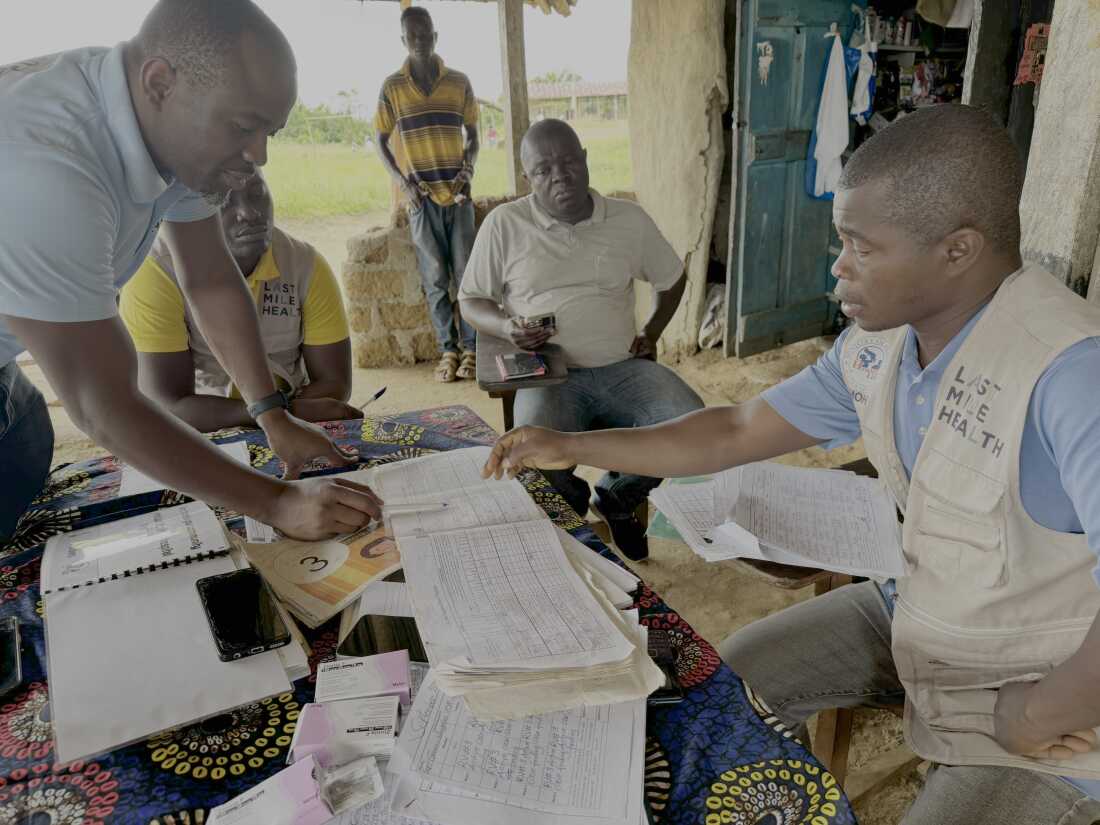
Genesis Whegelee, a dedicated community health worker for Last Mile Health in Rivercess County, Liberia, has been serving his community since 2018. His responsibilities include visiting families to monitor the health of children, pregnant women, and others needing medical attention.
Last Mile Health (LMH) was co-founded by Dr. Raj Panjabi in 2007. After returning to his birthplace of Liberia from Boston, he used $6,000 raised from wedding guests to start the organization. The name reflects LMH’s mission: ensuring everyone has access to vital healthcare, even in the most remote areas.
Recently, Last Mile Health was honored with the Conrad N. Hilton Humanitarian Prize, a $3 million award recognizing the nonprofit’s remarkable contributions to alleviating human suffering. Starting with 17 workers, funded by Panjabi’s initial $6,000, LMH now operates in several countries, including Ethiopia, Malawi, and Sierra Leone, reaching out to 32 million people.
Community health workers, who typically have basic education, receive training to diagnose and treat diseases such as malaria and pneumonia. They also assist pregnant women and monitor disease outbreaks. In 2010, LMH began addressing HIV/AIDS in partnership with global entities. During the Ebola crisis and the COVID-19 pandemic, the organization played a crucial role, distributing millions of protective equipment pieces and achieving an 81% vaccination rate in Liberia.
“Health systems in remote areas are under strain. Last Mile Health faces this challenge directly,” said Peter Laugharn of the Hilton Foundation.
LMH’s work is pivotal, especially as studies predict a rise in deaths by 2030 if funding decreases. Community health workers exemplify a cost-effective approach, with research indicating a median care cost of $0.59 per person annually.
Genesis Whegelee’s experiences in Rivercess County highlight the impact of community health workers. He’s responsible for 42 households, ensuring medical care and educating families on health practices. His interventions, such as treating a child with malaria or advising a hospital delivery to a pregnant woman facing complications, underscore the critical nature of his role.
LMH CEO Lisha McCormick emphasizes the nonprofit’s mission to make healthcare accessible to the two billion people lacking it. Dr. Panjabi and McCormick believe in professionalizing community health workers, who are essential frontline health providers.
The recent Hilton Foundation grant will support LMH’s ongoing efforts, aiming to reach 50 million people by 2028. The organization co-founded Africa Frontline First to expand community health programs, ensuring healthcare becomes universally accessible.
Writer Diane Cole, whose work spans publications like The Wall Street Journal and The Washington Post, shares these insights on LMH’s transformative journey in remote healthcare.