
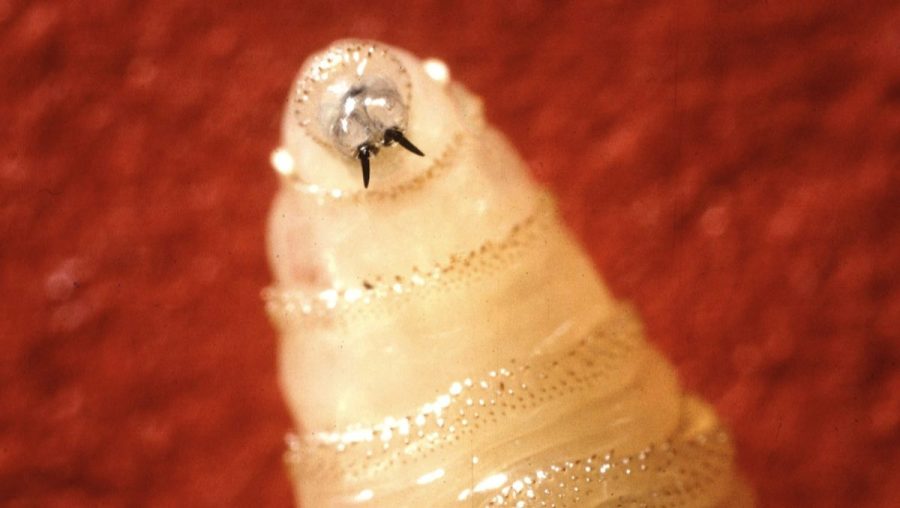
The New World screwworm has become a growing concern, with 45 confirmed infestations in the United States as of August, according to the U.S. Department of Agriculture. A recent case was identified in Terrell County, Texas, involving a domesticated sheep.
Since the screwworm entered the U.S. earlier this summer, it has been detected solely in animals such as cattle, sheep, and dogs. However, humans are not entirely safe. The screwworm flies can lay eggs on any warm-blooded animal, including humans. These eggs transform into parasitic larvae or maggots that feed on flesh, burrowing deeper into the host. Untreated infestations can be fatal.
The screwworm parasite differs from cyclospora, affecting many across the nation. Screwworms do not transmit through food; they require live tissue, utilizing wounds or openings in the body, such as noses, mouths, eyes, or ears, for egg-laying.

The Centers for Disease Control and Prevention (CDC) warns about the risks, noting that even minor wounds can attract egg-laying flies. A female fly can deposit 200-300 eggs at once, with a lifetime total of up to 3,000 eggs. Those who spend considerable time outdoors and around animals, particularly with open cuts or wounds, face heightened exposure risk.
Treatment involves removal of eggs and larvae, sometimes necessitating surgery for deeply embedded maggots. Efforts to contain the spread include releasing sterile flies to curb reproduction, with infestations mainly in Texas, and a few reported in New Mexico. The USDA is actively working on containment methods, while the Food and Drug Administration offers emergency authorization for preventive medication.