
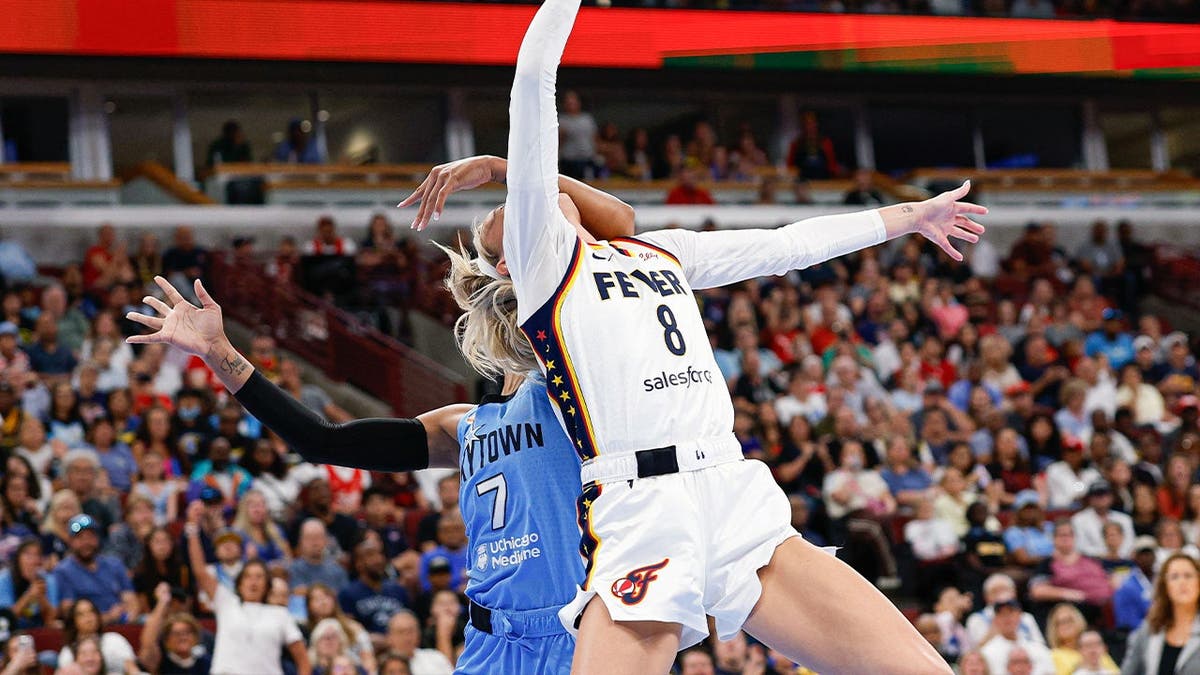
The WNBA faced intense moments following a controversial incident involving DiJonai Carrington and Sophie Cunningham. On Saturday, tensions escalated when Carrington hit Cunningham in the face during a game. This altercation led to Carrington’s ejection, sparking widespread discussions on social media and reigniting debates around race and privilege in the sport.
The Incident
DiJonai Carrington of the Chicago Sky committed a harsh foul on Sophie Cunningham from the Indiana Fever, drawing immediate attention and online commentary. The discourse quickly shifted to discuss racial tensions, highlighting wider societal issues beyond the game.
Backgrounds of the Players
Carrington and Cunningham come from different backgrounds, both having played football in their youth under varying circumstances. Carrington grew up in San Diego and was familiar with the football field, having played both flag and tackle football. Her father, Darren Carrington, was an NFL player, which influenced her athletic journey. She attended a private school where her mother coached basketball. Despite challenges, including two ACL surgeries, Carrington excelled in basketball, eventually attending Stanford and later transferring to Baylor.
Sophie Cunningham, on the other hand, hails from Columbia, Missouri. She played football in high school as a placekicker, making history as the first girl to score varsity points. Growing up on a farm and attending public schools, Cunningham experienced financial hardship due to the 2008 economic crisis, which shaped her identity and resilience. Staying close to home, she attended Missouri University, becoming a key figure in their basketball program.
College and Career Paths
Both athletes were nationally recognized recruits and played AAU basketball. Cunningham remained loyal to her local roots by committing to Missouri, where she excelled and became the program’s face. She set several school records and helped the team reach the NCAA Tournament consistently.
Carrington’s college journey was more complex due to injuries and transfers. After facing physical setbacks, she completed her education at Stanford but continued her basketball career at Baylor. Despite being a reserve player at Baylor, she made significant contributions, earning accolades like Big 12 Newcomer of the Year.
WNBA Careers and Symbolism
As WNBA players, both Carrington and Cunningham developed distinct reputations. Cunningham’s time with the Phoenix Mercury was marked by her bold and spirited playstyle, earning her the nickname “Spicy Sophie.” Carrington, playing for the Connecticut Sun, became known as a formidable defender and was recognized as the WNBA’s Most Improved Player in 2024.
Their public personas grew, and each became emblematic of different social and cultural issues. Cunningham’s public views on transgender athletes and conservative beliefs made her a polarizing figure. Conversely, Carrington’s advocacy for racial justice and gender equality garnered both support and criticism, reflecting the complexities in sports and society.
Public and Political Impact
The players’ personal lives and public affiliations further fueled their symbolic roles in the league. Cunningham maintained a relatively private romantic life, while Carrington’s relationship with fellow WNBA player NaLyssa Smith attracted public interest and scrutiny.
The incident between Carrington and Cunningham highlighted their contrasting identities and the roles they play within the WNBA. This event extended beyond a mere altercation, becoming a focal point for discussions on race, privilege, and representation in sports.
The Aftermath
Following the hit and Carrington’s “White privilege” social media post, the incident was scrutinized as a reflection of deeper societal issues. Carrington later clarified her intentions, stating that her post wasn’t directly about the officials’ decision, but the conversation surrounding it continues to resonate within the league and among its followers.
This event remains a significant part of recent WNBA history, highlighting how personal narratives and public perception intersect in the world of sports.