
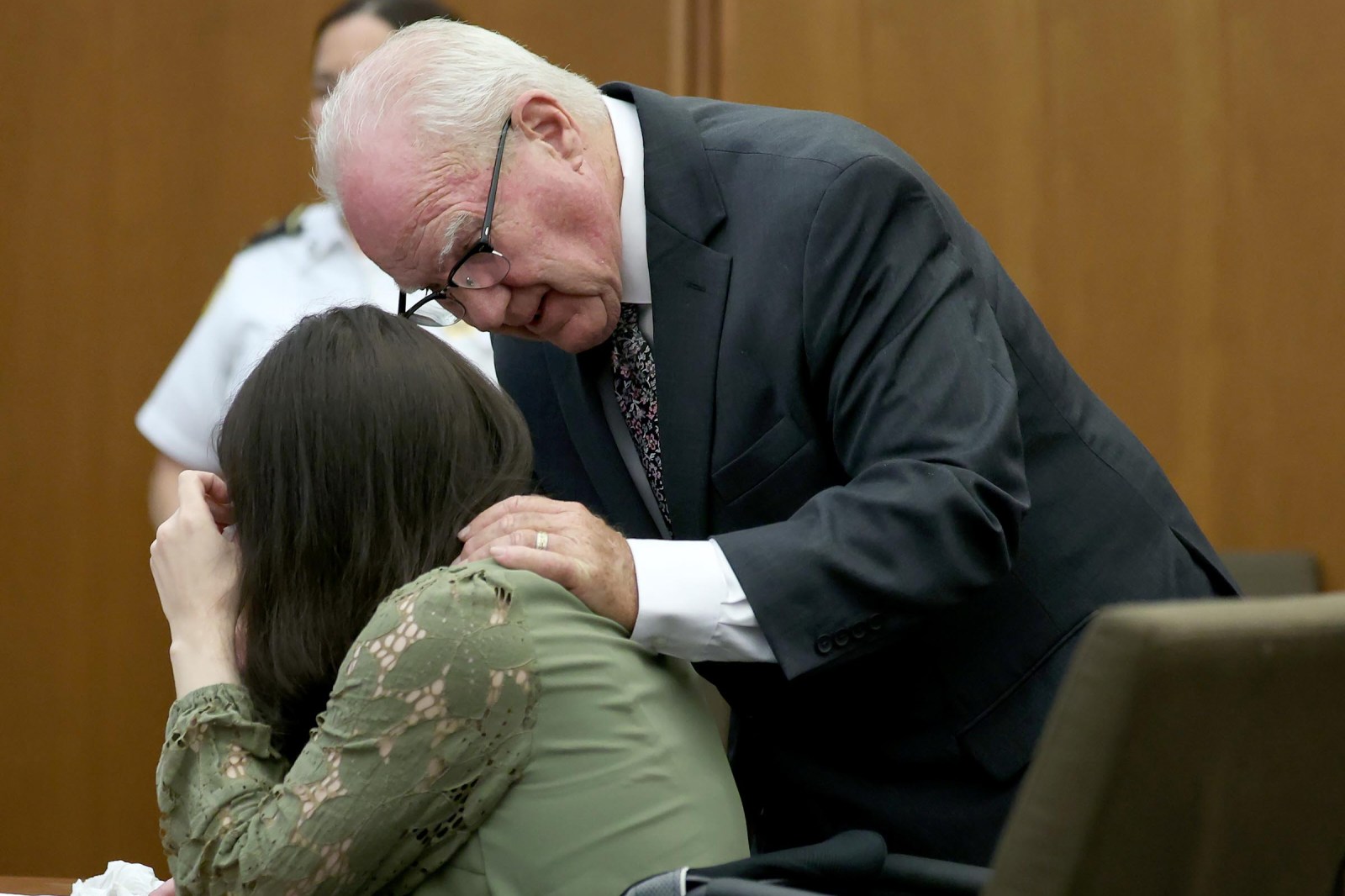
Emotional Reactions in Court
Lindsay Clancy wept in court as jurors heard disturbing testimony from medical experts detailing her children’s injuries. This led to courtroom recesses and a warning from the judge to focus solely on evidence and not be swayed by emotions.
The most poignant moments occurred during testimony from medical examiner Dr. Renee Stonebridge, who described the injuries found during the children’s autopsies, prompting a physical breakdown from Clancy.
Judge William Sullivan reminded the jury to base their verdict strictly on evidence, despite the emotional nature of the testimony.
Details of Children’s Injuries
Dr. Stonebridge testified about injuries consistent with strangulation, focusing on physical evidence leading to the children’s deaths.
Five-year-old Cora and 3-year-old Dawson had eye hemorrhaging, while 8-month-old Callan suffered a brain injury indicative of oxygen deprivation.
The defense argues that Clancy should not be held responsible due to severe mental illness, including postpartum psychosis. The prosecution, however, presented forensic evidence to demonstrate how the children died.
Mental Health Counselor’s Insight
Latiesha Dukes, Clancy’s mental health counselor, admitted she hadn’t reviewed another provider’s notes, despite both treating Clancy in a perinatal behavioral health program.
Dukes approached Clancy’s treatment with a fresh perspective, unaware of significant symptoms previously reported by psychiatric nurse practitioner Rebecca Jollotta.
This discrepancy is used by the defense to highlight incomplete understanding of Clancy’s mental state.
Debate Over ‘Voices’ Theory
Sergeant Dan Lawlor testified regarding Clancy’s claims of hearing voices, explaining there was no investigative basis for the theory that psychologist Paul Zeizel had influenced these claims.
Lawlor confirmed no firsthand knowledge of conversations between Clancy and Zeizel, which the defense argues supports claims of psychosis.
Suicidal Thoughts Without a Plan
Clancy reported suicidal thoughts but lacked a specific plan, leading Dukes to recommend partial hospitalization based on her observed improvement.
These observations provide evidence for both prosecutorial and defense arguments regarding Clancy’s mental state.
Next Steps in the Trial
Testimony progresses into a phase examining Clancy’s mental health and events surrounding the deaths. Prosecutors aim to establish criminal responsibility, while the defense seeks to prove severe mental illness during the tragedy.
If convicted, Clancy could face life imprisonment. If found not criminally responsible, she may be committed to a psychiatric facility.