
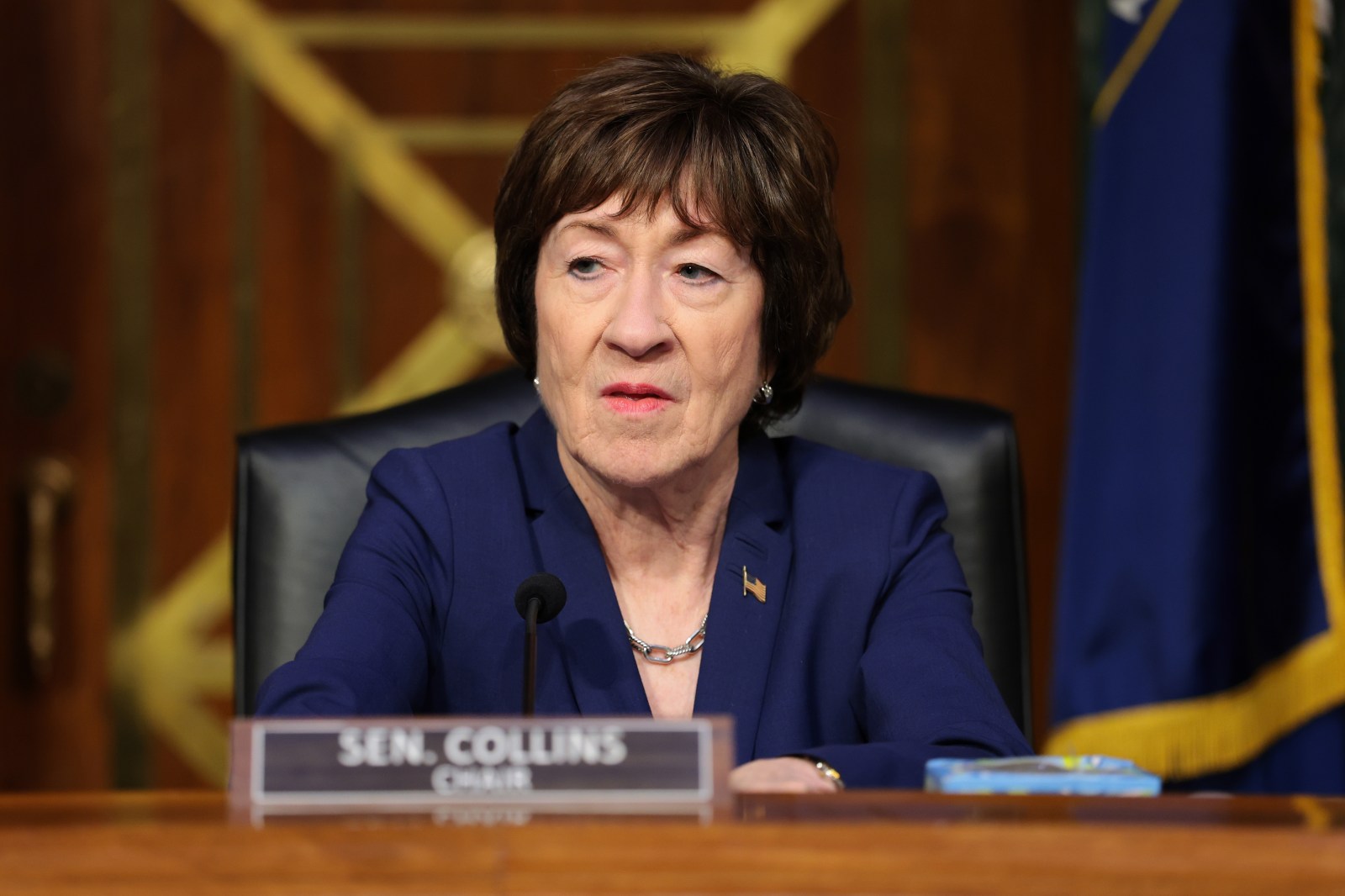
The 2026 U.S. Senate race in Maine is showing signs of intensifying competition. A recent Fox News poll indicates a close contest between Democratic candidate Troy Jackson and the sitting Republican Senator Susan Collins. The survey, conducted from August 6 to 10, shows Jackson with a slim lead of 48% versus Collins’ 46%. This places the race within the poll’s 3% margin of error, highlighting the potential for a tightly contested election.
In June, another poll placed Collins at 50% against former Democratic nominee Graham Platner’s 47%. Platner exited the race following accusations of inappropriate behavior and alleged sexual assault, which he denied. The recent Fox News survey included 1,000 registered Maine voters.
Senator Collins, known for her moderate Republican stance and occasional breaks from President Donald Trump, is under scrutiny in Maine. About 55% of those surveyed express significant concern over Collins’ voting alignment with Trump. This could pose a challenge in a state that has historically embraced candidates from both parties and where independent voters hold sway.
Who Is Troy Jackson?
Jackson’s nomination as the Democratic candidate has reshaped the campaign landscape. He stepped into the role after Platner’s departure and offers a Maine-centric political presence. Jackson, a fifth-generation logger from northern Maine and a former Maine Senate president, underscores his working-class roots and rural representation. His background may attract voters typically hesitant to support a Democratic candidate, especially in northern and rural areas.
What To Know
The polling data indicates a competitive race, but it doesn’t imply immediate setbacks for Collins. Both campaigns have time to influence undecided voters as the election is several months away. Jackson’s campaign may face scrutiny over his progressive views, while Collins could contend with questions about her ties to the Republican Party and Trump.
According to the poll, Jackson’s backing is strongest among liberals, younger demographics, college graduates, and union households. He also holds a lead among voters under 45. The support among male voters is evenly split. Collins garners strong support from conservatives, White evangelical Christians, non-college degree holders, and rural voters.
In a comparison of polling data, Jackson has maintained support among women, college graduates, and suburban voters. He also made notable gains among those under 45. Meanwhile, Collins has seen a decline from a previous 10-point lead among men. Near-universal support among MAGA Republicans favors Collins, yet her support from non-MAGA Republicans slips by nearly 20%, with some of these voters shifting to Jackson.
Overall, this polling suggests the Maine Senate race is a true toss-up. The Cook Political Report also describes the race as such. Jackson’s early lead is noteworthy, given the circumstances of his entry, but the narrow margins indicate the competition remains wide open. With the November 3 election approaching, the race could hinge on Collins’ ability to reengage moderates and independents, or whether Jackson can solidify his current advantage into a far-reaching statewide coalition.
What Other Polls Show
A Pine Tree State Poll by the University of New Hampshire Survey Center shows Collins with 46% to Jackson’s 49%, with 2% supporting another candidate and 3% undecided. This survey included 1,178 likely voters from July 15 to 20, 2026, carrying a 2.9% margin of error. Additionally, a Hart Research Poll, sponsored by Senate Majority PAC, reflects Collins at 45% to Jackson’s 49%, with 6% undecided. This poll surveyed 802 likely Maine general election voters from July 27 through August 1, with a 3.5% margin of error.