
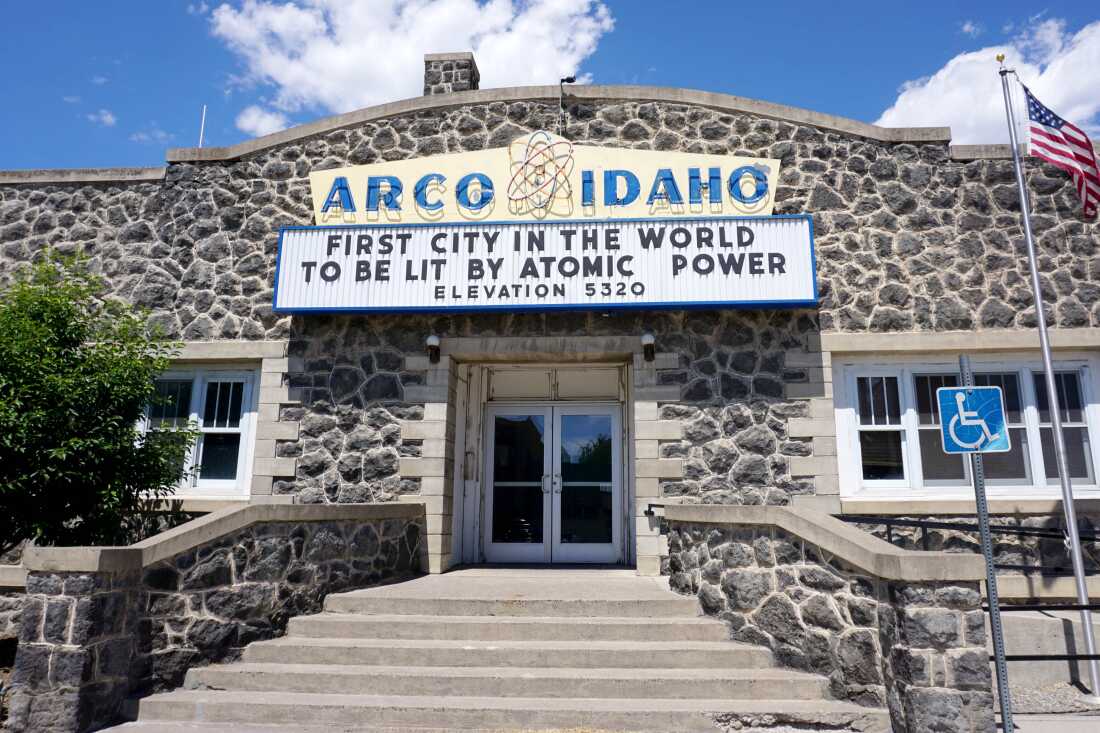
Arco, Idaho, along with nearby towns, carries a legacy of nuclear energy due to its proximity to the Idaho National Laboratory (INL). Atomic City, Idaho, population 52, offers a glimpse into this world, where indoor smoking is still allowed in its bar. The establishment is adorned with dollar bills and a “Don’t Tread On Me” flag.
Vickie O’Haro, owner of the bar and the Atomic Motor Raceway, knows her customers’ preferences — cold beers or shots called atomic bombs. Many patrons work at INL, the US’s nuclear energy testing grounds since 1949. Despite a March Gallup poll indicating that most Americans oppose nuclear energy plants nearby, O’Haro feels confident about living close to INL. “I’m not glowing in the dark,” she assures visitors, dismissing fears of radiation.
O’Haro’s businesses, situated near INL, serve a community long accustomed to nuclear developments. Nuclear power is seeing renewed interest after years of stagnation. Under President Donald Trump, new projects received expedited approval. A new generation of small nuclear reactors is expected to emerge soon. This summer, three companies at INL and one in central Utah turned on new reactor types. “I think it’s actually pretty cool to be happening in my backyard,” O’Haro commented on these developments.
INL spans 900 square miles of remote desert, nearly as large as Rhode Island. Deployable Energy, a startup operating within this vast space, successfully brought its test reactor critical, achieving a sustained chain reaction. Lance Maul, the company’s COO, regards this as a pivotal moment for the US. Micro reactors, their focus, differ from traditional nuclear plants — they are smaller and designed to power thousands of homes, not millions. These reactors are portable, fitting on trucks, marking a shift in perception and application.
Nuclear advocates envision mass-produced reactors supporting remote communities, military bases, and AI data centers, aligning with America’s growing energy needs without increasing carbon emissions.
Last year, the Department of Energy accelerated reactor permitting by easing regulations. This move, however, has not been without criticism. Edwin Lyman, Nuclear Power Safety Director at the Union of Concerned Scientists, expressed concern about the potential dilution of safety standards. He noted significant staff reductions within the federal commission overseeing nuclear projects, raising questions about oversight.
Despite these concerns, lab workers frequenting O’Haro’s bar remain unfazed. “If we weren’t safe, my guys would tell me,” O’Haro stated, confident in the information shared by her patrons. Although a majority of Americans resist nearby nuclear plants, there is growing support for further emphasizing nuclear power across the country.