
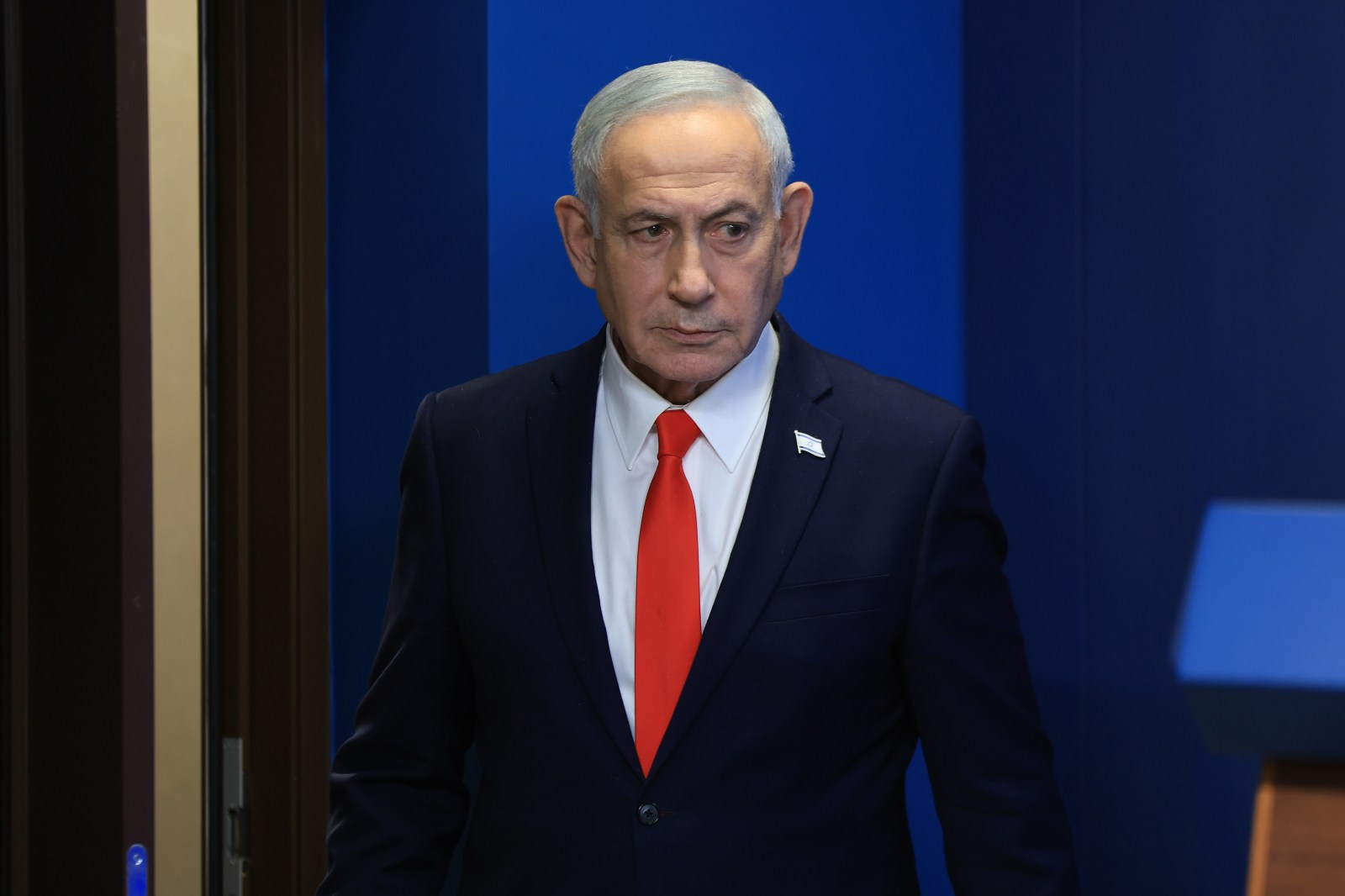
Israeli Prime Minister Benjamin Netanyahu has turned down a 15-point proposal for Gaza presented by U.S. President Donald Trump’s Board of Peace. He emphasized that Israeli troops would not leave the area until Hamas is fully disarmed. Netanyahu expressed his views at a Cabinet meeting, stating that Israel would not agree to a mere symbolic disarmament process.
Netanyahu’s concerns focus on the proposal’s sequencing, which links Hamas’ disarmament to a gradual Israeli withdrawal and handing over Gaza’s administration to a U.S.-backed Palestinian committee. He also reiterated his stance against a Palestinian state, insisting that Israel needs to maintain its capability to respond to threats from Gaza.
Netanyahu’s Response
During the Cabinet meeting, Netanyahu dismissed the notion that Israel had accepted the proposal. He stated clearly: “Israel rejects the 15-point document.” He added that the withdrawal of Israeli troops as envisioned in the plan would not begin until Hamas fully surrendered its entire weapon stash.
“The IDF will not carry out any withdrawal until Hamas is genuinely disarmed,” he declared.
Netanyahu described this demand as broad, covering “the heavy weapons, the less-heavy weapons, all weapons.” He emphasized that the disarmament must be genuine, not superficial.
This stance contradicts a key element of the proposal, which suggested decommissioning Hamas’ weapons while Israeli forces withdrew incrementally. Netanyahu signaled ongoing dialogue with Washington but made it clear Israel would not automatically endorse suggestions from its closest ally.
Netanyahu highlighted, “They have ideas; some are acceptable to us, and some are not.” He affirmed that Israel knew how to “stand our ground on these matters.” Netanyahu also affirmed military actions might continue to counter threats to Israeli forces and citizens as long as the dispute remains unresolved.
He reiterated his rejection of Palestinian statehood, stating: “As long as I am prime minister, there will be no Palestinian state, not in Gaza and not in Judea and Samaria.” He used terms like ‘Fatahstan’ and ‘Hamastan’ while referring to the rival factions Fatah and Hamas.
Details of the 15-Point Proposal
The 15-point plan isn’t an independent peace accord but part of a broader 20-point Gaza strategy from Trump’s Board of Peace, released on July 30. It aimed at linking Hamas’ disarmament with an Israeli pullback, changeover of control, and Gaza’s reconstruction.
Under the proposal, both Israel and Hamas would stop military actions and adhere to commitments from the October 2025 ceasefire agreement. Within 14 days of approval, a schedule and mechanisms for implementation would be established.
The plan stipulated that Hamas and other factions would relinquish civilian and security control to the National Committee for the Administration of Gaza (NCAG), backed by the Board of Peace. This interim body would oversee public services, finance, and internal security, barring Hamas from interference.
The security approach was based on “One Authority, One Law, One Weapon.” Police officers would be thoroughly vetted, while their weapons would be under NCAG authority. Hamas and armed groups would gradually surrender weapons, production sites, storage facilities, and tunnels.
An International Verification Committee would assess whether commitments had been met before progressing. An International Stabilization Force would supervise the ceasefire, train police, assist in aid delivery, and separate Israeli troops from NCAG-held zones.
Essentially, disarmament and Israeli withdrawal were interconnected, with each stage contingent on confirming prior obligations were completed. Gaza’s reconstruction would then follow a plan prepared by the Board of Peace and the Palestinian committee, aiming to facilitate Palestinian self-determination and statehood, a point counter to Netanyahu’s no-state stance.
Hamas conditionally supported the proposal, but disagreements over disarmament timing vs. Israeli withdrawal remained a major hurdle.