
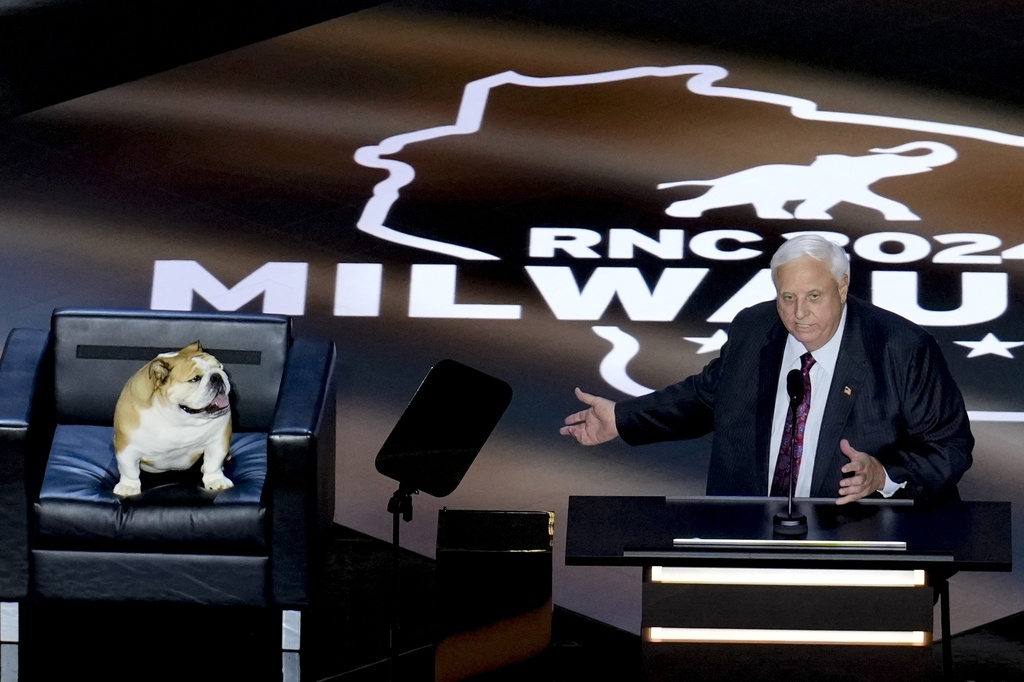
During the Republican National Convention on July 16, 2024, in Milwaukee, Gov. Jim Justice of West Virginia appeared with his dog, Babydog. A decade ago, hopes were high for ending greyhound racing in West Virginia. The state Legislature passed a bill to cease this practice, aiming to redirect $19 million a year from subsidies to more important initiatives such as roads and healthcare.
Theresa Bruner, president of the Federation of Humane Organizations of West Virginia, has long advocated for animal welfare. She recalls the 2017 bill that could have ended an industry breeding thousands of greyhounds that suffer injuries and neglect. She hoped the suffering would stop. However, Governor Justice vetoed the bill, allowing the tracks to remain open and continuing subsidizing dog racing.
In the wake of that veto, about 4,000 greyhound injuries have occurred in West Virginia. Among them, 1,367 suffered broken bones, and 84 died on the track. A case in point is GF St Barts, a greyhound that died at Mardi Gras in 2022 after suffering a broken skull.
Now, a new bill to end greyhound racing is advancing in Congress. This time, the Senate Agriculture Committee, which Sen. Jim Justice sits on, is set to debate it. There’s hope Justice will support the measure, particularly for Babydog. Babydog is a significant member of the Justice family, having gained prominence as a political symbol during West Virginia’s COVID vaccine sweepstakes. In subsequent years, Babydog has become a known figure, marking political campaigns and public appearances, like the 2024 Republican National Convention.
Political gestures using Babydog are distinct from creating substantial policy changes. In 2021, Justice urged vaccination through Babydog, a campaign that resonated with people. Now, there’s a chance for policy action with the Greyhound Protection Act.
West Virginia’s stance is shifting. Recent polls indicate 65 percent of residents back the Greyhound Protection Act. Research from Ball State University also revealed that greyhound racing offers no sustainable economic benefits and only drains millions in subsidies annually.
Bruner believes that the $19 million annual subsidy has better uses. The Greyhound Protection Act presents Gov. Justice with a chance to correct past decisions. Reflecting on his 2017 veto, it’s uncertain whether Justice’s stance might change. His 2017 decision allowed the industry to continue, which resisted reform, leading to further suffering. Justice could now support the Greyhound Protection Act for the sake of the greyhounds and the state’s future. Above all, he could do it for Babydog.
Theresa Bruner leads the Federation of Humane Organizations of West Virginia.
All rights to this content are reserved by Nexstar Media Inc., 2026. This material is protected against unlawful reproduction or distribution.